
Why Some Wounds Never Fully Heal
The Scars We Carry: Learning to Live With Wounds That Don't Close

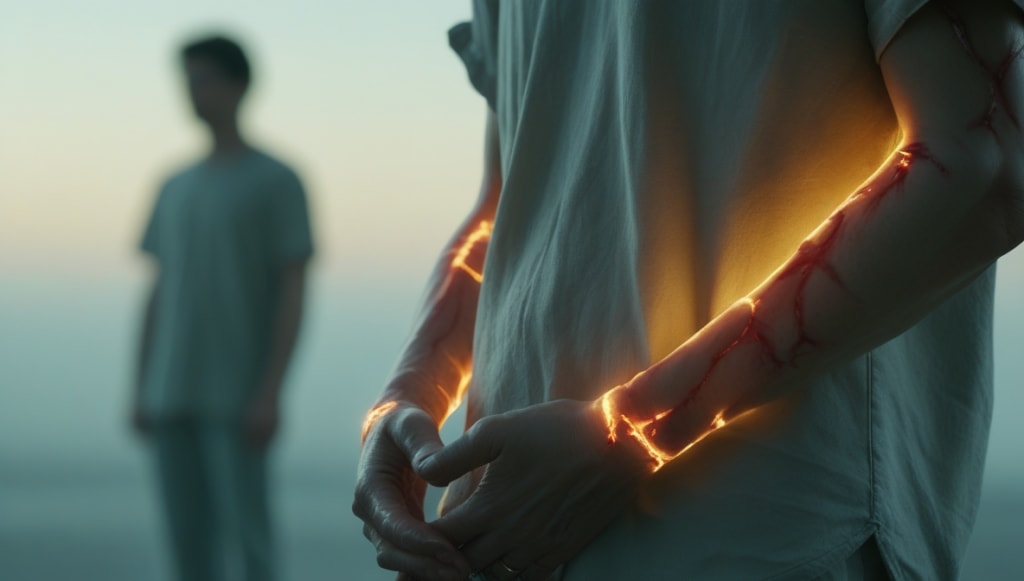
My mother died on a Tuesday in March, three weeks after her diagnosis.
Cancer moved through her body with terrifying speed, leaving no time for goodbyes, no space for preparation, no chance to say all the things I'd always assumed I'd have time to say. She was here, and then she wasn't.
Everyone told me the same thing: "Time heals all wounds."
They meant well. But they were wrong.
Fifteen years later, I still reach for the phone to call her when something good happens. Fifteen years later, I still feel the absence like a phantom limb—a presence that's missing but somehow still aches. Fifteen years later, I'm still waiting for the day when thinking about her doesn't hurt.
I've finally accepted that day isn't coming. And somehow, that acceptance has brought more peace than all the years of waiting for the pain to end.
The Myth of Complete Healing
We're sold a particular narrative about grief, about trauma, about loss: if you do the work, if you process it correctly, if you're strong enough, you'll heal completely. The wound will close. The pain will end. You'll be whole again.
But some wounds are too deep for that kind of closure. Some losses are too profound to ever fully recover from. And pretending otherwise doesn't help—it just makes us feel like failures when we're still hurting years later.
I spent the first five years after my mother's death trying to heal "correctly." I went to therapy. I joined support groups. I read books about grief. I talked about my feelings. I did everything I was supposed to do.
And yet, the wound remained open.
I'd have months where I felt okay, where I'd think, "Finally, I'm healing." Then something small—a song, a scent, Mother's Day—would rip everything open again, and I'd be back at square one, sobbing in parking lots and grocery stores, feeling like I'd failed at grief.
"Why can't I get past this?" I asked my therapist during one particularly difficult session. "It's been five years. Shouldn't I be better by now?"
She leaned forward, her eyes kind. "What if this isn't about getting past it? What if it's about learning to carry it?"
The Wounds That Change Us
Some experiences fundamentally alter who we are. They create a before and after in our lives so profound that we can never return to the person we were.
Before my mother died, I believed the world was basically safe. I believed people I loved would be around for a long time. I believed I had control over my life in ways that made me feel secure.
After she died, all those beliefs shattered. I learned that safety is an illusion. That people you need can vanish without warning. That control is a story we tell ourselves to feel less terrified of existence.
These weren't lessons I could unlearn. This wasn't damage I could repair. My mother's death didn't just hurt me—it changed me at a cellular level. The wound wasn't something on me; it became part of me.
I spent years trying to get back to who I was before. I'd look at old photos and barely recognize the carefree woman smiling back at me. Where had she gone? Could I ever find her again?
The answer, I eventually realized, was no. And that wasn't a failure. It was just the truth.
The Inheritance of Pain
Some wounds are even older than our own experiences. They're inherited, passed down through generations like genetic code.
My grandmother survived the Holocaust. She rarely spoke about it, but it lived in her body—in her compulsive hoarding of food, in her inability to throw anything away, in the way she'd flinch at loud noises, in her insistence that we always have an escape plan.
She died when I was twelve, but I carried her trauma in ways I didn't understand for decades. My own anxiety, my need for control, my difficulty trusting that good things would last—these weren't just mine. They were echoes of survival mechanisms that had kept my grandmother alive, passed down through my mother and into me.
Generational trauma doesn't heal in a single lifetime. These are wounds that span generations, embedded in family systems and nervous systems, repeated until someone finally does the work to interrupt the pattern.
But even with awareness, even with therapy, even with conscious effort—the wound doesn't disappear. You just learn to relate to it differently.
The Relationship With Our Pain
What changed for me wasn't that the wound healed. It's that I stopped expecting it to.
I stopped seeing my continued grief as evidence that something was wrong with me. I stopped comparing my timeline to others'. I stopped apologizing for still being affected by something that happened years ago.
Instead, I started treating my grief like a permanent houseguest—unwelcome, perhaps, but undeniably here. Someone I had to learn to live with rather than constantly trying to evict.
On good days, the grief sits quietly in the corner, barely noticeable. On hard days, it fills the entire room, demanding attention. But it's always there, in some form, and that's okay.
I learned to make space for it. To acknowledge it without letting it consume me. To feel the pain without being destroyed by it.
The Wisdom in the Wound
Here's what nobody tells you about wounds that don't heal: they teach you things that wholeness never could.
My mother's death taught me that love doesn't end when someone dies. That grief is just love with nowhere to go. That the depth of pain you feel is proportional to the depth of love you experienced.
It taught me to cherish the people I have while I have them. To say "I love you" more often. To not wait for perfect moments to express what matters.
It taught me empathy for others who are suffering. When someone tells me they're struggling with grief, I don't offer platitudes about time healing all wounds. I sit with them in their pain and say, "This is so hard. And it might always be hard. And that's okay."
The wound became a source of wisdom, of depth, of connection to others who carry similar wounds. It cracked me open in ways that made me more human, more compassionate, more real.
If the wound had healed completely, I'd have lost all of that.
Learning to Carry What Can't Be Fixed
I met a woman at a grief support group who'd lost her son twenty years earlier. She was in her seventies, vibrant and joyful and fully engaged with life. But when she spoke about her son, her eyes still filled with tears.
"Does it ever stop hurting?" someone asked her.
She smiled, sad but somehow at peace. "No," she said. "But you get stronger at carrying it. The weight doesn't change, but you do."
That image stayed with me. The weight doesn't change, but you do.
I stopped trying to make the wound smaller and started working on becoming someone who could carry it with more grace. I built strength around it—through therapy, through community, through practices that helped me stay grounded when grief threatened to overwhelm me.
I learned my triggers and developed strategies for difficult days. I created rituals to honor my mother's memory instead of trying to forget her. I surrounded myself with people who understood that healing doesn't mean forgetting, that moving forward doesn't mean leaving behind.
The Beauty in the Broken Places
There's a Japanese art form called kintsugi—repairing broken pottery with gold, making the cracks part of the object's beauty rather than something to hide.
That's what I've learned to do with my unfixable wounds. I've stopped trying to hide them or pretend they don't exist. Instead, I've learned to see them as part of my story, part of what makes me who I am.
The wound from my mother's death is now lined with gold—with the memories we shared, the lessons she taught me, the love that remains even in her absence. It's still a wound. But it's also beautiful in its own way.
I'm not the same person I was before she died. I carry pain that person never knew. But I also carry wisdom, depth, and capacity for love that only came through losing her.
The Permission to Not Be Fixed
If you're reading this and you're carrying a wound that won't heal—a loss, a trauma, a betrayal, a grief that time hasn't erased—I want you to know: you're not broken. You're not doing it wrong. You haven't failed at healing.
Some wounds are meant to be carried, not cured. Some pain is part of the price we pay for loving deeply, for living fully, for being brave enough to let people and experiences matter to us.
The wound doesn't mean you can't be happy. It doesn't mean you can't build a beautiful life. It just means that your life will always include this tender place, this scar that sometimes aches.
And that's not a tragedy. That's just being human.
Living With the Ache
Fifteen years later, I still miss my mother every single day. The wound hasn't healed. But I've built a life around it—a good life, a full life, a life she would have been proud of.
I've learned that healing doesn't mean the absence of pain. It means the presence of joy alongside the pain. It means crying about your mother and laughing with your children in the same afternoon. It means carrying what hurts while still reaching for what brings light.
Some mornings, I still wake up and forget for a moment that she's gone. And when I remember, it still hurts. After all these years, it still hurts.
But I've stopped seeing that as a problem. The hurt is just love that has nowhere to go. And I'd rather carry this hurt for the rest of my life than have never loved her at all.
Not all wounds are meant to heal. Some losses are so profound they become part of your architecture—load-bearing walls you learn to build around rather than demolish. Healing isn't about erasing the pain or returning to who you were before. It's about becoming someone strong enough to carry what can't be fixed, wise enough to find meaning in what can't be changed, and brave enough to build a beautiful life around a wound that will never fully close. The scar is proof you survived. The ache is proof you loved. Both are worth keeping.
About the Creator
Keep reading
More stories from Ameer Moavia and writers in Humans and other communities.
The Weight of Being "Too Much": How I Learned My Sensitivity Was Never the Problem
I was seven years old the first time someone told me I was too sensitive. I'd come home from school crying because my best friend said she didn't want to play with me anymore. My father looked up from his newspaper, irritation flickering across his face. "You're being too sensitive," he said, turning the page. "Kids say things. You need to toughen up." So I tried. I swallowed my hurt. I forced a smile. I pretended it didn't matter. That moment became a blueprint for the next three decades of my life. By the time I was thirty-seven, married with two kids and a successful career, I'd perfected the art of not feeling too much. I'd learned to laugh off insults, minimize my pain, and apologize for my emotions before anyone else could criticize them. But the cost of all that toughening up? I'd become a stranger to myself. The Education of Emotional Suppression The messages came from everywhere, each one teaching me that my natural way of being was somehow wrong. When I cried during a sad movie: "It's just a movie. Why are you so emotional?" When a friend's thoughtless comment hurt my feelings: "You're overreacting. I was just joking." When I needed time to process conflict: "You're being too dramatic. Just get over it." When I was moved to tears by beauty—a sunset, a piece of music, an act of kindness: "You cry at everything. What's wrong with you?" Each time, the same lesson: Your feelings are excessive. Your responses are inappropriate. You are too much. I learned to preface every emotional expression with an apology. "I know I'm being ridiculous, but..." "I'm probably overreacting, but..." "Sorry, I'm just too sensitive..." I became an expert at minimizing my own experience, at gaslight myself before anyone else could do it for me. The Slow Erosion of Self What happens when you spend decades being told your emotions are wrong? You start to believe it. I stopped trusting my own reactions. When something hurt me, my first thought wasn't "that was hurtful," but "I'm being too sensitive." When I felt uncomfortable in a situation, I'd override my instincts and force myself to stay, convinced my discomfort was a character flaw rather than valuable information. I became everyone's emotional support system while denying myself the same care. Friends would call me for hours when they were upset, and I'd listen with endless patience and compassion. But when I was hurting? I'd minimize it, laugh it off, handle it alone. In my marriage, I'd absorb my husband's bad moods without comment, adjust my behavior to keep the peace, and swallow my hurt when he was dismissive or short with me. "You're too sensitive" became his go-to response whenever I expressed that something bothered me. Eventually, I stopped expressing it at all. I taught my children to share their feelings, while simultaneously teaching them through my example that their mother's feelings didn't matter. I'd hide in the bathroom to cry, ashamed that I couldn't be stronger.
By Ameer Moavia2 months ago in Humans
The Wave and the Particle
“There it is. I see it now. Come here, you little.. Hold still, this is going to be tricky.” Like I could disobey? My head and torso might as well be locked in vise grips, and the meds held me even more immobile. What muscle twitch? They might as well have used Botox. Maybe they did.
By Meredith Harmon6 days ago in Humans




Comments
There are no comments for this story
Be the first to respond and start the conversation.