
Why queen Elizabeth 2nd was the queen of 15 countries!?
Crown Across Continents: Explore How Queen Elizabeth II Became the Sovereign Ruler of 15 Diverse and Fascinating Nations! A must-read insight

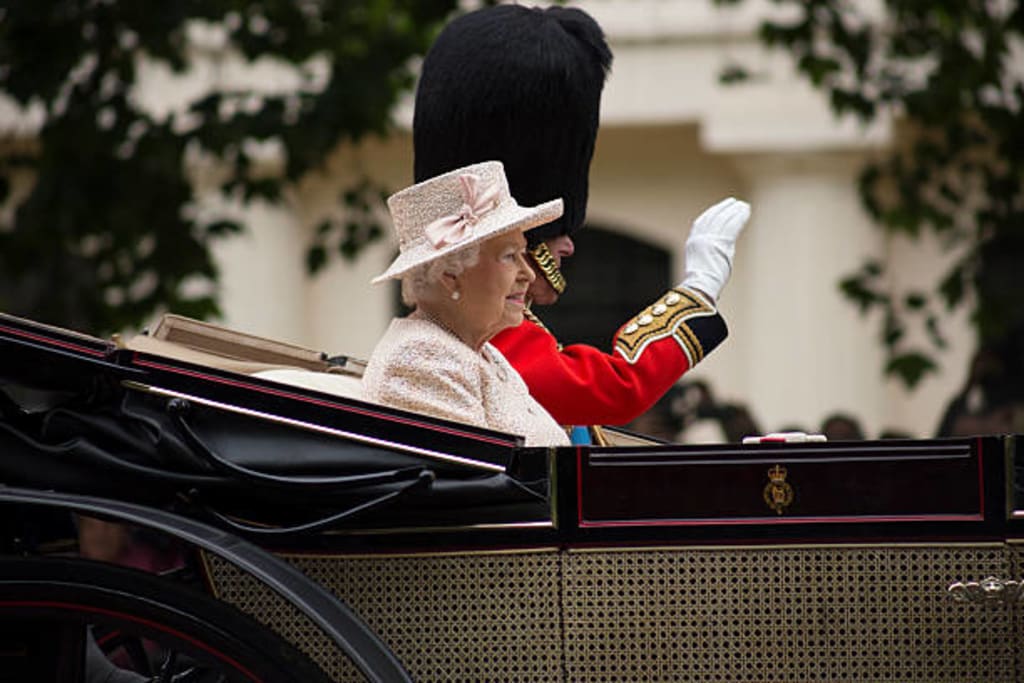
On November 30th, 2021, history was made as Barbados proudly emerged as the world's newest republic. With a resounding declaration, the transformation was solidified: "From this day and forever, declare Barbados a parliamentary republic." This pivotal moment marked the culmination of a journey that saw Barbados unfurl its own flag, symbolizing the end of a colonial era spanning over 350 years and dissolving its ties to the British royal family. What added an intriguing layer to the event was the presence of none other than Prince Charles, who acknowledged, "It was important that I should join you to reaffirm those things which do not change."
Prince Charles's words held a deeper significance, encompassing the essence of the transition. Although Barbados had stepped away from being a realm of the British Crown, it chose to maintain its membership in the Commonwealth—a conglomerate of nations primarily composed of former British colonies. A moment of transformation was unfolding, one that required a closer look at the intricate relationship between the British Empire and the Commonwealth of Nations.
Travel back to 1926, the year Queen Elizabeth II entered the world stage. At that time, the British Empire exerted dominion over nearly a quarter of the global population through its sprawling colonies. This immense reach was built upon refined systems designed to control and exploit wealth and resources across the colonies. Consider the case of Barbados, where descendants of those kidnapped from Africa were exploited on sugar plantations, or delve into South Africa, where a wealth of diamonds was extracted from local mines.
The early 20th century witnessed the initial ripples of change in the colossal British Empire. Countries such as Australia and Canada transformed into British dominions, relinquishing direct rule by Britain while maintaining symbolic allegiance to the Crown—a concept termed the British Commonwealth. This new form would later serve as the blueprint for the empire's evolution.
As Queen Elizabeth ascended the throne in the 1950s, the world was in flux. Post-World War II, Britain's economy faltered, and independence movements surged across the empire. Struggles for sovereignty unfolded in places like India, where leaders fought for self-governance, and in Kenya, where millions resisted British rule, even enduring internment camps.
Recognizing the inevitability of decolonization, the monarchy shifted its focus toward relevance. While Queen Elizabeth did not personally attend the lowering of the British flag, her family did. Prince Philip participated in ceremonies marking the independence of former colonies, including Kenya. Other royals, such as Lord Mountbatten, were also part of this symbolic transition, as seen in India.
India's trajectory took an intriguing turn as it chose to become a republic and sever ties with the monarchy. In response, the British Commonwealth underwent a transformation of its own, rebranding itself as the Commonwealth of Nations. This evolution allowed countries to join as members even if they were no longer under the queen's rule. Meanwhile, newly independent nations opted to retain the queen as their ceremonial head of state, establishing a diverse mix of monarchies and republics, all presided over by the queen.
In this intricate landscape, the monarchy adapted and thrived, expanding its reach through royal tours that echoed the imperial tradition. As the British empire decolonized, the monarchy remained a global entity. Fast-forward to today, where approximately a third of the world's population resides in a Commonwealth nation. This intriguing alliance extends beyond former British colonies, as countries find value in the political platform it offers, connecting them to influential diplomatic players like the UK, India, Canada, and even the Crown itself.
The transition to the next head of the Commonwealth, King Charles III, carries a hint of irony. While the British empire gave birth to the Commonwealth, the future leadership of the organization is not bound by colonial origins. Anyone has the potential to lead, indicating that the Commonwealth's evolution may be guided by those very colonies it was designed to unify.
The recent passing of Queen Elizabeth II triggered periods of mourning across Commonwealth nations. Her remarkable ability to unite diverse nations provided a buffer against the darker chapters of British history, such as slavery. However, the monarchy can no longer evade these discussions, as the collective reckoning with colonial legacies prompts introspection on the monarchy's role within the Commonwealth.
These conversations underscore a pivotal shift in power dynamics. Former British colonies now hold considerable influence within the Commonwealth. The question that looms large is the collective vision of these nations. What aspirations and goals will guide the future of this diverse union? The journey from colonialism to republics within the Commonwealth is a complex narrative, one that reflects not just a shift in political landscapes, but also the aspirations of nations bound by shared histories.
Like what you read? Consider liking and subscribing for more! :)
About the Creator
Keep reading
More stories from Shubham Bajaj and writers in History and other communities.
How the 'lost cities' of amazon were finally found
Meet Percy Fawcett, the intrepid British explorer whose journey into the heart of the Amazon rainforest in 1925 marked the last known communication from him. This was his eighth expedition into the Amazon, driven by a singular objective: the pursuit of a fabled lost city, dubbed "Z". This quest was fueled by age-old rumors that whispered of sprawling cities nestled deep within the dense rainforest, a notion that captured Fawcett's imagination. Yet, despite his unwavering determination, Fawcett's search for "Z" and other mythical cities remained unfruitful, leaving many to believe that the Amazon's untamed wilds were incompatible with the existence of urban centers.
By Shubham Bajaj2 years ago in History
Venezuela’s President Under Pressure: Arrest Calls, Indictments, and a Nation at a Crossroads
How the Arrest Narrative Began The idea of arresting Venezuela’s president did not appear out of nowhere. It stems from years of accusations that range from human-rights abuses to corruption and drug-related activities. U.S. authorities have filed formal charges against Nicolás Maduro, linking him to cocaine trafficking networks and large-scale financial misconduct. These cases place him among the few sitting leaders facing active international legal pressure.
By Muhammad Islam khan swati5 days ago in History
How I Learned That Aircraft Structures Are as Critical as Engines
When I first started studying aviation, I believed that engines and avionics defined an aircraft’s reliability. Over time, as I explored aerospace history and manufacturing records, I realized how incomplete that understanding was. Aircraft safety does not depend solely on thrust or navigation systems. It is deeply rooted in structural engineering, certified manufacturing, and the disciplined production of components that passengers never see.
By Beckett Dowhana day ago in History


Comments
There are no comments for this story
Be the first to respond and start the conversation.