
Venezuela’s President Under Pressure: Arrest Calls, Indictments, and a Nation at a Crossroads
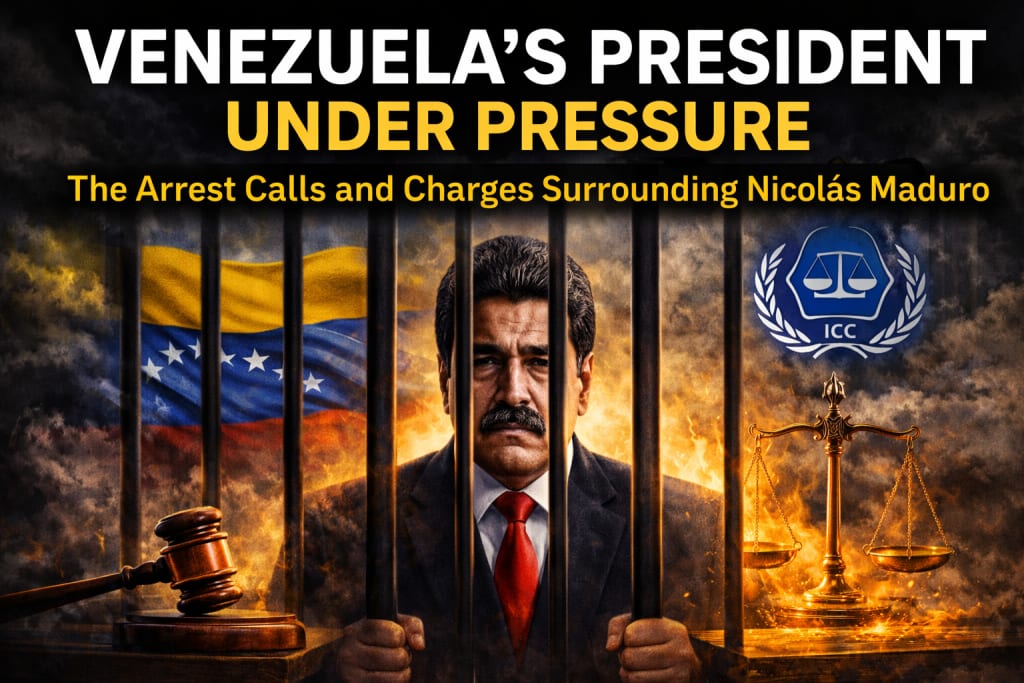
How international charges, political isolation, and internal unrest are tightening the net around Nicolás Maduro Venezuela’s long-running political crisis has entered another intense phase as President Nicolás Maduro faces renewed international pressure, legal indictments, and growing calls for arrest from foreign governments and institutions. While Maduro remains firmly in power inside Venezuela, his legitimacy abroad continues to erode, raising serious questions about accountability, sovereignty, and the future of the oil-rich nation. At the center of this controversy are criminal charges, international investigations, and diplomatic isolation, which together paint a picture of a leader increasingly cornered on the global stage—even as he maintains control at home.

How the Arrest Narrative Began
The idea of arresting Venezuela’s president did not appear out of nowhere. It stems from years of accusations that range from human-rights abuses to corruption and drug-related activities. U.S. authorities have filed formal charges against Nicolás Maduro, linking him to cocaine trafficking networks and large-scale financial misconduct. These cases place him among the few sitting leaders facing active international legal pressure.
These charges, however, do not automatically lead to an arrest. As long as Maduro stays within Venezuela’s borders and avoids jurisdictions aligned with the U.S., the chances of detention remain low.
Human Rights Investigations on the Global Stage
In addition to U.S. indictments, the International Criminal Court has launched an investigation into alleged human-rights violations carried out by Venezuelan authorities. The accusations include arbitrary detentions, torture, disappearances, and force used against protesters.
Although the ICC has not issued a direct arrest warrant for Maduro, the investigation is significant. It signals that global institutions are no longer willing to overlook abuses simply because a leader is still in power.
Why an Arrest Has Not Taken Place
Despite the harsh criticism and legal pressure, Maduro has avoided arrest for several reasons. Remaining inside Venezuela gives him the protection of loyal security forces and a military leadership that continues to support his government. Countries such as Russia, China, Iran, and Cuba still recognize his administration and consider foreign charges an intrusion into Venezuelan affairs.
His arrest would require one of two major developments:
Maduro traveling to a country willing to detain him
A major political shift inside Venezuela
So far, neither condition has happened.
Internal Control vs. Growing Isolation
Within Venezuela, Maduro still maintains a firm hold on power, though that control has become more fragile over time. Opposition leaders have been jailed, exiled, or banned from political activity, and election transparency remains a point of international concern.
Meanwhile, the country’s economy—once strong and full of promise—has collapsed due to sanctions, corruption, and years of mismanagement. Millions of Venezuelans have left, driven by poverty and instability, creating one of the largest displacement crises in recent history.
Ironically, Venezuela’s massive oil reserves continue to give Maduro geopolitical leverage. As global energy demands shift, foreign governments occasionally open limited channels of communication, even as legal pressure remains in place.
How the “Arrest” Narrative Became a Political Tool
For the U.S. and its allies, the threat of arrest serves as a form of diplomatic pressure. It undermines Maduro’s international standing and signals to members of his inner circle that supporting him could have legal consequences.
For Maduro, these accusations help fuel a domestic narrative of foreign aggression. By framing the pressure as an attack on national sovereignty, he strengthens support among loyalists and justifies tighter control at home.
This has turned the arrest debate into a strategic weapon used by both sides—more about long-term influence than immediate legal action.
What the Future Might Hold
Maduro’s political future depends on several uncertain factors:
Whether the Venezuelan military remains united
The pace and outcome of international legal cases
Shifts in global alliances and the oil market
An arrest may not be close, but the legal and political pressure surrounding him continues to grow. History has shown that leaders who once seemed untouchable can face sudden consequences when political conditions change.
Conclusion
Nicolás Maduro’s situation highlights the ongoing tension between political power and accountability. While he remains the head of Venezuela today, the investigations, charges, and global demands for justice ensure that his presidency moves under a constant cloud of legal uncertainty.
Ultimately, the deeper tragedy lies not just in the fate of one leader, but in the struggle of an entire nation—caught between authoritarian rule, international confrontation, and the hopes of millions longing for stability and a future beyond crisis
About the Creator
Keep reading
More stories from Muhammad Islam khan swati and writers in History and other communities.
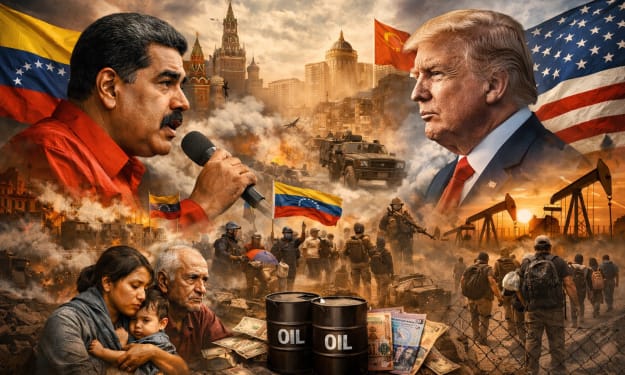
A Crisis of Power, Politics, and the People
The relationship between Venezuela and the United States remains one of the most complicated political dynamics in the Western Hemisphere. Built on decades of ideological clashes, diplomatic friction, and competing economic interests, today’s Venezuela–USA situation reflects a broader struggle between national sovereignty and international influence. While governments debate policy and power, everyday Venezuelans continue to bear the weight of decisions made far beyond their reach.
By Muhammad Islam khan swati8 days ago in History
When the Pyramids Learned to Breathe
The desert was silent in the way only ancient places can be—not empty, but listening. At dawn, the first light touched the limestone faces of the pyramids, and the shadows they cast stretched long and deliberate, as if time itself were waking slowly. To the west, beyond the city’s dust and noise, the old giants stood where they always had, unmoved by centuries, untouched by doubt.
By LUNA EDITHabout 2 hours ago in History
World War I
The morning fog lay thick over the trenches of northern France, clinging to the earth as if it too feared what was about to happen. Private Thomas Hale pulled his coat tighter around himself, though it did little to stop the cold from seeping into his bones. He had been in the trenches for six months, yet the damp smell of mud, smoke, and fear still felt unfamiliar, like a nightmare he could not wake from.
By Maavia tahir7 days ago in History


Comments
There are no comments for this story
Be the first to respond and start the conversation.