
What Happened to American Soldiers After the End of World War II
How American Troops Returned Home Took on Occupation Duties and Shaped Postwar America After WWII

What Happened to American Soldiers After the End of World War II
When World War II ended in 1945, millions of American soldiers, sailors, and airmen were scattered across Europe, the Pacific, and other parts of the world. Bringing them home and transitioning them back into civilian life was a massive challenge for the U.S. government. Yet, the process of demobilization, although complex and sometimes frustrating, is remembered largely as a great success. It changed countless lives and shaped the postwar world.
Operation Magic Carpet: Bringing Them Home
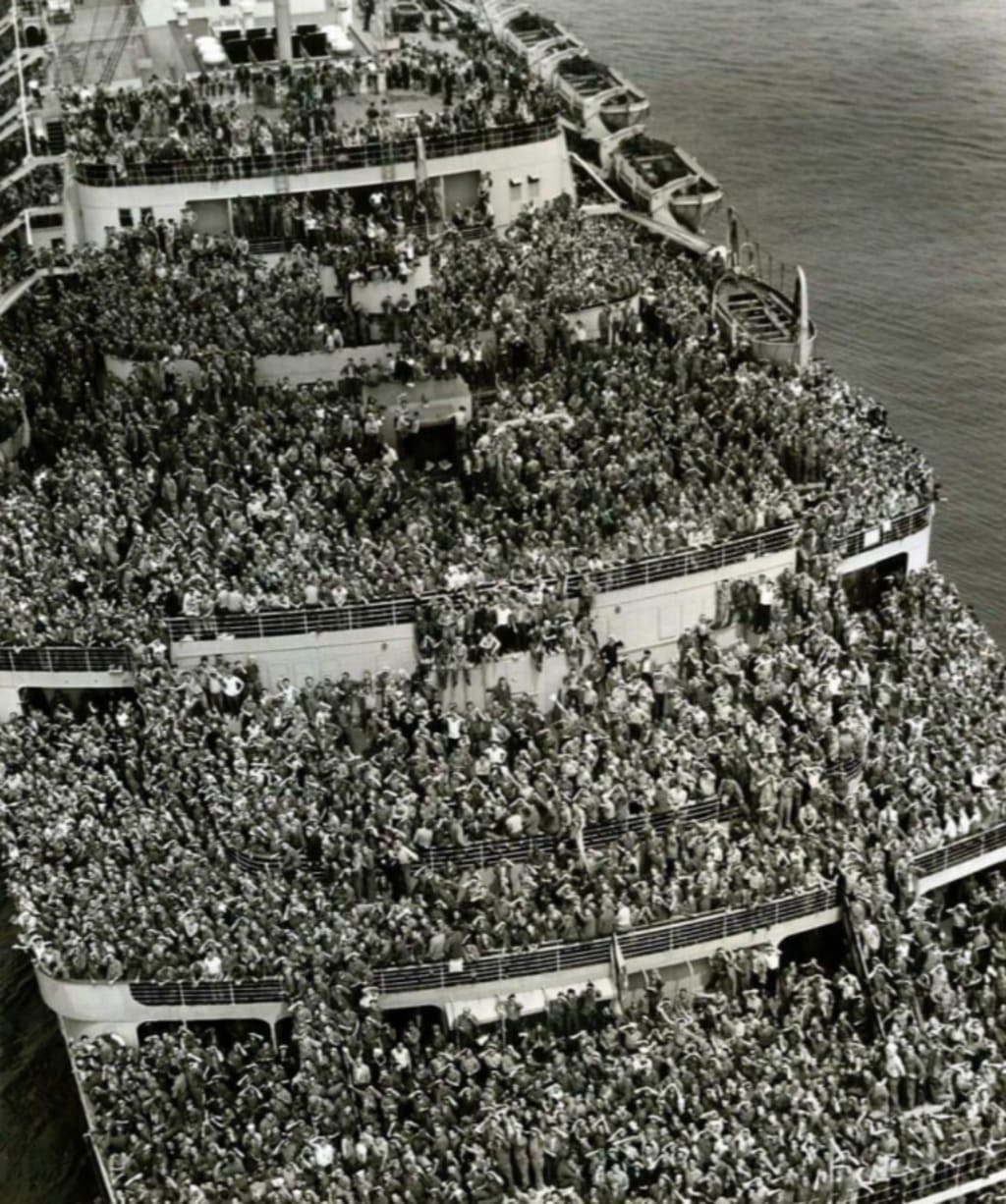
General Dwight D. Eisenhower, Supreme Commander of Allied Forces in Europe, was responsible for overseeing the return of millions of American troops. One of the biggest problems was transportation: there simply were not enough ships to carry everyone back immediately. Eisenhower introduced the idea of hotbunking on troopships — where half of the men would sleep below decks while the other half stayed topside, then switch. This doubled the number of soldiers who could be transported at a time. Despite the crowded conditions, the soldiers appreciated the faster return home and the chance to finally leave Europe after years of war.
In the Pacific, the U.S. Navy had hundreds of ships available, which meant that many servicemen, like sailors and marines, returned home relatively quickly. For instance, some Navy personnel found themselves back in New York just a few weeks after Japan’s surrender in August 1945. The effort to return American military personnel was called Operation Magic Carpet, and it involved thousands of ships and planes ferrying soldiers, often packed tightly aboard, back across oceans to the United States.
The Points System
Because it was impossible to bring everyone home at once, the U.S. Army developed a points system to decide who would be discharged first. Soldiers earned points based on how long they had served, how much time they had spent overseas, how many battles they had fought, and whether they had dependents back home.
Men with high numbers of points were eligible for discharge quickly. Those with lower points often had to stay behind for occupation duty or other assignments. Newly trained soldiers who had not yet been sent to combat were sometimes used to replace higher-point veterans, keeping the military forces stable during the immediate postwar period.
The points system was generally seen as fair, but it still caused frustration, especially among soldiers stationed far from home, such as in the Pacific, where distances were greater and the war against Japan had been more brutal.
Occupation Duty
Not every soldier went home immediately. Many were assigned to occupation duty in former enemy territories. In Germany, American troops were stationed to oversee the rebuilding of the country, maintain order, and help with the difficult task of de-Nazification. In Japan, under General Douglas MacArthur’s leadership, U.S. forces played a critical role in reforming Japanese society, politics, and the economy.
Occupation duty was a mixed experience. Some soldiers found the work boring and longed to return to their families. Others appreciated the chance to experience foreign cultures and see the direct results of America's victory. Conditions were sometimes harsh, but compared to the violence of war, occupation was a welcome change for many.
Life After War
Once back home, American soldiers faced the challenge of reintegrating into civilian life. To ease this transition, the U.S. government introduced the G.I. Bill, providing veterans with benefits like free college tuition, low-interest home loans, and unemployment assistance. This contributed to the postwar economic boom and allowed many veterans to build prosperous futures for themselves and their families.
However, not all transitions were smooth. Some veterans struggled with physical injuries, psychological trauma (what we now call PTSD), or difficulties finding work. Despite the challenges, the vast majority of returning soldiers eventually settled into American life, helping to fuel the enormous social and economic growth of the 1950s.
A Sudden Departure
In Europe, particularly in England, the return home could be sudden and abrupt. Donald Miller, in his book Masters of the Air, describes how American airmen stationed in England flew humanitarian missions after Germany’s surrender. Then, seemingly overnight, the orders came: the crews simply packed their planes and flew home, leaving their bases empty and abandoned. This suddenness captured the overwhelming desire of the soldiers to return to the United States as soon as possible.
Conclusion
The end of World War II marked not only the defeat of fascism but also the beginning of a new chapter in American life. The return of American soldiers was handled with remarkable speed and efficiency, given the scale of the challenge. While some stayed behind for occupation duty, most were brought home as fast as ships and planes could carry them. Their homecoming helped shape the dynamic postwar America we know today, and their experiences overseas left a lasting mark on the world.
About the Creator
Adnan Rasheed
Author & Creator | Writing News , Science Fiction, and Worldwide Update| Digital Product Designer | Sharing life-changing strategies for success.
Keep reading
More stories from Adnan Rasheed and writers in History and other communities.
The Deadly Legacy of German U-Boats From World War I to World War II
The Deadly Legacy of German U-Boats From World War I to World War II The First World War marked the beginning of a new era in naval warfare. Traditional battleships and fleets still played crucial roles but lurking beneath the waves was a new and terrifying threat the German U-boat. Short for Unterseeboot meaning undersea boat these submarines wreaked havoc on Allied shipping lines and changed maritime conflict forever. By the end of World War I the numbers told a chilling story. A total of 274 German U boats were responsible for sinking 6,394 merchant ships and approximately a hundred warships. This was not just a disruption of military logistics it was an assault on civilian supply chains crucial for sustaining Britain and its allies. Food arms fuel everything needed to sustain a war effort and civilian life was at constant risk. The U-boat campaign pushed Britain to the brink of starvation and remains one of the key examples of the effectiveness of unrestricted submarine warfare. However despite their success Germany's U-boat campaign in the First World War ultimately failed to secure victory. The Allies countered with convoy systems improved anti submarine tactics and technological innovations like sonar limiting the submarines' effectiveness in the later stages of the war. Still the psychological and strategic lessons were clear submarines had the power to tilt the scales of war.
By Adnan Rasheed9 months ago in History
Albert Einstein: The Mind That Changed the Universe
Albert Einstein was not born a legend. When he entered the world on March 14, 1879, in the quiet German city of Ulm, nothing about his early life suggested that he would one day transform science forever. In fact, his beginnings were remarkably ordinary—and in some ways, difficult. As a child, Einstein spoke slowly, so slowly that his parents worried something might be wrong. Teachers considered him distracted and stubborn, a boy who questioned too much and obeyed too little. Yet hidden beneath that quiet exterior was a restless, powerful curiosity that would later reshape the universe itself.
By The best writer 5 days ago in History
Ludacris and Nelly draw backlash over bookings at MAGA-coded music festival
Ludacris and Nelly headlining a mostly right-wing event is good for them. It’s also great for the genre of hip hop. The two rap veterans have showcased their talents on other stages. Why can’t they perform for mostly MAGA folks and grab that bag?
By Skyler Saunders6 days ago in Beat




Comments
There are no comments for this story
Be the first to respond and start the conversation.