
The Deadly Legacy of German U-Boats From World War I to World War II
How German Submarines Nearly Starved Britain Into Defeat Across Two World Wars

The Deadly Legacy of German U-Boats From World War I to World War II
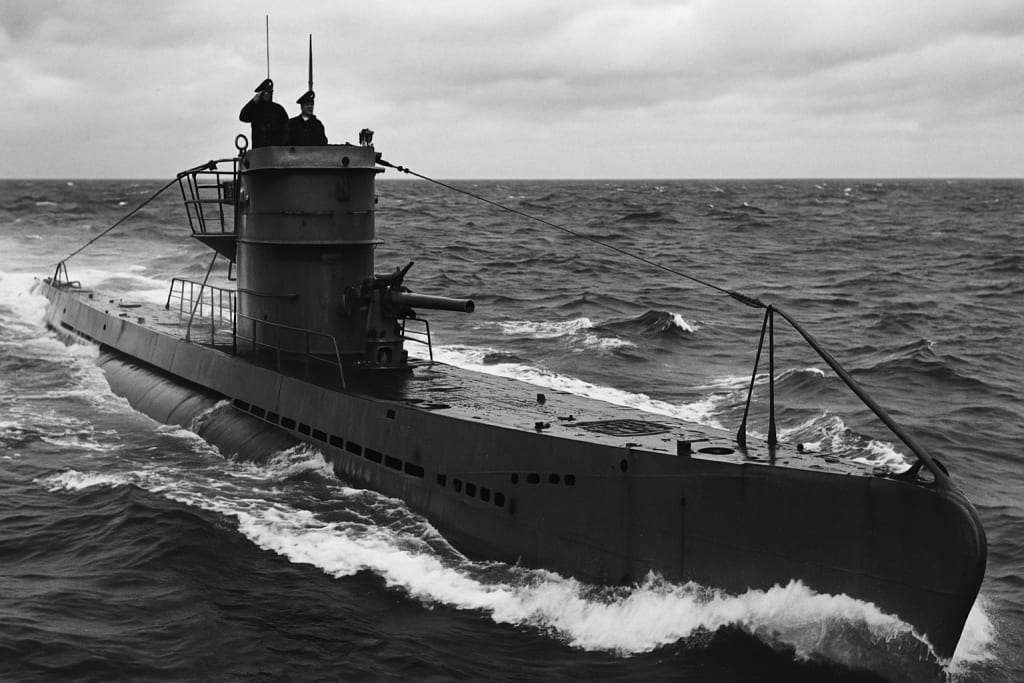
The First World War marked the beginning of a new era in naval warfare. Traditional battleships and fleets still played crucial roles but lurking beneath the waves was a new and terrifying threat the German U-boat. Short for Unterseeboot meaning undersea boat these submarines wreaked havoc on Allied shipping lines and changed maritime conflict forever. By the end of World War I the numbers told a chilling story. A total of 274 German U boats were responsible for sinking 6,394 merchant ships and approximately a hundred warships. This was not just a disruption of military logistics it was an assault on civilian supply chains crucial for sustaining Britain and its allies. Food arms fuel everything needed to sustain a war effort and civilian life was at constant risk. The U-boat campaign pushed Britain to the brink of starvation and remains one of the key examples of the effectiveness of unrestricted submarine warfare. However despite their success Germany's U-boat campaign in the First World War ultimately failed to secure victory. The Allies countered with convoy systems improved anti submarine tactics and technological innovations like sonar limiting the submarines' effectiveness in the later stages of the war. Still the psychological and strategic lessons were clear submarines had the power to tilt the scales of war.
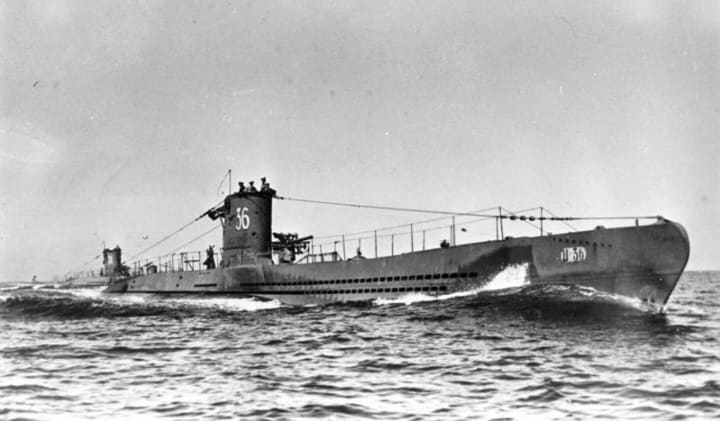
When the world plunged into the Second World War in 1939 German naval leadership had not forgotten the lessons of the previous conflict. Admiral Karl Dönitz a seasoned submarine officer during World War I and later Commander of the German Navy's U-boat fleet recognized the potential of a renewed and expanded U-boat campaign. In his strategic calculations Dönitz famously wrote that 300 operational submarines would be sufficient to cut off Britain's vital Atlantic supply lines and force the island nation into submission. Yet when World War II began Dönitz had a mere 57 submarines at his disposal far from the 300 he believed necessary. German naval production in the interwar period had been limited by the Treaty of Versailles and although rearmament had begun in the 1930s under Hitler the Kriegsmarine (German Navy) was still not fully prepared for a sustained conflict against the world's most powerful naval forces. Despite this initial disadvantage early results for Germany were surprisingly strong. Utilizing wolf pack tactics groups of U boats coordinating attacks on Allied convoys the Germans inflicted severe losses on merchant shipping during the early years of the war. The Atlantic became a hunting ground with U-boats sinking thousands of tons of Allied cargo monthly. The U-boat crews operated with deadly efficiency and tremendous courage braving long voyages harsh conditions and the constant threat of depth charges and destroyer patrols.
In 1940 and 1941 often referred to as the Happy Time by German submariners the U-boats seemed unstoppable. British shipping losses were so high that at times it seemed Britain might once again be starved into submission just as Dönitz had envisioned. German propaganda hailed the U-boat commanders as national heroes and their successes were celebrated widely at home.
However the tide of battle would not stay favorable forever. The Allies adapted just as they had during the First World War. Advances in radar sonar and aerial patrols made life increasingly dangerous for U boat crews. The introduction of escort carriers longer range aircraft like the B 24 Liberator and improved convoy tactics dramatically reduced the effectiveness of U-boat attacks by 1943. Germany’s failure to produce enough submarines quickly enough combined with the loss of experienced crews meant that Dönitz’s vision of strangling Britain into defeat ultimately remained unrealized. By the war’s end the statistics again painted a tragic picture for both sides. Germany had built over 1,100 U boats during World War II but more than 700 were lost and around 30,000 of the 40,000 German U-boat sailors perished. It was one of the most dangerous assignments in the German military with casualty rates of around 75%. Nevertheless the impact of the U boat campaigns in both World Wars cannot be overstated. They nearly succeeded in isolating Britain shifted naval tactics worldwide and forced technological innovation on an unprecedented scale. Today the legacy of the U boat is a testament to the strategic power of undersea warfare and a sobering reminder of the thin line between victory and defeat at sea.
About the Creator
Adnan Rasheed
Author & Creator | Writing News , Science Fiction, and Worldwide Update| Digital Product Designer | Sharing life-changing strategies for success.
Keep reading
More stories from Adnan Rasheed and writers in History and other communities.
Orion Comes Alive: NASA Capsule Throws Off Its Cover in Major Test
Orion Comes Alive: NASA Capsule Throws Off Its Cover in Major Test NASA has achieved a major breakthrough in its ambitious Artemis program with a successful and critical test of the Orion spacecraft's forward bay cover (FBC) separation system. This achievement marks an essential milestone toward the goal of returning humans to the Moon, and eventually venturing further into deep space, including Mars.
By Adnan Rasheed9 months ago in History
A secret staircase found beneath a 1,500-year-old French church
A subterranean staircase and burial strata dating back approximately 1,500 years were discovered during a project inside the Church of Saint Philibert in Dijon, France. The stairs were discovered by restoration workers inside the church when repairs were being made, and the excavation soon ensued.
By Francis Dami5 days ago in History
Martin Luther King's 'I Have a Dream' Speech: Things People Still Don't Know
Former President Ronald Reagan declared the third Monday in January to be Martin Luther King Jr. Day to celebrate the slain civil rights activist. Had he lived, he would be celebrating his birthday at age 97 on January 15, 2026, but he was assassinated at the young age of 39 on April 4, 1968.
By Margaret Minnicksa day ago in History




Comments
There are no comments for this story
Be the first to respond and start the conversation.