
US State Capital History Oklahoma, Oregon, and Pennsylvania
The history of Oklahoma City, Salem, and Harrisburg

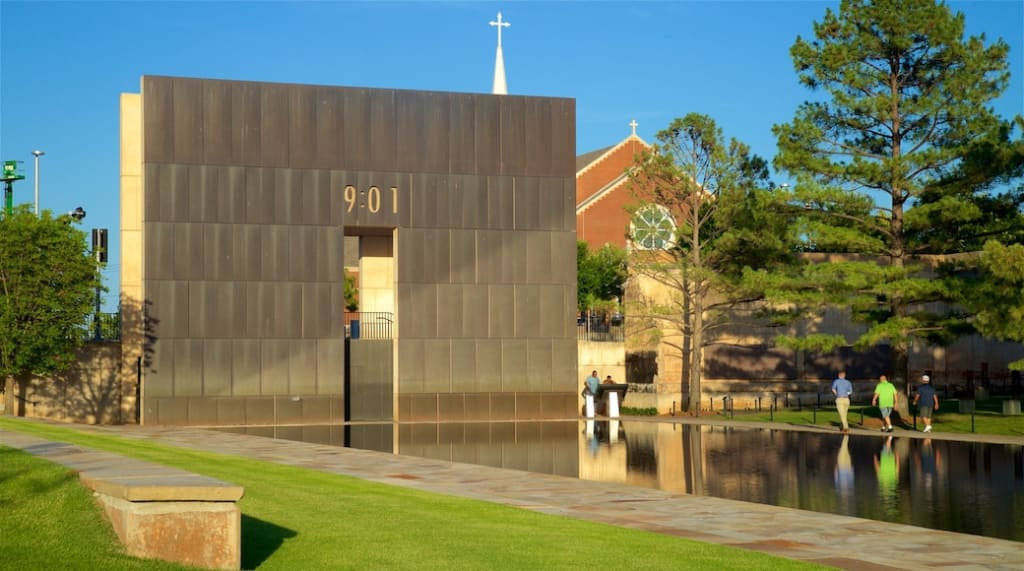
Fast Growing Oklahoma City
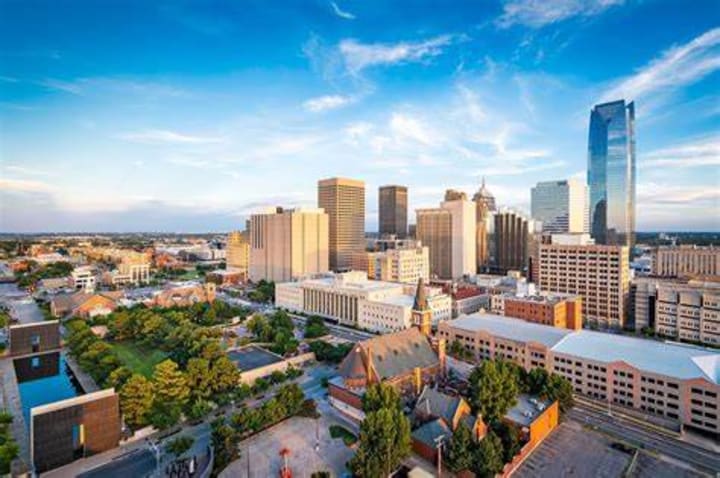
After the state of Oklahoma was admitted to the Union in 1907, Oklahoma City became the capital. It was a major stop on Route 66 and it was mentioned in the 1946 jazz classic “(Get Your Kicks On) Route 66”. The song was later made popular by Nat King Cole.
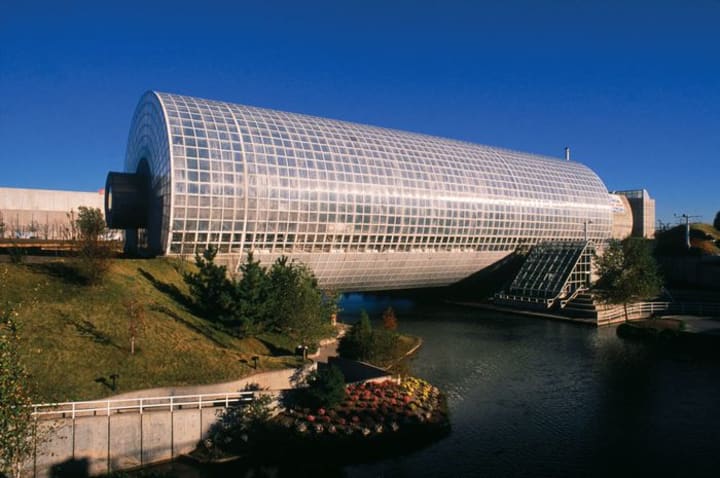
After oil was discovered within city limits in 1928 Oklahoma City became the center of oil production. The development of the city was helped along when the Myriad Gardens and Crystal Bridge, a botanical garden and modernistic conservatory were built in the heart of the city.
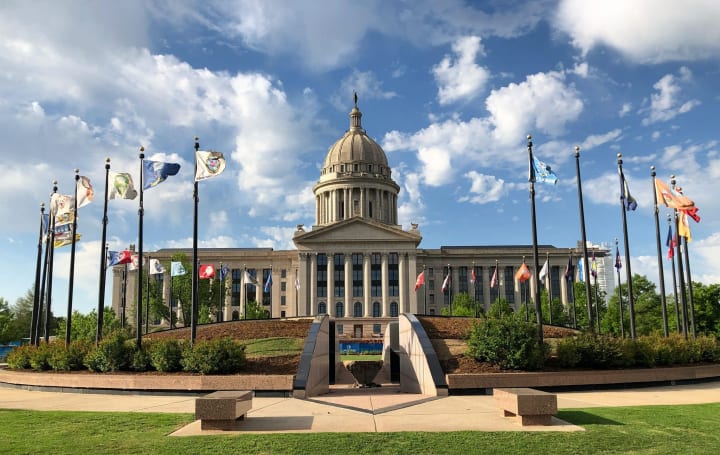
Oklahoma State Capitol
In 1995 Oklahoma City suffered tragedy and loss when a bomb was set off in front of the Murrah Building. The building was destroyed as well as over 100 nearby buildings were damaged and 168 people were killed. Today the site is home to the Oklahoma City National Memorial and Museum which opened in 2000. More than 3 million people have visited since. Every year on April 19, survivors, friends, and family come to the memorial to read the names of every victim lost.
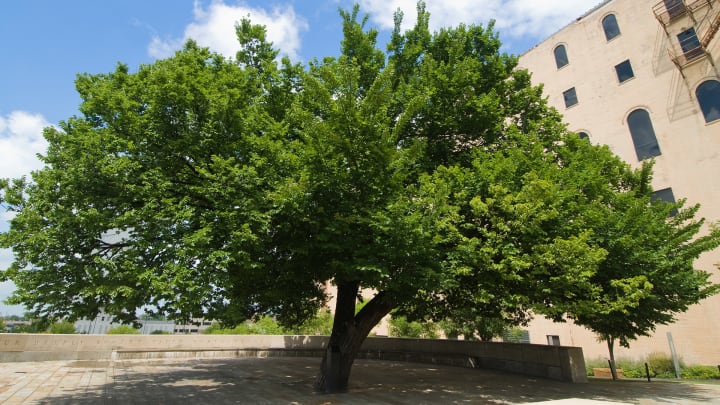
An interesting part of this site is the Survivor Tree, an American elm that survived the attack.
Name of City Derived from Semitic Words
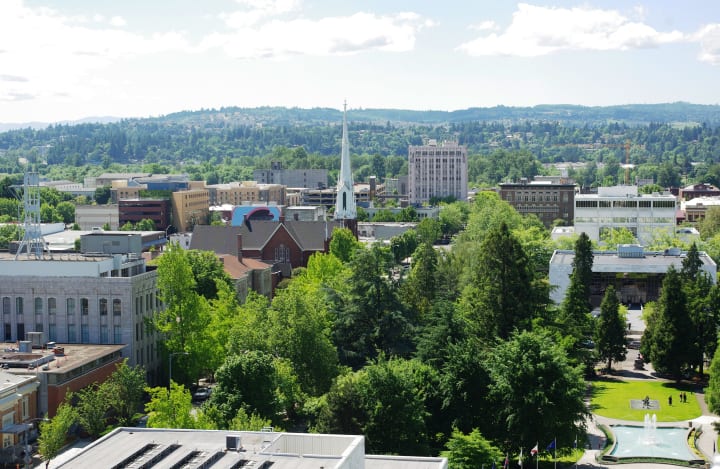
The area where today you can find the capital of Oregon, Salem was occupied by Native Indians who called the area Chemeketa, meaning “meeting or resting place”. Some thought the settlement should have the Indian name but it was changed to Salem. The name Salem is derived from the Semitic words – Arabic salam and Hebrew shalom, meaning peace.
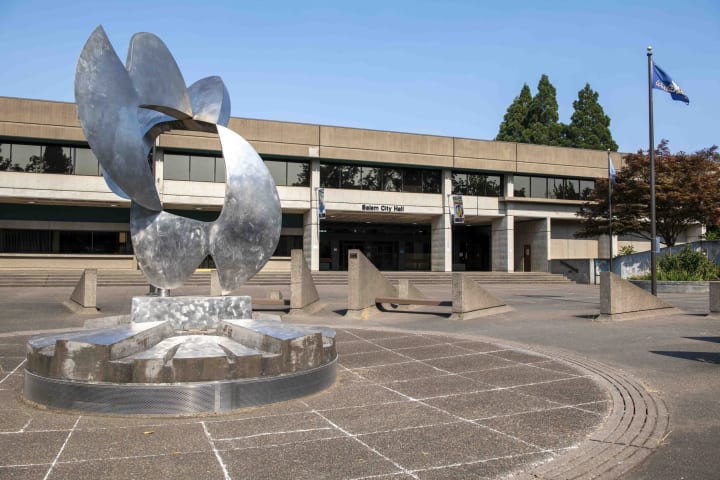
Today in Salem there is a public space known as Peace Plaza which recognizes the names by which this city is known. Strangely enough, it is thought that Salem is the original name of Jerusalem used in the Book of Genesis in the Bible.
Europeans began arriving in 1812 and the first permanent American settlement was just north of Salem and known as Wheatland. In 1851 Salem became the territorial capital and was incorporated in 1857. It became the permanent capital in 1859. It was chosen to be the permanent site of the Oregon State Fair in 1961. Since it was important for the local cherry growing industry it got the nickname “Cherry City”. The first cherry festival was held in 1903 and became an annual event.
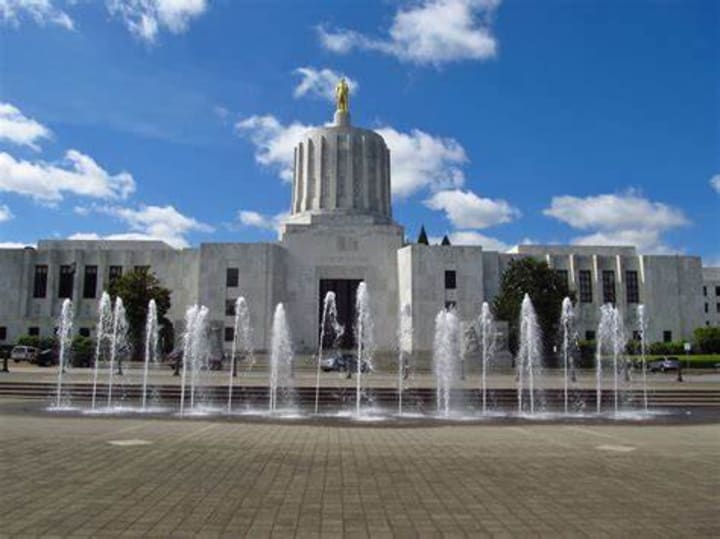
Today visitors enjoy seeing the domed Oregon State Capitol surrounded by a park with gardens, The Hallie Ford Museum of Art with artwork by Pacific Northwest and Native Indian artists, The Willamette Heritage Center, and the Bush House Museum.
Capital By the Susquehanna River
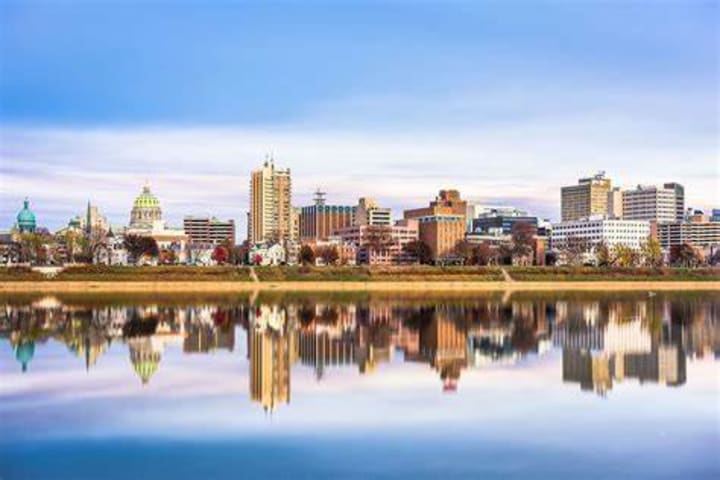
The area around Harrisburg is thought to have been inhabited by Native Americans as early as 3000 B.C. They call this area “Peixtin” or “Paxtang”. It was an important place and crossroads for Native American traders. The first European to arrive here was the Englishman Captain John Smith, who traveled up the Susquehanna to visit with the Susquehanna tribe in 1608. John Harris, Sr. an English trader settled here in 1719. He helped lay out a town he called Harrisburg and it became the capital of Pennsylvania in 1812.
The city became an important stopping point along the Underground Railroad with slaves being transported across the Susquehanna River. The first national convention of the Whig Party of the U.S. was held in Harrisburg. In the 1830s the city became part of the Pennsylvania canal system and an important railroad center. The Pennsylvania Steel Company opened its plant in nearby Steelton in 1866 and it was the first such plant in the country.
Harrisburg became a significant training center for the Union Army during the Civil War. Since this was a major rail center for the Union it became a target for General Robert E. Lee, who attempted to capture the city.
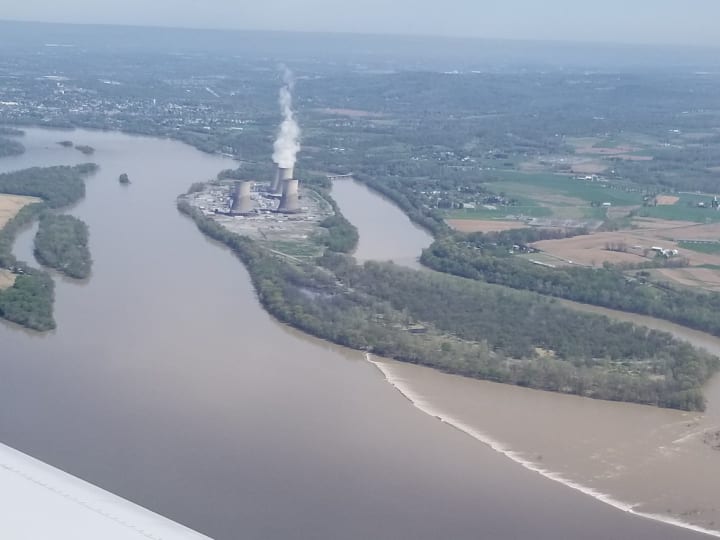
On March 28, 1979, the Three Mile Island nuclear plant, along the Susquehanna River located south of Harrisburg suffered a partial meltdown. Within days of the accident, 140,000 people had fled the area. For some time Harrisburg suffered economically. Soon economic improvements were being made and many office buildings and residences were built.
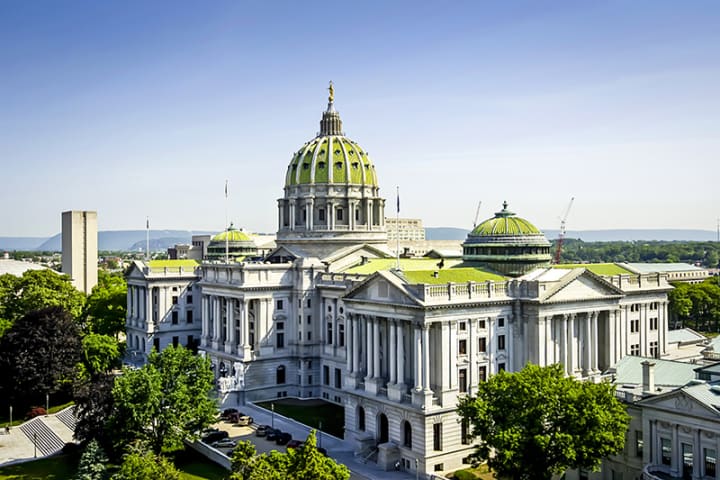
Pennsylvania State Capitol
Today tourists visit the capital to see the National Civil War Museum, the State Museum of Pennsylvania, and Hersheypark, just east of the city, which is a chocolate-themed park with many different rides.
About the Creator
Rasma Raisters
My passions are writing and creating poetry. I write for several sites online and have four themed blogs on Wordpress. Please follow me on Twitter.
Keep reading
More stories from Rasma Raisters and writers in History and other communities.
US Capital History North Carolina, North Dakota, and Ohio
Named for Sir Walter Raleigh In 1788 the city of Raleigh was chosen to be the capital of North Carolina. It was named for Sir Walter Raleigh, who was the sponsor of the Colony of Roanoke. Known as the “Lost Colony”, it has been commemorated at the Fort Raleigh National Historic Site on Roanoke Island.
By Rasma Raistersabout a year ago in History
A Story of the World
The history of the world is the longest story ever told—a vast journey that began long before written words, long before cities, and even before humans themselves. It is a story shaped by nature, driven by curiosity, and transformed by ideas, power, faith, and struggle. The Dawn of Life and Early Humanity Billions of years ago, the Earth was a violent and restless place. Volcanoes erupted, oceans formed, and the first simple life appeared in the seas. Over immense stretches of time, life evolved from single-celled organisms into complex plants and animals. Eventually, a branch of primates learned to walk upright, use tools, and think beyond survival. These were the early humans. For tens of thousands of years, humans lived as hunters and gatherers. They followed animals, gathered plants, and learned to cooperate in small groups. Fire changed everything—it provided warmth, protection, and a way to cook food. Language allowed ideas to pass from one generation to the next. Slowly, humans spread across continents, adapting to deserts, forests, mountains, and ice. The Agricultural Revolution and the First Civilizations Around 10,000 years ago, a turning point arrived: agriculture. Humans learned to grow crops and domesticate animals. This allowed them to settle in one place, build villages, and increase their population. Farming began independently in regions such as Mesopotamia, the Indus Valley, China, Egypt, and Mesoamerica. With settled life came civilization. Cities rose near rivers that provided water and fertile soil. Governments formed to organize labor and protect land. Writing was invented to record trade, laws, and stories. The first legal codes appeared, such as the Code of Hammurabi, which tried to define justice. Religion became organized, explaining the mysteries of life and death and giving meaning to human existence. Empires, Power, and Belief As civilizations grew, so did conflict. Powerful kingdoms expanded into empires through conquest and control. The Egyptian, Persian, Greek, Roman, Mauryan, and Han empires shaped large parts of the ancient world. Roads, armies, taxes, and laws connected millions of people under a single rule. Ideas traveled along with armies and traders. Greek thinkers explored philosophy, science, and democracy. In India and China, deep philosophies like Hinduism, Buddhism, Confucianism, and Taoism offered guidance on morality and harmony. In the Middle East, monotheistic faiths emerged, teaching belief in one God and emphasizing justice and compassion. The Roman Empire became a bridge between ancient and modern worlds. It spread law, engineering, and language across Europe and the Mediterranean. Yet no empire lasts forever. Over time, internal weakness, economic strain, and outside pressures caused great empires to fall. The Middle Ages and the Flow of Knowledge After the fall of Rome in the West, Europe entered a period often called the Middle Ages. Power was divided among kings, nobles, and the Church. Life was difficult for many, but this era was not without progress. Universities formed, architecture flourished, and faith shaped daily life. Meanwhile, the Islamic world experienced a golden age. Scholars preserved and expanded knowledge in mathematics, medicine, astronomy, and philosophy. Cities like Baghdad and Cordoba became centers of learning, where ideas from Greece, India, and Persia were studied and improved. Trade routes connected Asia, Africa, and Europe, allowing goods and cultures to mix. In Asia, powerful dynasties ruled China, advancing technology such as paper, printing, gunpowder, and the compass. These inventions would later transform the world. The Renaissance and the Age of Exploration Around the 14th century, a rebirth of learning began in Europe: the Renaissance. Artists, scientists, and thinkers looked back to classical knowledge while pushing forward with new ideas. Figures like Leonardo da Vinci and Galileo challenged old beliefs and celebrated human potential. At the same time, explorers set sail across unknown oceans. The Age of Exploration connected the world as never before. Europeans reached the Americas, Africa, and Asia, creating global trade networks. This brought wealth and knowledge—but also suffering. Indigenous civilizations were destroyed, millions were enslaved, and colonial empires rose through exploitation. Revolutions and the Modern World The 18th and 19th centuries were ages of revolution. Political revolutions in America and France challenged absolute monarchy and promoted ideas of liberty, equality, and rights. The Industrial Revolution transformed economies, as machines replaced manual labor and cities grew rapidly. Life improved for some, but workers often faced harsh conditions. New ideologies emerged—capitalism, socialism, nationalism—each offering different visions of society. Nations formed and competed, leading to global conflicts. The 20th century witnessed two devastating world wars that reshaped borders and shattered illusions of progress. Yet from the ruins came international cooperation, technological leaps, and movements for independence and civil rights. The World Today and Beyond In recent decades, technology has accelerated history. Computers, the internet, and artificial intelligence have changed how humans communicate, learn, and work. Globalization has connected economies and cultures, while also creating new challenges. Climate change, inequality, and conflict remind humanity that progress is fragile. The history of the world is not just a record of kings and wars—it is the story of ordinary people: farmers, thinkers, builders, dreamers. It is a story of mistakes and lessons, destruction and hope. Each generation inherits this long journey and adds its own chapter. The future remains unwritten. Like those who came before, humanity stands at a crossroads—guided by the past, tested in the present, and responsible for what comes next.
By The best writer a day ago in History
How to Succeed at the Benson Directory®
Congratulations and welcome to the Benson Directory® employee #22391! As our newest call handler, you will have the privilege of speaking with dozens of unique and interesting people on a daily basis as well as the opportunity to earn bonuses for high performance. Contained within this handbook you will find a set of ease to follow instructions designed to help you settle in to your new role and begin paving the way to success.
By S. A. Crawford4 days ago in Fiction


Comments (1)
There is a lot about American history that we don't really appreciate. Excellent article.