
US Capital History North Carolina, North Dakota, and Ohio
The history of Raleigh, Bismark, and Columbus

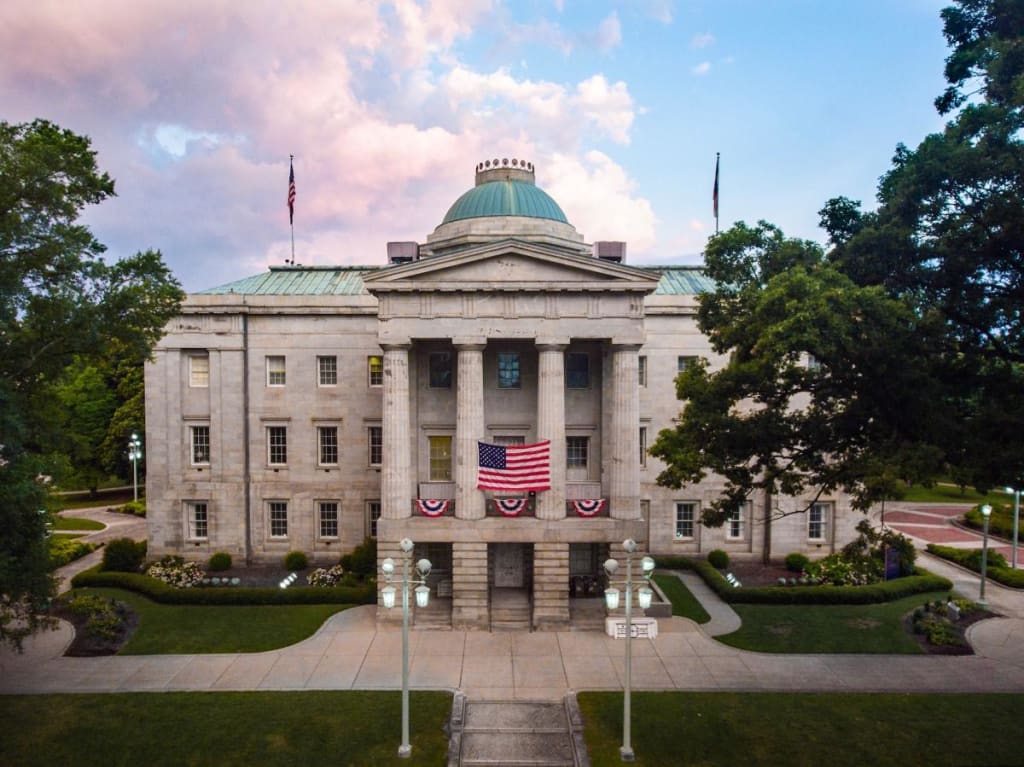
Named for Sir Walter Raleigh
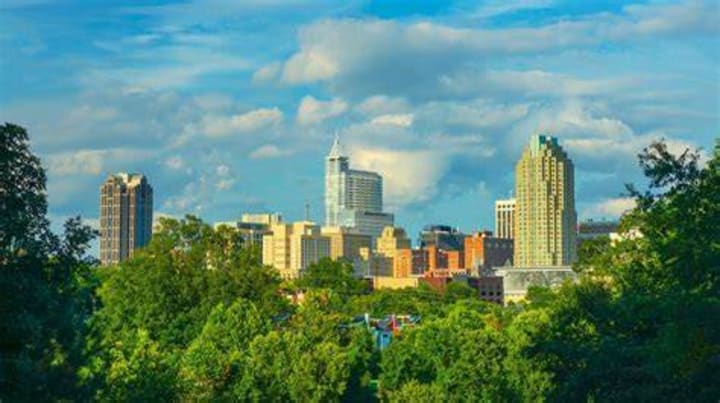
In 1788 the city of Raleigh was chosen to be the capital of North Carolina. It was named for Sir Walter Raleigh, who was the sponsor of the Colony of Roanoke. Known as the “Lost Colony”, it has been commemorated at the Fort Raleigh National Historic Site on Roanoke Island.
The location of the city was chosen because it was within eleven miles of Isaac Hunter’s Tavern which was a popular tavern, frequented by the state legislators. Raleigh is one of the few cities in the U.S. that was planned and specifically built to serve as a state capital. It was designed axially, with four public squares and one central square.
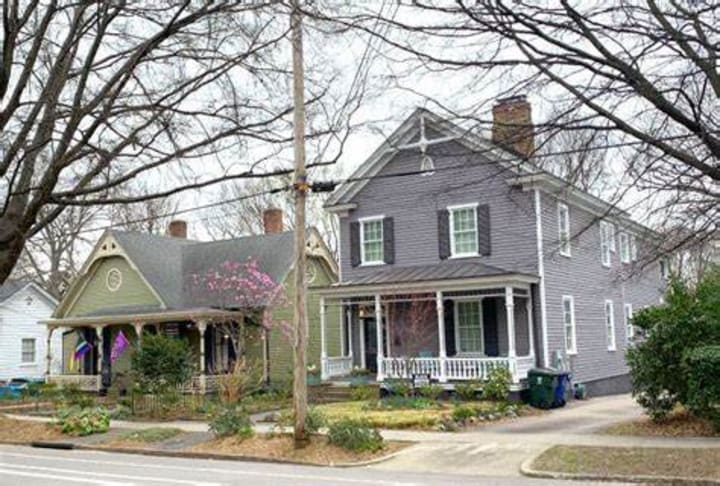
Raleigh’s Historic Oakwood still has many houses from the 1800s. The city grew and expanded through the first half of the 21st century. In 2006 the city’s NHL franchise, the Carolina Hurricanes won the Stanley Cup, North Carolina’s first professional sports championship. In 2011 the city hosted the National Hockey League All-Star Game.
Among the things that draw tourists is the North Carolina State Capitol, a 19th-century Greek Revival-style building with a statue of the 1st U.S. President George Washington dressed as a Roman general in its rotunda.
A Capital Named After a German Chancellor
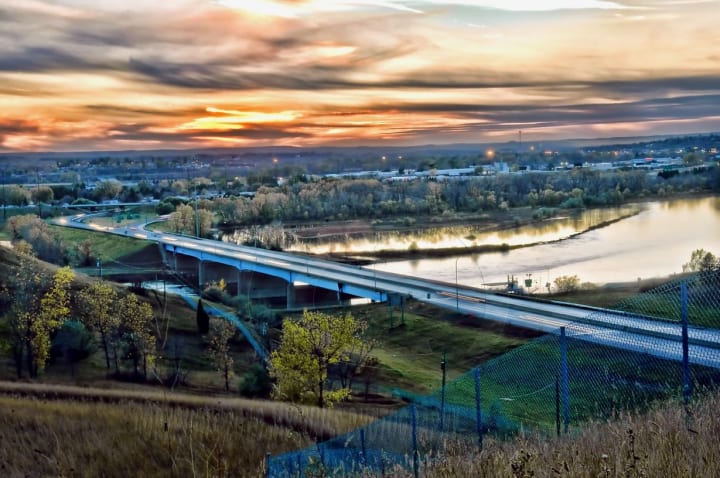
The region that became what today is known as central North Dakota was once inhabited by the Mandan people. The city that would become Bismarck started at a place called Missouri Crossing.
When the city was founded in 1872 it was given the name Edwington, in honor of Edwin Ferry Johnson who was a civil engineer working for the Northern Pacific Railway.
In 1873 the Northern Pacific Railway changed the name of the city to Bismarck, after the German chancellor Otto von Bismarck, to attract German investment.
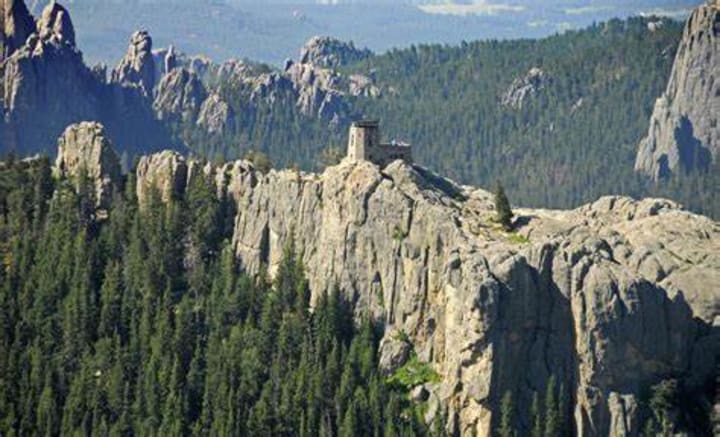
The city began a period of growth in 1874 when gold was discovered in the Black Hills. Bismarck became the capital of North Dakota in 1889. The city sits on the eastern bank of the Missouri River.
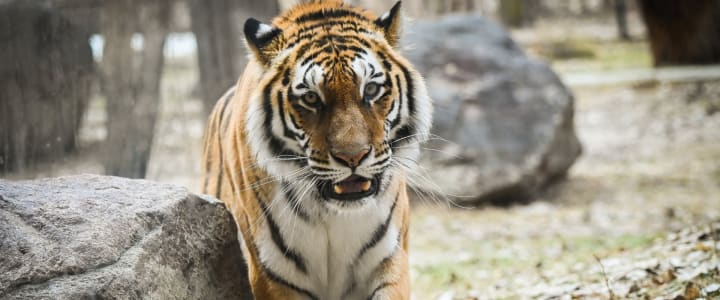
There are many things to do and see in Bismarck today. One of them is The Dakota Zoo located by the Missouri River and is home to grizzly bears and endangered Bengal tigers.
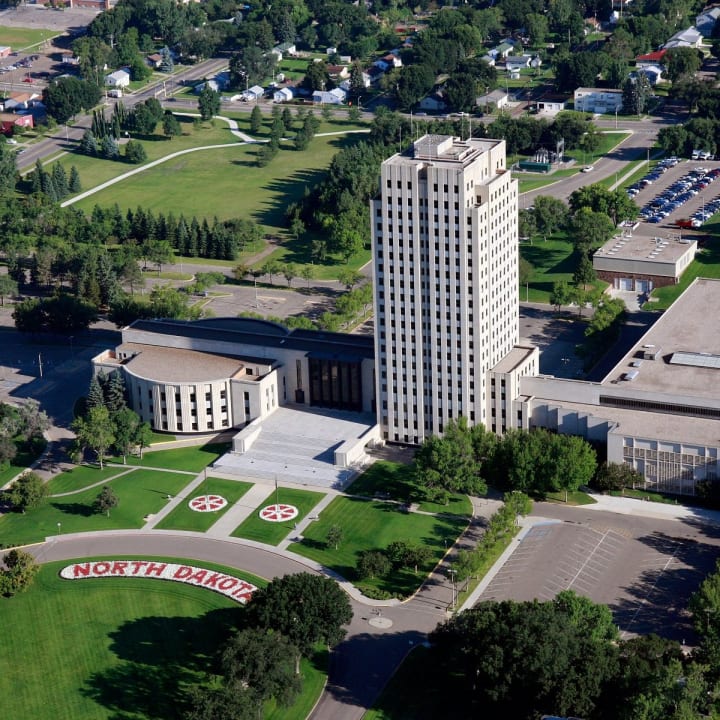
North Dakota State Capitol
A Capital Named in Honor of Christopher Columbus
Mound Street in today’s downtown Columbus was so named because it was close to a large Native American burial mound. Other relics could be seen as well but the ancient civilizations had moved on by the time the European explorers started moving into the region south of Lake Erie. There were many different Native Indian tribes in the area.
By February 10, 1816, the Borough of Columbus was officially established and Columbus was founded in 1812, named in honor of Christopher Columbus. The National Railroad reached Columbus in 1831 and on the outskirts of the city European immigrants settled. In the north were Irish and Germans in the south. The German population built many breweries, the Trinity Lutheran Seminary, and Capital University.
During the Civil War, Columbus was a major base for the volunteer Union Army with 26,000 troops and 9,000 Confederate prisoners of war at Camp Chase. Today this is the Hilltop neighborhood of West Columbus. By the end of the 19th century, Columbus was known as the “Buggy Capital of the World”. Two organizations founded here were the American Federation of Labor and the United Mine Workers of America.
In 1908 The Columbus Experiment was an internationally recognized environmental project, which was the start of the construction of the first water plant in the world. It was designed and invented by the Hoover brothers. In the 20th century, Columbus was nicknamed “The Arch City” because of the many wooden arches that spanned High Street. These arches illuminated the thoroughfare and became how electric power was provided to the new streetcars.
Due to a devastating flood on March 25, 1913, which left thousands of residents homeless and flooded neighborhoods, leaving more than ninety people dead the Army Corps of Engineers decided to widen the Scioto River. New bridges and a retaining wall were built along the banks. Many new buildings started going up in 1he 1920s including the massive Ohio Stadium. WW II brought new jobs to the city. In 1948 the Town and Country Shopping Center opened in suburban Whitehall and today is noted as being one of the first modern shopping centers in the U.S.
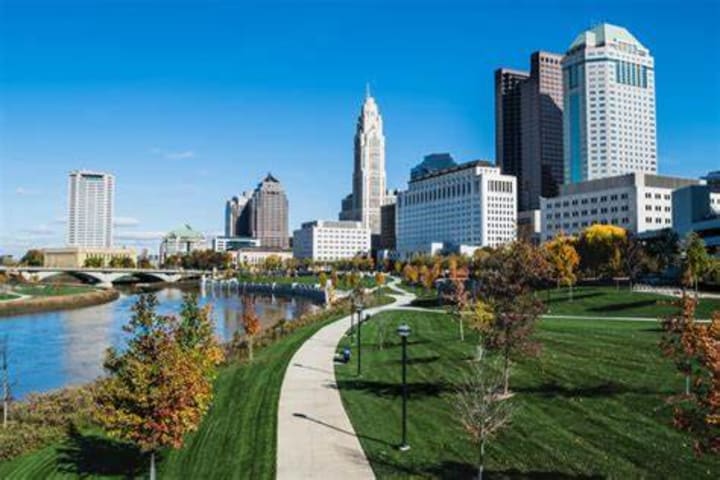
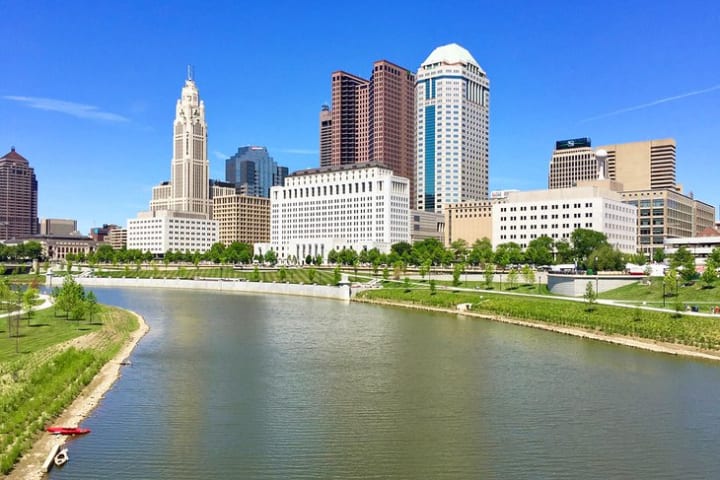
The 1970s saw more construction which included the Greater Columbus Convention Center and brought in major conventions and trade shows to the city. The Scioto Mile is a showcase park along the riverfront.
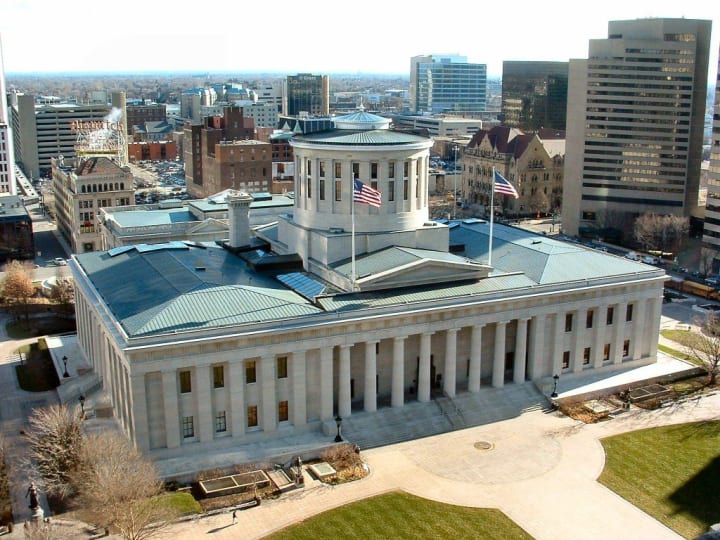
Ohio State Capitol
About the Creator
Rasma Raisters
My passions are writing and creating poetry. I write for several sites online and have four themed blogs on Wordpress. Please follow me on Twitter.
Keep reading
More stories from Rasma Raisters and writers in History and other communities.
US Capital History New Jersey, New Mexico, and New York
Site of George Washington's First Victory During the War of Independence, the site where Trenton stands was the place of George Wahington's first victory over the Redcoats. The city is the namesake of William Trent, one of the leading landowners and it was first known as Trent-towne later shortened to Trenton.
By Rasma Raistersabout a year ago in History
Firoun: The Tyrant Who Defied God
Firoun, known to history as Pharaoh, was not just a king—he was a symbol of absolute power. He ruled over ancient Egypt at a time when the Nile flowed generously, the granaries were full, and massive stone monuments rose toward the sky. To his people, Firoun appeared invincible. To himself, he was more than human.
By The best writer 4 days ago in History


Comments (1)
beautiful written thanks