
A Story of the World
From the First Sparks of Life to the Modern Age


The history of the world is the longest story ever told—a vast journey that began long before written words, long before cities, and even before humans themselves. It is a story shaped by nature, driven by curiosity, and transformed by ideas, power, faith, and struggle.
The Dawn of Life and Early Humanity
Billions of years ago, the Earth was a violent and restless place. Volcanoes erupted, oceans formed, and the first simple life appeared in the seas. Over immense stretches of time, life evolved from single-celled organisms into complex plants and animals. Eventually, a branch of primates learned to walk upright, use tools, and think beyond survival. These were the early humans.
For tens of thousands of years, humans lived as hunters and gatherers. They followed animals, gathered plants, and learned to cooperate in small groups. Fire changed everything—it provided warmth, protection, and a way to cook food. Language allowed ideas to pass from one generation to the next. Slowly, humans spread across continents, adapting to deserts, forests, mountains, and ice.
The Agricultural Revolution and the First Civilizations
Around 10,000 years ago, a turning point arrived: agriculture. Humans learned to grow crops and domesticate animals. This allowed them to settle in one place, build villages, and increase their population. Farming began independently in regions such as Mesopotamia, the Indus Valley, China, Egypt, and Mesoamerica.
With settled life came civilization. Cities rose near rivers that provided water and fertile soil. Governments formed to organize labor and protect land. Writing was invented to record trade, laws, and stories. The first legal codes appeared, such as the Code of Hammurabi, which tried to define justice. Religion became organized, explaining the mysteries of life and death and giving meaning to human existence.
Empires, Power, and Belief
As civilizations grew, so did conflict. Powerful kingdoms expanded into empires through conquest and control. The Egyptian, Persian, Greek, Roman, Mauryan, and Han empires shaped large parts of the ancient world. Roads, armies, taxes, and laws connected millions of people under a single rule.
Ideas traveled along with armies and traders. Greek thinkers explored philosophy, science, and democracy. In India and China, deep philosophies like Hinduism, Buddhism, Confucianism, and Taoism offered guidance on morality and harmony. In the Middle East, monotheistic faiths emerged, teaching belief in one God and emphasizing justice and compassion.
The Roman Empire became a bridge between ancient and modern worlds. It spread law, engineering, and language across Europe and the Mediterranean. Yet no empire lasts forever. Over time, internal weakness, economic strain, and outside pressures caused great empires to fall.
The Middle Ages and the Flow of Knowledge
After the fall of Rome in the West, Europe entered a period often called the Middle Ages. Power was divided among kings, nobles, and the Church. Life was difficult for many, but this era was not without progress. Universities formed, architecture flourished, and faith shaped daily life.
Meanwhile, the Islamic world experienced a golden age. Scholars preserved and expanded knowledge in mathematics, medicine, astronomy, and philosophy. Cities like Baghdad and Cordoba became centers of learning, where ideas from Greece, India, and Persia were studied and improved. Trade routes connected Asia, Africa, and Europe, allowing goods and cultures to mix.
In Asia, powerful dynasties ruled China, advancing technology such as paper, printing, gunpowder, and the compass. These inventions would later transform the world.
The Renaissance and the Age of Exploration
Around the 14th century, a rebirth of learning began in Europe: the Renaissance. Artists, scientists, and thinkers looked back to classical knowledge while pushing forward with new ideas. Figures like Leonardo da Vinci and Galileo challenged old beliefs and celebrated human potential.
At the same time, explorers set sail across unknown oceans. The Age of Exploration connected the world as never before. Europeans reached the Americas, Africa, and Asia, creating global trade networks. This brought wealth and knowledge—but also suffering. Indigenous civilizations were destroyed, millions were enslaved, and colonial empires rose through exploitation.
Revolutions and the Modern World
The 18th and 19th centuries were ages of revolution. Political revolutions in America and France challenged absolute monarchy and promoted ideas of liberty, equality, and rights. The Industrial Revolution transformed economies, as machines replaced manual labor and cities grew rapidly. Life improved for some, but workers often faced harsh conditions.
New ideologies emerged—capitalism, socialism, nationalism—each offering different visions of society. Nations formed and competed, leading to global conflicts. The 20th century witnessed two devastating world wars that reshaped borders and shattered illusions of progress. Yet from the ruins came international cooperation, technological leaps, and movements for independence and civil rights.
The World Today and Beyond
In recent decades, technology has accelerated history. Computers, the internet, and artificial intelligence have changed how humans communicate, learn, and work. Globalization has connected economies and cultures, while also creating new challenges. Climate change, inequality, and conflict remind humanity that progress is fragile.
The history of the world is not just a record of kings and wars—it is the story of ordinary people: farmers, thinkers, builders, dreamers. It is a story of mistakes and lessons, destruction and hope. Each generation inherits this long journey and adds its own chapter.
The future remains unwritten. Like those who came before, humanity stands at a crossroads—guided by the past, tested in the present, and responsible for what comes next.
About the Creator
The best writer
I’m a passionate writer who believes words have the power to inspire, heal, and challenge perspectives. On Vocal, I share stories, reflections, and creative pieces that explore real emotions, human experiences, and meaningful ideas.
Keep reading
More stories from The best writer and writers in History and other communities.
Bill Gates — The Architect of the Digital Age
Bill Gates is one of the most influential figures in modern history, a man whose vision helped shape the digital world and whose later life has been devoted to tackling some of humanity’s greatest challenges. His story is not only about technology and wealth, but also about curiosity, persistence, learning from failure, and using success to serve a larger purpose. Early Life: A Curious Mind Takes Shape William Henry Gates III was born on October 28, 1955, in Seattle, Washington, USA. He grew up in a well-educated and supportive family. His father, William H. Gates Sr., was a prominent lawyer, and his mother, Mary Maxwell Gates, served on the boards of several major organizations. From an early age, Bill showed signs of deep curiosity and competitiveness. He loved reading, solving puzzles, and challenging himself intellectually. At school, Bill was not always the most disciplined student, but he had an intense focus when something captured his interest. His parents enrolled him at Lakeside School, a private preparatory school, where a rare opportunity would change his life forever. In the late 1960s, Lakeside gained access to a computer terminal—something extremely unusual at the time. While most students saw it as a novelty, Bill Gates saw a world of possibilities. Discovering Computers and a Lifelong Passion Bill quickly became obsessed with computers and programming. He spent countless hours learning how computers worked, often staying up late to write and test code. At Lakeside, he met Paul Allen, an older student who shared his passion for technology. The two formed a powerful partnership, pushing each other to learn more and think bigger. They began writing programs not just for fun, but for real-world use. One of their early projects was a scheduling system for the school. Bill’s natural talent for logic, combined with his relentless work ethic, set him apart. He didn’t just want to understand computers—he wanted to master them. Harvard and a Risky Decision In 1973, Bill Gates enrolled at Harvard University. Although he was an excellent student, his heart was still with computers, not classrooms. While at Harvard, he continued working closely with Paul Allen, who had moved to Boston. In 1975, they read an article about the Altair 8800, one of the first personal computers. Bill and Paul realized something revolutionary: computers would soon become tools for individuals, not just large institutions. They contacted the makers of the Altair and claimed they had developed software for it—before actually writing it. Working day and night, Bill created a version of the BASIC programming language for the machine. It worked, and this success became the foundation of a new company. At just 19 years old, Bill Gates made a bold decision. He dropped out of Harvard to start Microsoft with Paul Allen. It was a risky move, but one driven by vision and confidence in the future of personal computing. Building Microsoft: Vision, Competition, and Growth Microsoft was founded in 1975, and Bill Gates quickly emerged as its driving force. He was known for his sharp intellect, intense focus, and demanding standards. Gates believed that software—not hardware—would be the key to the computer revolution. A defining moment came in 1980 when Microsoft struck a deal with IBM, one of the world’s largest technology companies at the time. Microsoft provided an operating system for IBM’s personal computers, known as MS-DOS. Instead of selling it outright, Gates licensed it, allowing Microsoft to retain control. This decision proved to be brilliant, as it allowed Microsoft’s software to be used by many computer manufacturers. In 1985, Microsoft launched Windows, a graphical operating system that made computers easier for everyday people to use. Over time, Windows became the dominant operating system worldwide. Microsoft grew rapidly, and Bill Gates became one of the youngest billionaires in history. Leadership Style and Challenges Bill Gates was known as a tough leader. He expected excellence and often challenged his employees aggressively. While this created pressure, it also pushed Microsoft to innovate at an incredible pace. Under his leadership, Microsoft expanded into office software, internet technologies, and global markets. However, success brought controversy. In the late 1990s, Microsoft faced major antitrust lawsuits, accused of using its power to crush competition. The legal battles were intense and damaged the company’s public image. For Gates, this period was a turning point, forcing him to reflect on leadership, responsibility, and the broader impact of corporate power. Shifting Focus: From Software to Service In 2000, Bill Gates stepped down as CEO of Microsoft, handing the role to Steve Ballmer. Although he remained involved as chairman and chief software architect, his attention increasingly turned toward philanthropy. Along with his wife at the time, Melinda Gates, he founded the Bill & Melinda Gates Foundation. The foundation focused on global health, education, and poverty reduction. Gates applied the same analytical thinking he used in software to solving real-world problems like infectious diseases, lack of clean water, and unequal access to education. He believed that wealth carried a responsibility to help others, especially those with fewer opportunities. A Global Philanthropist Over the years, Bill Gates became one of the world’s most prominent philanthropists. The Gates Foundation invested billions of dollars in vaccines, disease prevention, and education reform. Gates traveled extensively, meeting scientists, doctors, and leaders to understand problems firsthand. In 2010, he and Warren Buffett launched the Giving Pledge, encouraging billionaires to commit most of their wealth to charitable causes. Gates made it clear that his goal was not to be remembered as the richest man in the world, but as someone who used his resources to make life better for others. Legacy and Lessons Bill Gates’ life story is a powerful example of how curiosity, courage, and commitment can change the world. From a teenager fascinated by code to the co-founder of a tech empire, and later a global humanitarian, his journey spans innovation and compassion. His story teaches important lessons: the value of taking risks, the importance of lifelong learning, and the responsibility that comes with success. Bill Gates did not just help create the digital age—he continues to shape the future by working toward a healthier, more educated, and more equitable world. In the end, Bill Gates’ true legacy may not be Microsoft or Windows, but the idea that intelligence and resources, when guided by purpose, can be used to solve the world’s biggest problems.
By The best writer about 6 hours ago in History
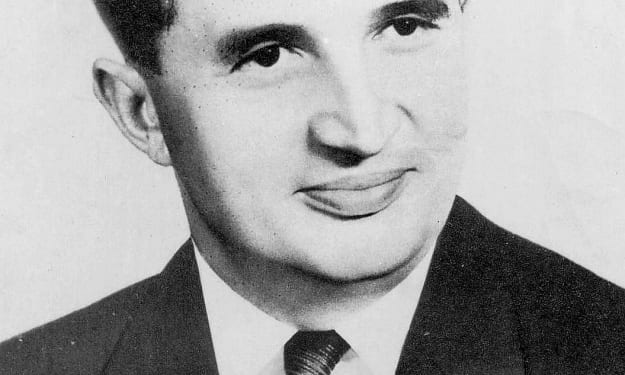
The Rise and Fall of Nicolae Ceaușescu
Nicolae Ceaușescu’s rise to power was initially marked by promise, even optimism. Born in 1918 into a poor peasant family, he entered politics early, shaped by the ideological rigidity of interwar and wartime communism. When he became General Secretary of the Romanian Communist Party in 1965, following the death of Gheorghe Gheorghiu-Dej, many Romanians saw in him a younger leader, one who might soften the harsh Stalinist legacy that had defined the previous decades. For a society weary of repression and deprivation, Ceaușescu appeared to embody the possibility of cautious change.
By Pure child3 days ago in History
A woman from a vanished female dynasty was discovered buried with 270,000 beads.
In a Copper Age tomb close to Seville, Spain, the Montelirio bead assemblage contains over 270,000 beads that identify the ladies buried there as elites. The discovery is the biggest collection of beads ever
By Francis Dami5 days ago in History



Comments
There are no comments for this story
Be the first to respond and start the conversation.