
Unveiling Nigeria’s Ancient Kingdoms
Part 1: The Rise of Early Nigerian States and the Yoruba Kingdoms

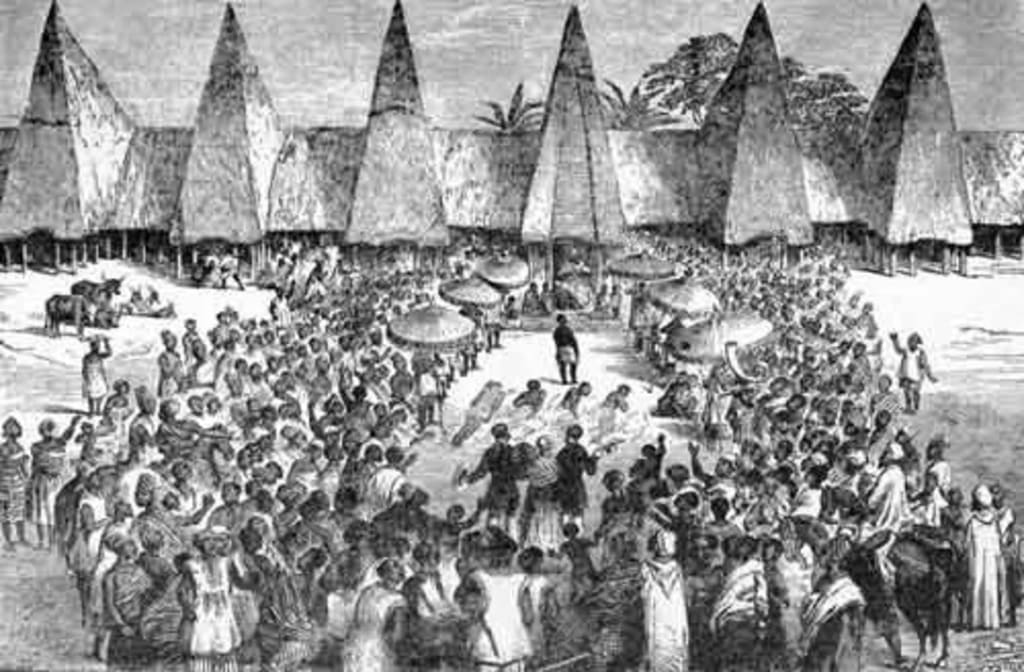
Before the year 1500, the lands we now know as Nigeria were a rich collection of states, a vibrant patchwork reflecting the ethnic groups that still exist today. These early states gave birth to the Yoruba kingdoms, the regal Edo Kingdom of Benin, the bustling Hausa cities, and the beautiful land of Nupe.
Small states scattered to the west and south of Lake Chad were swallowed up or displaced by the burgeoning power of Kanem, a kingdom nestled to the northeast of Lake Chad. Borno, once just the western province of Kanem, proudly declared independence in the late 14th century. We’ve heard whispers of other states too, lost in the mists of time due to the absence of archaeological data and reliance on oral traditions.
Now, let’s stroll through the Yoruba kingdoms and Benin, where the Yoruba people have long held sway on the west bank of the Niger. This dynamic group has a diverse origin, a melting pot of migrant waves who over time wove together a shared language and culture. The Yoruba's humble beginnings were in agriculture-based village communities organized along patrilineal descent lines. But around the 11th century A.D., something remarkable happened: neighboring village compounds known as Ile began merging to form territorial city-states.
Loyalties to the clan took a back seat to allegiance to a dynastic chieftain, giving birth to a thriving urbanized society pulsating with artistic achievements. Terracotta and ivory sculptures, intricate metal castings at Ife, and an array of bronze and brass artifacts crafted by Yoruba artisans grace this cultural landscape.
Belief systems flourished in the Yoruba realms, presided over by a divine entity, a Lauren, and a host of minor deities entrusted with cosmic and practical roles. Among them, Oduduwa was revered as the creator of the earth and the forefather of the Yoruba kings. According to Yoruba mythos, Oduduwa founded the city of Ife and sent his sons to establish other cities where they reigned as priest-kings and directed cult rituals.
These myths have been seen as metaphorical narratives of the historical process through which Ife’s ruling dynasty exerted its influence over Yoruba land. The stories seek to legitimize the Yoruba monarchies by attributing them divine origins. Ife was the beating heart of over 400 religious cults, and the Oni cleverly used these traditions to strengthen his political standing during the kingdom’s golden era. Ife stood as a bustling hub of a vast trading network extending to the north. The Oni sustained his court through trade tolls, tributes from dependencies, and tithes collected as a religious leader. Ife’s most enduring legacy to modern Nigeria is its exquisite sculpture associated with this vibrant tradition.
The Oni, the ruler of the land, was chosen from the expansive branches of the ruling dynasty, a clan that boasted thousands of members. Once chosen, the Oni would retreat into the seclusion of the palace compound, forever hidden from the view of his people. Below him, palace officials, town chiefs, and rulers of external dependencies kept the kingdom running smoothly. These officials acted as the voice of the Oni and rulers of dependent territories, all of whom had their own chain of command.
Every office, including the Oni’s, required widespread community support. Officials were picked from clan members with a hereditary right to hold office. Members of the royal lineage were often tasked with governing dependencies, while the sons of palace officials took on secondary roles.
In the 15th century, Ife’s political and economic influence was overtaken by Oyo and Benin, although Ife retained its religious significance. The Oni of Ife’s priestly role and the shared origin story played a key part in shaping Yoruba ethnicity. The Oni of Ife held the highest political position recognized not only among the Yoruba but also in Benin, granting Benin’s rulers the symbols of their power.
The model of government established in Ife was adapted in Oyo, where a ruler brought several smaller city-states under his command. A state council, the Oyo Mesi, had the responsibility of choosing the Alaafin (king) from the proposed candidates from the ruling dynasty and acted as a balance to his authority. Unlike the Yoruba kingdoms nestled within the forest, Oyo was a savannah kingdom, gaining its strength from its cavalry forces, allowing it to expand its trade routes farther north.
To the east of Ife, an established agricultural community in the Edo-speaking area became a dependency of Ife in the early 14th century. By the 15th century, it had grown independent, becoming a major trading power. The king, or Oba, guided by a council of six hereditary chiefs, held political and religious power. At its zenith, Benin might have housed 100,000 inhabitants, spreading over 25 square kilometers within three rings of earthworks. The administration of this urban complex was handled by 60 trade guilds, each with its own neighborhood whose members were loyal to the Oba.
Unlike the Yoruba kingdoms, Benin developed a centralized system to manage its growing territories. By the late 15th century, Benin was trading with Portugal and, at its height, it even encompassed parts of southeastern Yoruba land and a small Igbo area on the western bank of the Niger. Dependencies were managed by royal family members scattered throughout the kingdom to prevent any rebellion against the Oba.
From this snapshot, it’s clear that the histories of Yoruba and Benin are entwined, extending even to the west of Nigeria into what is now the Republic of Benin. This relationship persisted both before and after the 1500s.
About the Creator
Balovic
Though I might be late, I never fail to make progress.
A Story of the World
The history of the world is the longest story ever told—a vast journey that began long before written words, long before cities, and even before humans themselves. It is a story shaped by nature, driven by curiosity, and transformed by ideas, power, faith, and struggle. The Dawn of Life and Early Humanity Billions of years ago, the Earth was a violent and restless place. Volcanoes erupted, oceans formed, and the first simple life appeared in the seas. Over immense stretches of time, life evolved from single-celled organisms into complex plants and animals. Eventually, a branch of primates learned to walk upright, use tools, and think beyond survival. These were the early humans. For tens of thousands of years, humans lived as hunters and gatherers. They followed animals, gathered plants, and learned to cooperate in small groups. Fire changed everything—it provided warmth, protection, and a way to cook food. Language allowed ideas to pass from one generation to the next. Slowly, humans spread across continents, adapting to deserts, forests, mountains, and ice. The Agricultural Revolution and the First Civilizations Around 10,000 years ago, a turning point arrived: agriculture. Humans learned to grow crops and domesticate animals. This allowed them to settle in one place, build villages, and increase their population. Farming began independently in regions such as Mesopotamia, the Indus Valley, China, Egypt, and Mesoamerica. With settled life came civilization. Cities rose near rivers that provided water and fertile soil. Governments formed to organize labor and protect land. Writing was invented to record trade, laws, and stories. The first legal codes appeared, such as the Code of Hammurabi, which tried to define justice. Religion became organized, explaining the mysteries of life and death and giving meaning to human existence. Empires, Power, and Belief As civilizations grew, so did conflict. Powerful kingdoms expanded into empires through conquest and control. The Egyptian, Persian, Greek, Roman, Mauryan, and Han empires shaped large parts of the ancient world. Roads, armies, taxes, and laws connected millions of people under a single rule. Ideas traveled along with armies and traders. Greek thinkers explored philosophy, science, and democracy. In India and China, deep philosophies like Hinduism, Buddhism, Confucianism, and Taoism offered guidance on morality and harmony. In the Middle East, monotheistic faiths emerged, teaching belief in one God and emphasizing justice and compassion. The Roman Empire became a bridge between ancient and modern worlds. It spread law, engineering, and language across Europe and the Mediterranean. Yet no empire lasts forever. Over time, internal weakness, economic strain, and outside pressures caused great empires to fall. The Middle Ages and the Flow of Knowledge After the fall of Rome in the West, Europe entered a period often called the Middle Ages. Power was divided among kings, nobles, and the Church. Life was difficult for many, but this era was not without progress. Universities formed, architecture flourished, and faith shaped daily life. Meanwhile, the Islamic world experienced a golden age. Scholars preserved and expanded knowledge in mathematics, medicine, astronomy, and philosophy. Cities like Baghdad and Cordoba became centers of learning, where ideas from Greece, India, and Persia were studied and improved. Trade routes connected Asia, Africa, and Europe, allowing goods and cultures to mix. In Asia, powerful dynasties ruled China, advancing technology such as paper, printing, gunpowder, and the compass. These inventions would later transform the world. The Renaissance and the Age of Exploration Around the 14th century, a rebirth of learning began in Europe: the Renaissance. Artists, scientists, and thinkers looked back to classical knowledge while pushing forward with new ideas. Figures like Leonardo da Vinci and Galileo challenged old beliefs and celebrated human potential. At the same time, explorers set sail across unknown oceans. The Age of Exploration connected the world as never before. Europeans reached the Americas, Africa, and Asia, creating global trade networks. This brought wealth and knowledge—but also suffering. Indigenous civilizations were destroyed, millions were enslaved, and colonial empires rose through exploitation. Revolutions and the Modern World The 18th and 19th centuries were ages of revolution. Political revolutions in America and France challenged absolute monarchy and promoted ideas of liberty, equality, and rights. The Industrial Revolution transformed economies, as machines replaced manual labor and cities grew rapidly. Life improved for some, but workers often faced harsh conditions. New ideologies emerged—capitalism, socialism, nationalism—each offering different visions of society. Nations formed and competed, leading to global conflicts. The 20th century witnessed two devastating world wars that reshaped borders and shattered illusions of progress. Yet from the ruins came international cooperation, technological leaps, and movements for independence and civil rights. The World Today and Beyond In recent decades, technology has accelerated history. Computers, the internet, and artificial intelligence have changed how humans communicate, learn, and work. Globalization has connected economies and cultures, while also creating new challenges. Climate change, inequality, and conflict remind humanity that progress is fragile. The history of the world is not just a record of kings and wars—it is the story of ordinary people: farmers, thinkers, builders, dreamers. It is a story of mistakes and lessons, destruction and hope. Each generation inherits this long journey and adds its own chapter. The future remains unwritten. Like those who came before, humanity stands at a crossroads—guided by the past, tested in the present, and responsible for what comes next.
By The best writer 4 days ago in History




Comments (1)
Liked it. Well done!