
Nigeria's Ancient Kingdom
Part 3: The Prosperity of Kanem-Borno and the Flourishing Hausa City-States

Kanem-Borno’s rise to power is closely tied to the political and religious maneuvers of the Sefawa dynasty, descendants of pastoralists who settled near Lake Chad in the 7th century. The king, or Mai, of Kanem ruled as a constitutional monarch, often in consultation with a council of peers. The kingdom was deeply entrenched in the trans-Saharan trade routes, exchanging goods like slaves, natron, salt, and grain with Egypt and North Africa. This trade not only fortified Kanem-Borno's prosperity but also laid the foundation for its cultural and religious evolution.
Islam became an integral part of Kanem-Borno’s identity by the late 11th century, facilitated by Muslim Berbers and Arabs who began settling in the region. The conversion of Mai Umme to Islam around 1085 marked a significant shift, as Islamic practices took root within the Kanem royal court. Over time, Islam spread throughout Borno society, further solidified by trade links with Egypt and North Africa. Despite frequent dynastic upheavals, the essence of Kanem-Borno endured, evolving into a formidable force that navigated the complexities of dynastic conflicts and trade ambitions.
Kanem-Borno’s prosperity was intertwined with its role in the trans-Sudanic slave trade and the desert trade in salt and livestock. The kingdom was a center of Islamic culture and learning, earning fame for its court and mosques under the scholarly king’s patronage. Despite its political vulnerabilities, Kanem-Borno remained a beacon of Islamic culture and wisdom during this era.
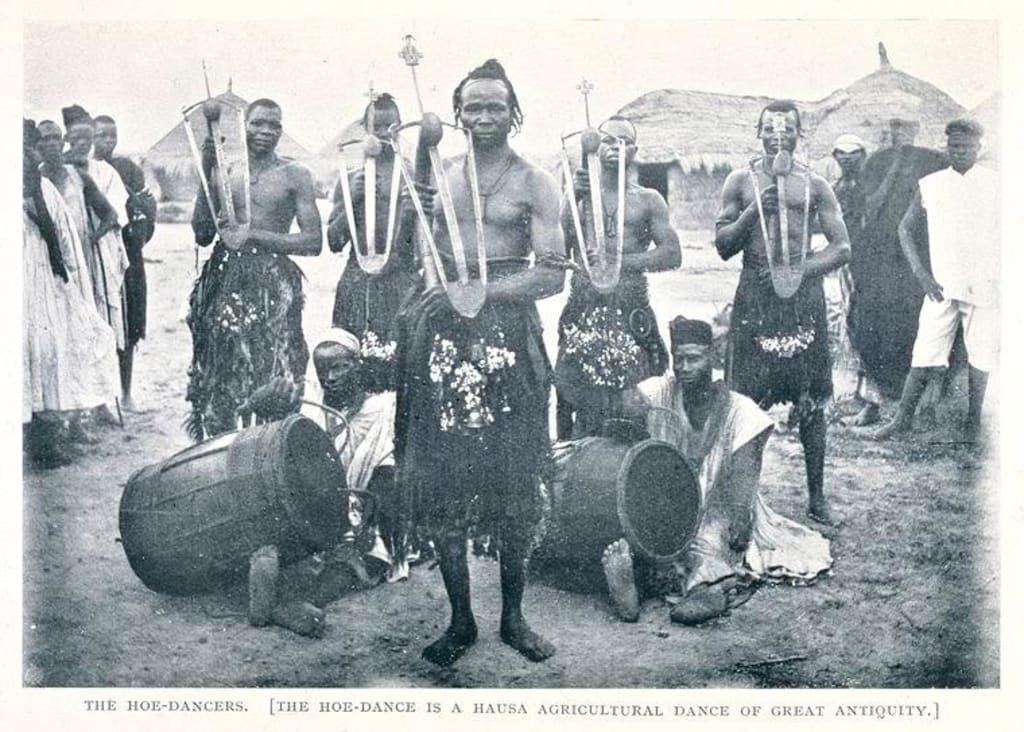
By the 11th century, certain Hausa states like Kano, Katsina, and Gobir transformed into walled towns that flourished as trade hubs. These towns serviced caravans, manufactured cloth and leather goods, and the surrounding farmlands yielded crops like millet, sorghum, sugarcane, and cotton. However, until the 15th century, the Hausa states remained on the fringes of the era’s prominent empires. According to tradition, the Hausa rulers were descendants of Bayajidda, a founding hero of supposed Middle Eastern origins. Surrounded by more potent Sudanic kingdoms, each Hausa state developed unique military, economic, or religious specialties.
The Hausa states coexisted without any single state dominating the others, but the influences of Songhai to the west and Kanem-Borno to the east were palpable. Economic interests, such as capturing slaves or gaining control of pivotal trade routes, were the primary motivators for war. In these Hausa cities, trade was organized through self-regulating guilds that collected taxes and pledged loyalty to the Sarki (king). In return, the king ensured the safety of the guild’s commerce. Thus, the interplay of trade and politics painted a vibrant picture of the northern savanna kingdoms of Nigeria.
Islam found its way into Hausaland through the caravan routes, subtly infusing its teachings into the fabric of the land. The esteemed Kano Chronicle offers a glimpse into this transition, documenting the conversion of Kano’s ruling dynasty under the spiritual guidance of clerics from Mali. This highlights the reach of Mali’s imperial influence, which extended well into the eastern territories. The adoption of Islam in Hausaland was gradual, often superficial in the countryside where folk religion remained deeply rooted. Elements of non-Islamic practices persisted, notably in the court ceremonies of the Hausa kings.
Over time, cities like Kano and Katsina, renowned for their majestic mosques and prestigious schools, became vibrant contributors to the cultural and intellectual milieu of the Islamic world. The landscape of Hausaland began to shift in the 13th century with the arrival of Fulani pastoralists. By the 15th century, they were tending to cattle, sheep, and goats in Borno as well. Hailing from the Senegal River Valley, the Fulani developed a unique system of livestock management based on transhumance, involving seasonal north-south movement in search of pasture and water.
The Fulani, drawn by the allure of the east, expanded their territories through the heartlands of the Mali and Songhai empires, eventually reaching Hausaland and Borno. As early as the 11th century, some Fulani embraced Islam in the Senegal region. One group of Muslim Fulani, distinguished by their devout faith and education, integrated into the cities, blending seamlessly with the Hausa. This group offered their knowledge and religious insight to the Hausa kings, serving as government advisors, Islamic judges, and teachers. Meanwhile, the nomadic Fulani, identifiable by their lighter skin, retained their distance from the Hausa and to some extent from Islam as well. These pastoral nomads continued to live outside the cities, their lives inextricably linked to the cycles of their cattle and the call of the pastures.
The intricate interplay of faith, culture, and pastoral life shaped the vibrant tapestry of Hausaland. Nigeria’s ancient kingdoms stand out as radiant threads, each weaving a tale of power, sophistication, and immense cultural significance. Before colonialism cast its shadow, Nigeria was a land where monarchs ruled, art flourished, and great empires like Ife, Oyo, and Kanem-Bornu rose and fell, each leaving an indelible mark on the sands of time.
As we journey through this exploration, we see more than just rulers and realms; we witness the soul of a nation, proud and undaunted. Let’s not merely remember Nigeria for the borders drawn by colonial powers but for its vibrant mosaic of kingdoms that once were. In understanding our past, we pave the pathway to a richer future.
About the Creator
Balovic
Though I might be late, I never fail to make progress.
Honoring a Pioneer: The Dr. Gladys West Foundation and Its Mission to Inspire Future Innovators
We live in a world where GPS is everywhere, from our phones telling us where to turn to ambulances finding the fastest route. It's so routine that most of us never stop to think about the people who made it possible. But one of the key figures behind it was Dr. Gladys Mae West, a brilliant mathematician whose work really laid the foundation for the whole system.
By Sophie Bullockabout 19 hours ago in History
Stanislav Kondrashov Oligarch Series: Lobbying Groups and the Rise of the Modern Oligarch
In today’s economic landscape, wealth alone doesn’t define influence. Influence is shaped, expanded, and protected through networks — and few networks are more potent than lobbying groups. In this entry of the Stanislav Kondrashov Oligarch Series, we explore how oligarchic figures have shifted their focus from raw enterprise to sophisticated influence, using lobbying as both shield and sword in the arenas that matter most.
By Stanislav Kondrashov 2 days ago in History



Comments
There are no comments for this story
Be the first to respond and start the conversation.