
Twelve (12) Women Who Linked Ur to Nazareth and Shaped the Nation of Israel
Meet twelve women—some famous, some nearly forgotten—whose lives shaped the story that leads from ancient Ur to Nazareth.

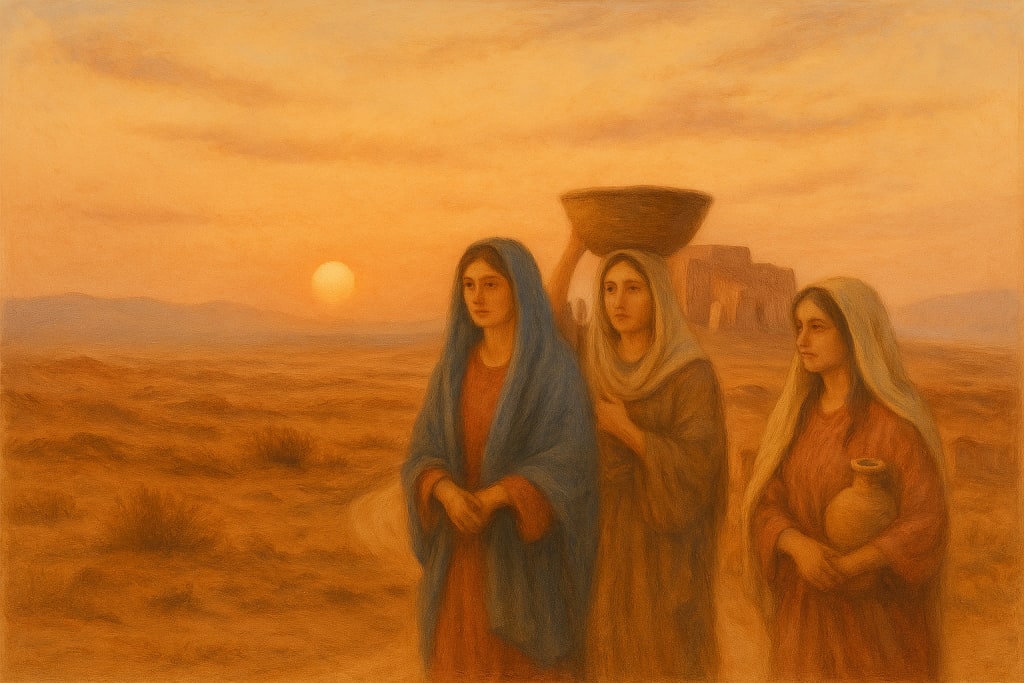
Introduction to Women in the Ancestry and History of Ancient Israel
While Matthew’s Gospel famously highlights five women in the genealogy of Jesus (Tamar, Rahab, Ruth, Bathsheba, and Mary), the wider biblical record introduces many more women connected to Israel’s unfolding story. Some are celebrated matriarchs; others appear only briefly. Yet each woman—whether prominent or obscure—stands as part of a long, complex lineage stretching from Ur of the Chaldeans to a humble Galilean village called Nazareth.
This article revisits twelve women, listed roughly in chronological order, whose lives intersect with Israel’s patriarchs, kings, and ultimately the messianic line. Their stories reveal faith, tragedy, intrigue, perseverance, and the sovereign weaving of history through ordinary human lives.
- The twelve women explored here are: Sarah, Rebekah, Leah, Naamah, Maacah, Azubah, Athaliah, Jerusha, Abijah, Hephzibah, Jedidah, and Zebidah.
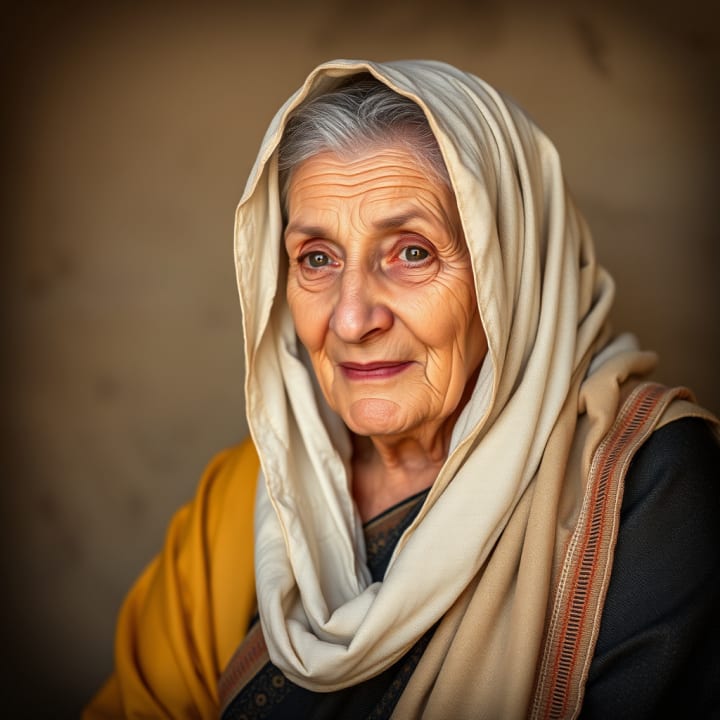
1. Sarah (Scriptures: Genesis 11–23)
Sarah (formerly Sarai) was the wife and half-sister of Abraham. Her early life unfolded in Ur, a thriving Mesopotamian city known for commerce and for the worship of the moon-god Nanna. Archaeological excavations confirm the city’s former wealth and religious influence.
Responding to God’s call, Sarah and Abraham left their homeland for the unfamiliar land of Canaan (Genesis 12:1–5). Her journey of faith was long, marked by barrenness, hope, doubt, and eventual fulfillment in the birth of Isaac, the son through whom the covenant line would continue.
Although Abraham remarried after her death, he chose to be buried beside Sarah in the cave of Machpelah (Genesis 23:19; 25:9–10). Jewish tradition honors her as matriarch of the Hebrew people, traditionally referred to as Sarah Imeinu (“Sarah Our Mother”). Judaism, Christianity, and Islam all regard Sarah as a revered figure.
- Genesis 17:16: God tells Abraham, “I will bless her, and she shall give rise to nations; kings of peoples will come from her.”
2. Rebekah (Scriptures: Genesis 24–27)
Rebekah became the wife of Isaac and the mother of twins Esau and Jacob. The Bible describes her as generous, decisive, and relationally perceptive (Genesis 24:15–20).
Yet her story also includes deep family tension. Favoring Jacob, she orchestrated the deception that secured him the birthright and blessing meant for Esau (Genesis 27). Though the plan succeeded, it fractured the family and forced Jacob into exile. Scripture implies that Rebekah never saw her beloved son again—one of the more poignant losses in Genesis.
Her life illustrates the power and consequences of human choices woven into God’s larger purposes.
3. Leah (Scriptures: Genesis 29–35)
Leah was Jacob’s first wife, though not the one he loved. Deceived by her father Laban, Jacob married Leah instead of her younger sister Rachel. Despite this painful beginning, God honored Leah, opening her womb and blessing her with sons—including Judah, ancestor of Israel’s royal line and ultimately of Jesus (Genesis 29:31–35).
Her story reflects quiet resilience and the dignity of a woman who, though overlooked, shaped the destiny of a nation.
4. Naamah (Scripture: 1 Kings 14:21, 31; 2 Chronicles 12:13)
Naamah, an Ammonite princess, became one of King Solomon’s wives and the mother of Rehoboam, who succeeded Solomon as king. Scripture notes that many of Solomon’s foreign wives continued their own religious practices, and he built shrines to accommodate them (1 Kings 11:1–8).
The Ammonites worshiped Molech, a deity associated with child sacrifice. While the Bible does not specify Naamah’s personal beliefs, the presence of such worship within Israel reflects the spiritual compromises that contributed to national decline.
5. Maacah (Scripture: 2 Chronicles 11–15)
Maacah, another influential royal woman, was the favorite wife of Rehoboam, mother of Abijah, and grandmother of Asa. Like Naamah, she maintained idolatrous practices, including a cultic image that Asa later removed during his religious reforms (1 Kings 15:10–13).
Though she once held the powerful role of Queen Mother, her grandson deposed her to restore proper worship of Yahweh. Her story serves as a reminder of the impact—positive or negative—that leaders’ personal beliefs can have on a nation.
6. Azubah (Scripture: 1 Kings 22:42; 2 Chronicles 20:31)
Azubah, daughter of Shilhi, was the mother of Jehoshaphat, one of Judah’s most faithful and reform-minded kings. Scripture says virtually nothing else about her. Her name means “forsaken” or “deserted,” though nothing in the narrative suggests that she lived an unfortunate life.
Her significance lies in her place within a righteous king’s heritage.
7. Athaliah (Scriptures: 2 Kings 11; 2 Chronicles 22–23)
Athaliah, likely the daughter of the infamous Jezebel and King Ahab, married Jehoram, son of Jehoshaphat, and became mother to Ahaziah.
Her story is one of the most dramatic in the Bible. After the deaths of her husband and son, Athaliah violently seized the throne by ordering the execution of the royal heirs (2 Kings 11:1). Only Joash, her infant grandson, survived—hidden for six years by his aunt Jehosheba.
When Joash was finally revealed and crowned king, Athaliah cried “Treason! Treason!” (2 Kings 11:14) but was executed soon after.
Her life, shaped by the brutality and idolatry of her upbringing, illustrates how corruption can ripple across generations.
8–12. Five Quiet Names in the Royal Line
These five women appear only briefly in Scripture, mentioned in passing as mothers of future kings. Though the Bible gives no details of their personalities, virtues, struggles, or relationships, they were honored by being preserved in the royal records.
8. Jerusha (Scripture: 2 Kings 15:32–33)
Wife of Uzziah and mother of Jotham.
9. Abijah (Scripture: 2 Kings 18:1–2)
Wife of Ahaz and mother of Hezekiah, one of Judah’s greatest reformers.
10. Hephzibah (Scripture: 2 Kings 21:1)
Wife of Hezekiah and mother of Manasseh, a king whose reign reflected both tragedy and late-in-life repentance (2 Chronicles 33:12–13).
11. Jedidah (Scripture: 2 Kings 22:1)
Wife of Amon and mother of Josiah, the young king whose reforms revived the Torah tradition and purified worship in Judah.
12. Zebidah (Scripture: 2 Kings 23:36)
Wife of Josiah and mother of Jehoiachin, who ruled shortly before the Babylonian exile.
From Ur to Nazareth: A Lineage Completed
Whether devout or wayward, joyful or sorrowful, these women were part of the lineage that preserved a kingdom. Their names mattered enough to be written—and remembered.
The lives of these twelve women intersected across nearly two millennia. Their world stretched from the flourishing city of Ur, later destroyed and buried in dust, to Nazareth, a town so obscure that people asked:
- “Can anything good come out of Nazareth?” —John 1:46
And yet from that small, overlooked place came Jesus of Nazareth, the fulfillment of generations of hopes, promises, and imperfect human stories. These women—well-known or barely remembered—each stand as a thread in the tapestry of God’s redemptive plan for all the world - Jew and Gentile.
---
⭐I'm not a qualified historian or a biblical scholar. So thank you for letting me share my thoughts. Hope you enjoyed reading this content. Please, tap the heart❤️ and/or leave a comment💬.
© 2013 Treathyl FOX — Revised Edition 2025 (with permission); previously published
You Might Also Like:
About the Creator
Treathyl Fox (aka cmoneyspinner)
Work-at-home professional since 2007.
*NOTE* My content might contain affiliate links, meaning commissions might be earned if you click through to the vendor’s website.
My socials: * X (Twitter) * Bluesky *
* Blogger * Content Writer *
Keep reading
More stories from Treathyl Fox (aka cmoneyspinner) and writers in History and other communities.
Alexander the Great: Divinity or Mere Mortal?
Introduction History remembers Alexander the Great as a conqueror, a visionary, and a cultural bridge between East and West. But was his legacy the result of deliberate genius—or the fortunate alignment of timing, myth, and momentum? Or ... was he a God-King?
By Treathyl Fox (aka cmoneyspinner)4 months ago in History
Firoun: The Tyrant Who Defied God
Firoun, known to history as Pharaoh, was not just a king—he was a symbol of absolute power. He ruled over ancient Egypt at a time when the Nile flowed generously, the granaries were full, and massive stone monuments rose toward the sky. To his people, Firoun appeared invincible. To himself, he was more than human.
By The best writer 3 days ago in History


Comments (1)
⭐I'm not a qualified historian or a biblical scholar... but I think this is great history snippet. Thank You