
Trump rallies supporters in Michigan to mark 100 days in office
President Trump Celebrates Key Achievements and Reaffirms His Agenda in Front of Enthusiastic Michigan Crowd

Introduction
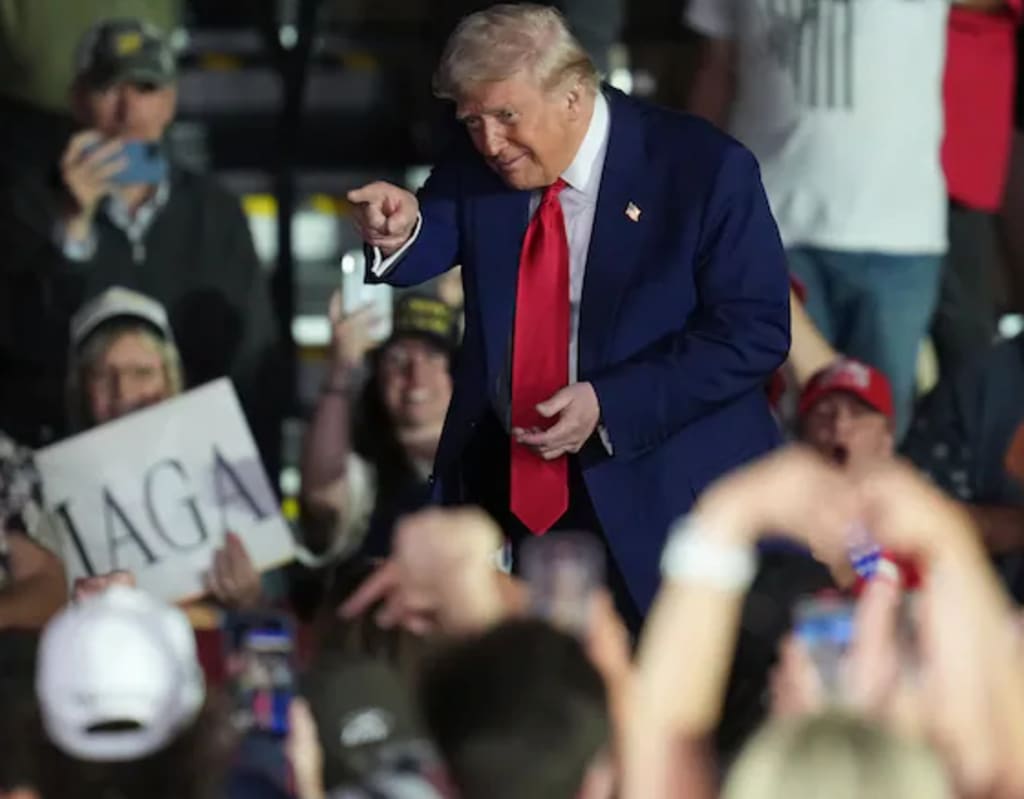
On April 29, 2025, President Donald Trump held a rally in Warren, Michigan, to commemorate the 100th day of his second term in office. The event, held at the Macomb County Community College Sports Expo Center, was a major political showcase, gathering thousands of enthusiastic supporters. This rally marked a significant moment in Trump's second term, as he used the occasion to highlight his administration’s achievements, energize his base, and set the tone for the upcoming 2026 midterm elections.
In this article, we will explore the major themes of Trump’s speech during the rally, his policy achievements, and the reactions of both his supporters and critics. We will also examine the broader political context of this rally, including its implications for the future of Trump’s presidency and his political strategy in the coming years.
Economic Achievements and Promises
Trump began his speech by emphasizing his administration's economic record, particularly the impact of his policies on the American economy. He focused on his efforts to revive American manufacturing, citing his administration’s tariffs on foreign imports and efforts to reduce dependence on overseas production.
“The American auto industry is back, and it’s going to keep getting better,” Trump declared to a roaring crowd. He pointed specifically to Michigan, a state historically known for its automotive manufacturing, as a prime example of the success of his policies. According to Trump, his trade war with China and other foreign nations had forced companies to reconsider offshoring their production and had resulted in the creation of jobs for American workers.
Trump’s economic message was one of “America First” – a principle he reiterated throughout the rally. He outlined his administration’s efforts to revitalize domestic industries, particularly in the manufacturing sector, which had suffered in previous decades due to outsourcing and global trade practices.
In addition to his trade policies, Trump highlighted a new tax reform proposal that would eliminate taxes on tips, overtime, and Social Security contributions. This initiative, according to Trump, would not only reduce the tax burden on working-class Americans but would also increase household incomes by $5,000 annually. He painted a picture of an economy in growth, with more jobs, higher wages, and fewer regulations impeding business innovation.
Immigration and Border Security
A significant portion of Trump’s speech focused on immigration, an issue that had been a cornerstone of his first campaign for the presidency and continued to shape his policy agenda. He reiterated his commitment to strict immigration enforcement, touting his administration’s achievements in border security and immigration policy.
The continued implementation of the Alien Enemies Act, which had been used to deport immigrants deemed to pose a threat to national security, was one of Trump's most important points in his speech. The president emphasized his administration's commitment to securing the U.S.-Mexico border, a promise he made during both his first and second presidential campaigns. He also proudly mentioned the construction of new border walls and the expansion of security measures along the southern border.
During the rally, Trump showed a video of Venezuelan immigrants being deported to El Salvador and got cheers from the crowd. He used this as an example of his administration’s commitment to enforcing immigration laws and protecting American citizens. Furthermore, Trump spoke of his success in ending birthright citizenship for the children of undocumented immigrants, framing this as a major victory for American sovereignty and national security.
Additionally, he extolled the necessity of mass deportations, which he had deemed essential to his immigration strategy, in order to shield American workers from the strain of illegal immigration. According to Trump, his policies were helping to reduce crime and improve job opportunities for U.S. citizens.
Criticism of Opponents and the Media
As expected, Trump did not shy away from criticizing his political opponents and the media during the rally. He once again lambasted “radical-left” judges who had blocked his policies, calling them “communist” and accusing them of trying to undermine the will of the American people.
He spent a significant amount of time attacking the media, which he claimed had been “unfair” and “dishonest” throughout his presidency. He said that the press was a big enemy of his administration and that they were working against the people of the United States. His rhetoric about the media was heated, and he referred to them as “fake news” numerous times throughout the speech.
Trump also made repeated references to the 2020 election, continuing to claim that it was “stolen” from him. Although many of these claims had been debunked by courts and election officials, Trump remained adamant about his stance. He used the rally to energize his base by suggesting that the fight for electoral integrity was ongoing, framing himself as the champion of the American people against what he called a “rigged” system.
In addition to his domestic opponents, Trump touched on foreign policy, expressing controversial views about potential U.S. military interventions in places like Greenland and Panama. He made mention of the possibility of annexing territories in those areas, which elicited a variety of responses, both domestically and internationally.
Public Reaction and Polling Data
Despite the celebratory atmosphere at the rally, the event was not without its critics. Public opinion polls following the rally indicated that Trump's approval rating had declined in certain key areas. A Reuters/Ipsos poll showed that Americans were becoming increasingly skeptical of Trump’s handling of the economy, particularly regarding his trade policies and his approach to immigration.
While the rally was a clear success in energizing his base, it also highlighted the deep polarization that has characterized Trump’s presidency. His supporters, as evidenced by the crowd’s enthusiastic response, remained fiercely loyal to him. However, critics, particularly from the Democratic National Committee, were quick to condemn the event as a “pathetic display” of Trump’s divisiveness.
Additionally, Trump's approval rating was historically low at the time of the rally. A Gallup poll showed that just 40% of Americans approved of his handling of the presidency, reflecting growing discontent among the broader electorate. His approval was particularly low among independent voters, who had played a crucial role in his victory in 2016.
The Role of Media and Trump’s Narrative
During the rally, Trump's strategy included utilizing the media to shape his narrative. Trump used the rally as an opportunity to attack the mainstream media and to portray himself as the victim of a biased press. His message was clear: he was the voice of the “forgotten” Americans who had been ignored by elites and the media.
Throughout the rally, Trump repeatedly framed the media as adversaries of his administration, accusing them of distorting his achievements and focusing on negative stories. He positioned himself as the champion of the American people, claiming that he was standing up to a corrupt system that was working against the interests of the country.
By attacking the media, Trump was able to rally his supporters and reinforce the idea that he was fighting a battle not only against political opponents but against a broader establishment that was conspiring to undermine his presidency. This narrative, although controversial, continued to resonate with his base, who viewed him as a political outsider standing up for their interests.
Conclusion
In his second term, Trump's Michigan rally was a significant moment because it allowed him to directly connect with his base, defend his policies, and prepare for the midterm elections in 2026. Trump was able to demonstrate his immigration and economic policies, reaffirm his commitment to his supporters, and criticize his adversaries at the rally. While the rally was a success in energizing his base, it also highlighted the deep divisions in American politics. Trump’s policies and rhetoric continue to spark intense debate, and his approval ratings remain polarized. As the 2026 elections approach, it is clear that Trump’s political strategy will continue to focus on energizing his supporters, attacking his opponents, and using media narratives to shape public opinion.
For Trump, the rally in Michigan was not just a celebration of his 100 days in office; it was a powerful reminder of the political strategy that brought him to the White House and continues to define his leadership.
If you liked this article, feel free to subscribe for more updates!
About the Creator
Mahmodul hassan mojahid
Curious mind turning complex ideas into clear, compelling stories. Always exploring, always writing—one word at a time.
Keep reading
More stories from Mahmodul hassan mojahid and writers in History and other communities.
Suspect charged with murder over Vancouver Filipino festival car ramming, police say victims were aged five to 65
Tragedy at Vancouver's Lapu-Lapu Day Festival: 11 Dead, Dozens Injured in Vehicle Attack A tragic incident occurred at Vancouver's Lapu-Lapu Day Festival, a celebration of Filipino heritage, on April 26, 2025, in the evening. A black Audi Q7 SUV drove into a crowd near East 43rd Avenue and Fraser Street, resulting in the deaths of 11 individuals and injuring over 20 others. The victims' ages ranged from five to sixty-five. Reuters
By Mahmodul hassan mojahid9 months ago in History
Wealth Reserves and Economic Power of the Madurai Rulers during the First Sangam Age
The Madurai rulers of the Sangam Age possessed immense wealth derived from trade, agriculture, tribute, and natural resources, making them among the richest monarchs of ancient India.
By Say the truth 2 days ago in History
Who Replaces the United Nations If It Fails?
Who Replaces the United Nations If It Fails? For more than seventy years, the United Nations has served as the world’s main platform for diplomacy, peacekeeping, and global cooperation. Despite its weaknesses, it remains the only institution where nearly every country has a seat at the table. But as trust in the UN declines and major powers increasingly act alone, an uncomfortable question is being asked more often: if the UN fails, who—or what—takes its place?
By Wings of Time 7 days ago in History




Comments
There are no comments for this story
Be the first to respond and start the conversation.