
Translate this Ancient Script and Earn $1 Million.
History Of Mohenjo Daro:

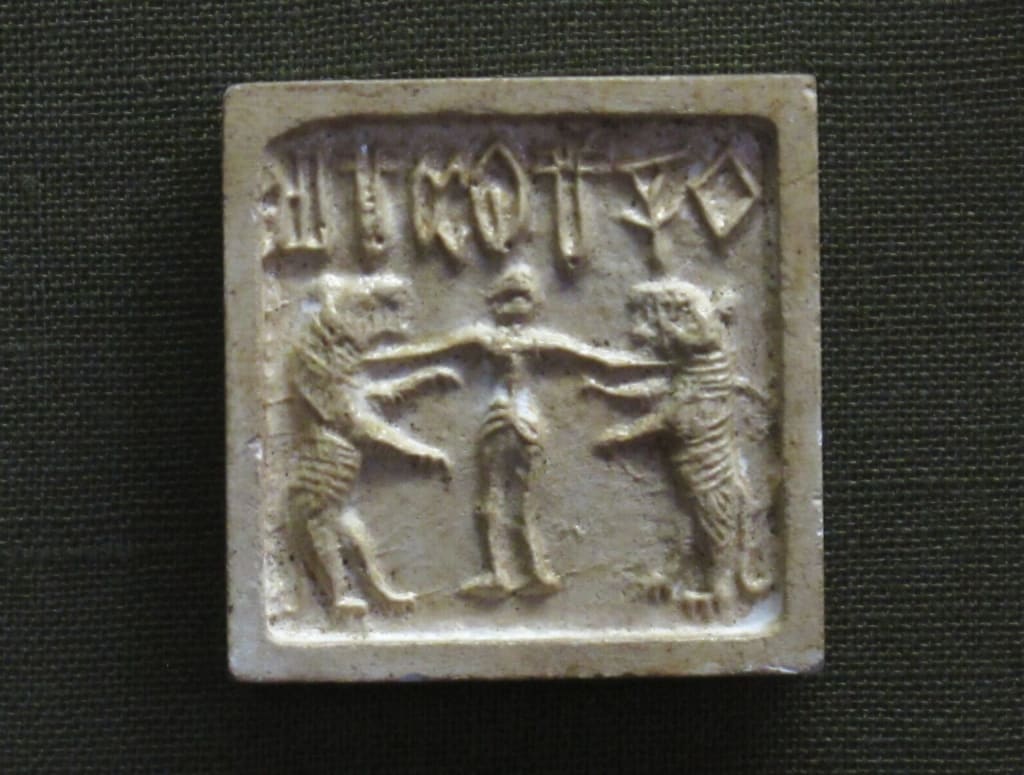
Translate this Ancient Script and Earn $1 Million
This tablet is a classic example of the Indus script. A short sequence of symbols is displayed above an image in this case a bull and an unidentified object. Flourishing in the fertile plains of the Indus River the Indus Valley was home to one of the world's earliest urban civilizations. Between 3300 and 1700 BC the Indus people constructed remarkable cities such as Mohenjo daro and Harappa which featured the first urban sanitation systems advanced agricultural methods extensive trade networks and intricate art. Yet they left behind numerous mysteries. Who were these people and why did they abandon their sprawling cities. What form of governance did they have which facilitated meticulous urban planning but left no traces of palaces temples or monuments. One of the most significant challenges in understanding the Indus people is their written language. While it is likely they had one this remains a topic of debate. These questions are not only crucial for archaeologists and historians but also intersect with various political and cultural issues in the region.

A Language Mystery
Several political and ethnic groups on the Indian subcontinent are keen to claim descent from the Indus Valley civilization. Hindu nationalists argue that the Indus script is linked to Sanskrit the ancient language of Hindu scriptures which was brought to India by the Aryans. They claim that if the Indus script is related to Sanskrit it would prove that the Aryans are the indigenous people of India supporting the ideology of Hindu supremacy.
On the other hand some scholars suggest that the script is connected to Tamil the classical language of the Dravidian people. If the Indus language is Dravidian it would imply that the Dravidians are the original inhabitants of India. A recent study has added fuel to this debate. A collaborative effort between Pondicherry University archaeologist K. Rajan and R. Sivananthan deputy director of the state’s archaeological department involved digitizing 15,000 pieces of graffiti from over a hundred sites across Tamil Nadu and comparing them with the Indus script. Their findings revealed that over half of the signs matched and another 90% showed similarities. Tamil Nadu is located more than 2,500 kilometers from the Indus River Valley. If the ancient scripts are indeed related it could significantly alter our understanding of the ancient civilizations of the Indian subcontinent. Tamil Nadu Chief Minister MK Stalin recognized the potential significance of this discovery. He stated The efforts of the state government are to ensure the rightful place for Tamil Nadu in the country’s history. He also announced a reward of $1 million for anyone who successfully deciphers the Indus script.

A Table of Numbered Sigils
Decoding the script is no easy task. There are over 5,000 artifacts with Indus script inscriptions but deciphering them is challenging. The inscriptions are typically very short with most containing only five symbols and the longest having 26. Some scholars believe the script may represent proto writing similar to early Mesopotamian clay tablets used for recording transactions. Others suggest it could be akin to medieval European heraldry symbolizing specific groups individuals or families. Even if the script is a written representation of a spoken language the language itself remains unknown. Unlike other ancient scripts like Linear B or Mayan glyphs which were deciphered with the help of known linguistic descendants modern Greek and Mayan the Indus script has no such connections. Additionally, no bilingual inscriptions have been found unlike the Rosetta Stone which was instrumental in decoding Egyptian hieroglyphics. The Indus script contains as many as 676 unique symbols but a recent computer analysis by researcher Nicha Yadav found that just 67 of these symbols account for 80% of the script. Scholars like Yadav are increasingly using computer analysis and machine learning to decode the script. However Yadav acknowledges that the mystery remains unsolved. We still don’t know whether the signs represent complete words parts of words or parts of sentences he admitted. The Indus script remains one of the most enigmatic puzzles in the study of ancient civilizations. If you can decipher it you stand to earn $1 million from the Tamil Nadu government. But with so many unanswered questions and the complexity of the script the challenge is immense.

Indus Valley Civilization.
The Indus Valley Civilization also known as the Harappan Civilization was one of the world's earliest urban cultures flourishing between 3300 and 1700 BC. It was known for its advanced urban planning including grid layouts, drainage systems and standardized weights and measures. The Indus people engaged in extensive trade with other contemporary civilizations including Mesopotamia. Artifacts such as beads pottery and seals have been found in regions far from the Indus Valley indicating a well-established trade network. The reasons for the decline of the Indus Valley Civilization remain unclear. Possible explanations include climate change, river course shifts and invasions by nomadic tribes. The Indus script and the civilization's legacy continue to be a subject of political and cultural significance in South Asia with various groups claiming descent from the ancient Indus people.
About the Creator
Adnan Rasheed
Author & Creator | Writing News , Science Fiction, and Worldwide Update| Digital Product Designer | Sharing life-changing strategies for success.
Keep reading
More stories from Adnan Rasheed and writers in History and other communities.
What the Women of Hiroshima and Nagasaki Witnessed
The double tragedy of Hiroshima and Nagasaki in August 1945 wasn't just a culmination of war; it was an unprecedented erasure of reality. For the thousands of women living within those two cities, the event was not an abstract historical moment but an intimate, terrifying collapse of their world. These women, known as Hibakusha (explosion-affected people), carried memories that blurred the line between the living and the dead. Their testimonies offer a searing perspective on what they saw—and what they could never unsee.
By Irshad Abbasi 4 days ago in History



Comments
There are no comments for this story
Be the first to respond and start the conversation.