
The War to End All Wars
A Journey Through Courage, Loss, and the Silence of War

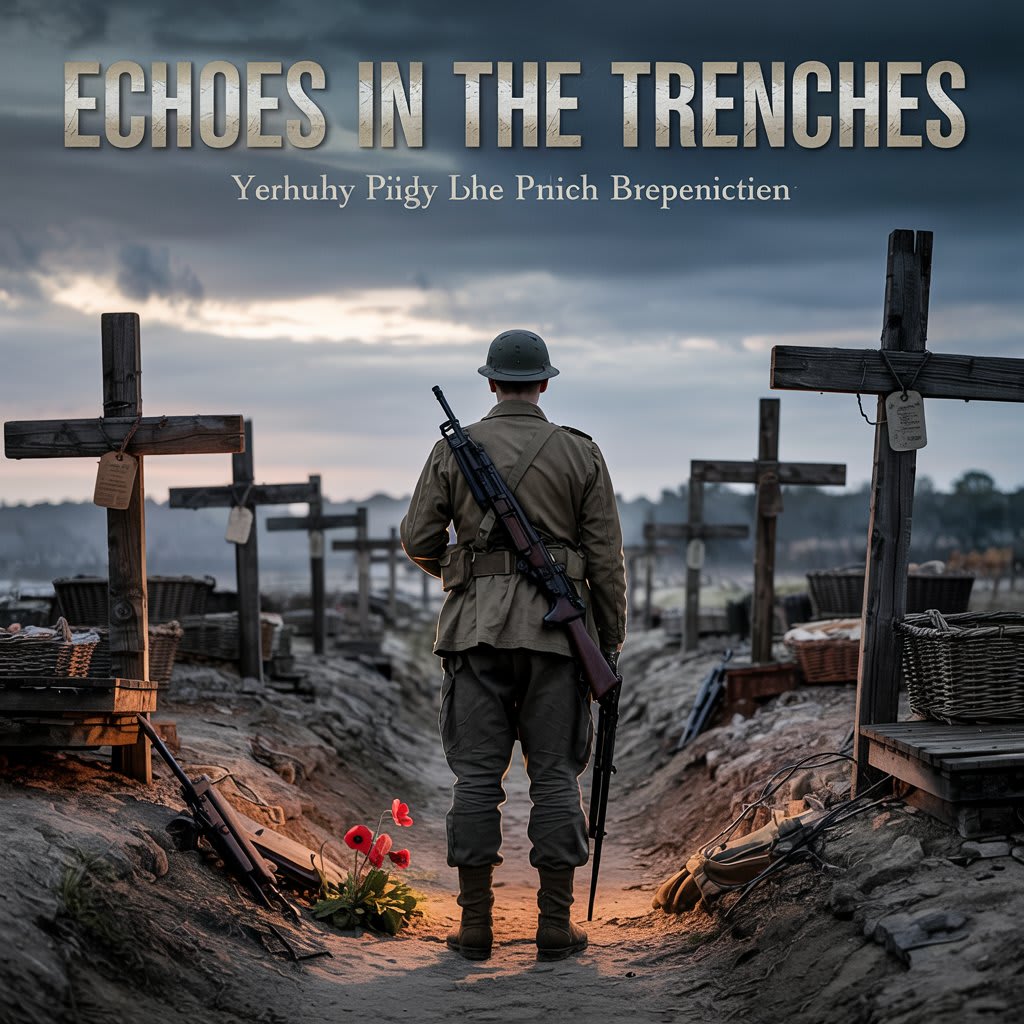
November 11, 1918 – Northern France
The morning was quiet. Too quiet. The kind of silence that made Private Thomas Merrick feel more afraid than gunfire ever had. The air, usually thick with smoke and screams, now held only fog and the faint rustling of rats scurrying through the remnants of the trench.
Thomas stood still, rifle lowered, boots sunken into weeks-old mud. Around him were the ghosts of months past—splintered helmets, abandoned packs, and carved initials in damp trench walls, names of boys who would never return home. Some were his friends. Most were strangers. All were brothers.
The ceasefire was just hours away, but no one trusted it. Whispers had passed from trench to trench, claiming the war would end at the eleventh hour. But they had heard that before. Empty rumors could kill a man if he believed them too soon.
Thomas clutched a folded letter in his breast pocket—its paper worn and smudged from months of rereading. It was from his younger sister, Mary. She had written about the cows on their family farm, the cat that wouldn’t stop having kittens, and how their father still thought he could fix the old barn roof himself.
But the last line stuck with him the most:
“Come home, Tommy. I’ll be waiting by the gate.”
He closed his eyes.
Home felt like a fairy tale now.
June 1917 – Before the Fire Fell
When Thomas first enlisted, he was full of fire. Everyone was. The whole village waved flags and sang songs when the train pulled out of the station. Girls threw flowers, and old men shook hands like they were passing on a secret honor.
War was adventure.
War was glory.
War was a lie.
A month into the trenches, and reality hit like mustard gas. Days turned into weeks, rain turned to rot, and boys turned into bodies. The enemy wasn’t just across No Man’s Land—it was the cold, the hunger, the madness creeping in when the guns went quiet.
One night, Thomas had watched his best friend, Eli Harper, write his last letter.
“Just in case,” Eli had said, forcing a smile.
It was only days later that a shell took half the trench—and Eli with it.
Thomas never sent that letter.
He buried it with him instead.
November 11, 1918 – The Final Hour
At 10:15 a.m., the shelling stopped. No warning. No gradual fade. Just... stopped.
Thomas peeked over the edge of the trench. Smoke lingered over No Man’s Land, but not a single shot rang out. The silence was eerie, unnatural. His captain stepped up beside him, clutching a silver watch.
“Fifteen minutes,” the captain muttered. “Then it’s over.”
Thomas couldn’t speak. The words caught in his throat like shrapnel. What did it mean—over? That the dying was done? That the world would pretend the blood hadn’t soaked into the soil so deep it could never be washed away?
At 11:00 a.m., a flare shot into the sky. Red, like fire. Red, like the blood that had painted the fields for four long years.
The war was over.
Just like that.
But Thomas felt no joy. No triumph. Only numbness.
And then, as if the wind itself had paused to listen, he heard it.
A violin.
Soft and unsteady at first, then bolder, clearer—a melody rising from a nearby trench, played by a German soldier. A tune Thomas didn’t recognize, but it didn’t matter. It wasn’t the song that mattered.
It was the sound.
Music.
After all the noise of war, it was the most human thing he’d heard in years.
He sat down slowly, back against the trench wall, eyes closed. Tears slid down his cheeks—quietly, like the rain.
Spring 1919 – Home
The gate creaked just like it used to.
Mary ran barefoot down the path when she saw him, her hair longer, her face older—but the same. She threw her arms around his waist, hugging him tightly as if she were afraid he’d vanish like a dream.
Thomas didn’t speak. Not yet. He looked out at the hills, the sky, the barn that still needed fixing. All untouched by war. All impossibly normal.
And finally, as she stepped back and wiped her tears, he smiled.
“I kept the promise,” he whispered. “I came home.”
Years Later – A Different Silence
The world moved on. Graves were built. Memorials carved. Books written. But some stories stayed buried in the mud of the trenches.
Every November, Thomas would sit by the fire and listen to silence again. Not the silence of fear—but the kind that held memories, like soft echoes in the distance. He would unfold Mary’s letter, now brittle with age, and read the last line once more.
“Come home, Tommy. I’ll be waiting by the gate.”
And he’d whisper into the quiet:
"I did.
About the Creator
Farhan
Storyteller blending history and motivation. Sharing powerful tales of the past that inspire the present. Join me on Vocal Media for stories that spark change.
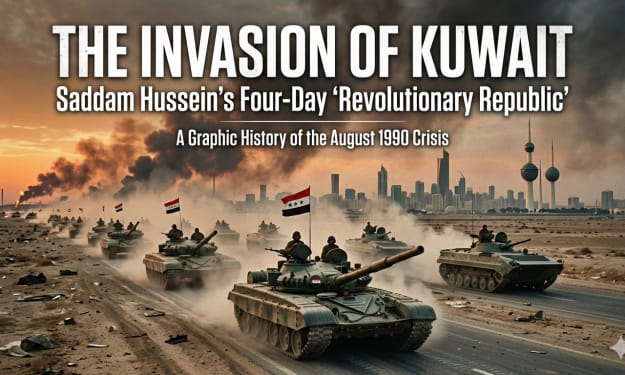
The Invasion of Kuwait: Saddam’s Four-Day ‘Revolutionary Republic
On August 2, 1990, the world woke up to a geopolitical earthquake. Under the orders of Saddam Hussein, over 100,000 Iraqi troops, backed by hundreds of tanks, surged across the border into the tiny, oil-rich emirate of Kuwait. While history remembers this as the spark for the Gulf War, the first few days of the occupation featured a bizarre political theater: the creation of a short-lived puppet state known as the **"Republic of Kuwait."**
By Irshad Abbasi 3 days ago in History



Comments
There are no comments for this story
Be the first to respond and start the conversation.