
The United States vs. Venezuela: A Geopolitical Struggle in the 21st Century
Power, Oil, and Politics in the Western Hemisphere
Introduction
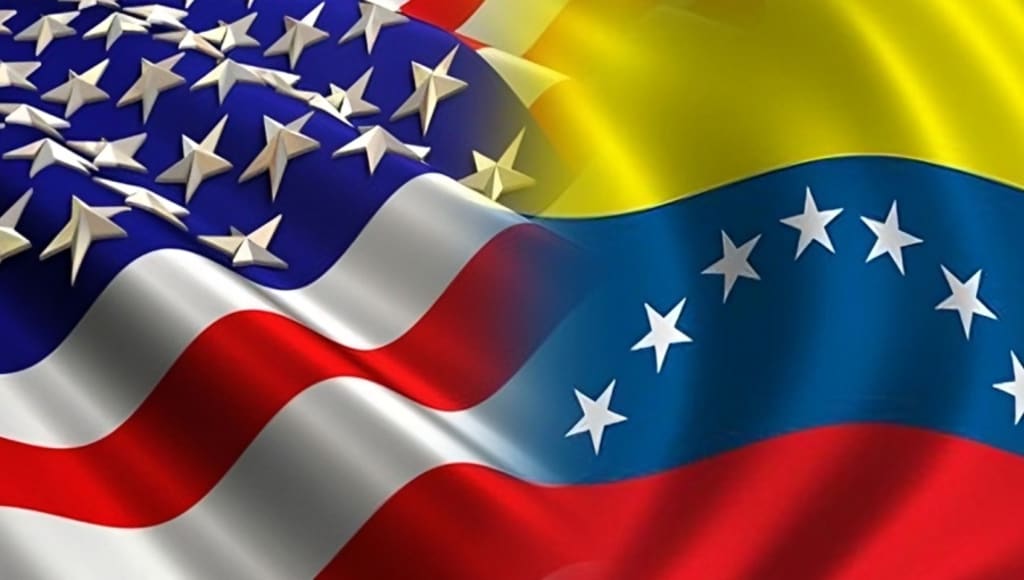
The relationship between the United States and Venezuela has been one of the most contentious diplomatic rivalries in the Western Hemisphere for the past two decades. While once bound by trade and energy cooperation, both nations have grown into ideological adversaries. Venezuela, rich in oil but plagued by economic collapse and political crises, has found itself at odds with the United States, which has often pushed for democratic reforms while simultaneously imposing sanctions.
This geopolitical conflict goes beyond simple bilateral relations. It reflects larger questions about sovereignty, global power competition, economic sanctions, the role of oil in world politics, and the survival of authoritarian regimes in a globalized era. To understand the U.S.–Venezuela rivalry, one must examine its historical roots, the role of oil and ideology, the emergence of Nicolás Maduro’s contested leadership, U.S. foreign policy strategies, and the broader regional and international consequences of this confrontation.
Historical Background of U.S.–Venezuela Relations
Early Cooperation
For much of the 20th century, Venezuela was one of the United States’ closest partners in Latin America. The U.S. relied heavily on Venezuelan oil, particularly after World War II, when Venezuela became a top oil exporter. American oil companies such as Exxon and Chevron invested heavily in the Venezuelan economy, creating decades of economic interdependence.
Rise of Hugo Chávez
The turning point came in 1998 with the election of Hugo Chávez, a populist leader who promoted “Bolivarian socialism.” Chávez criticized U.S. foreign policy, aligned himself with Cuba, and nationalized key industries, including oil. His fiery rhetoric painted the U.S. as an imperialist power, while he sought alliances with countries like Russia, China, and Iran.
The Chávez era introduced an era of hostility, despite Venezuela still selling vast amounts of oil to the U.S. The American government criticized Chávez for undermining democratic institutions, while Chávez accused Washington of trying to destabilize his government.
Nicolás Maduro and Deeper Conflict
After Chávez’s death in 2013, Nicolás Maduro assumed power. Unlike Chávez, Maduro lacked charisma and popular legitimacy, which deepened Venezuela’s internal crises. The U.S. increasingly refused to recognize Maduro’s presidency, especially after the disputed 2018 election. Washington instead supported opposition leader Juan Guaidó as Venezuela’s interim president, escalating the diplomatic standoff.
Oil: The Heart of the Conflict
Venezuela holds the largest proven oil reserves in the world. For decades, oil revenue funded social programs and sustained the economy. However, corruption, mismanagement, and falling oil prices devastated the country.
The U.S. historically depended on Venezuelan oil but shifted away as relations soured. By 2019, U.S. sanctions targeted Venezuela’s oil industry, cutting off its primary source of revenue. These sanctions were intended to pressure Maduro’s government but also worsened Venezuela’s economic crisis, leading to food shortages, hyperinflation, and mass migration.
The geopolitics of oil made Venezuela a strategic battleground. While the U.S. sought to isolate Maduro, Russia and China offered loans and investments in exchange for access to Venezuelan oil. Thus, the U.S.–Venezuela rivalry became part of a larger global competition.
U.S. Policy Toward Venezuela
Sanctions as a Weapon
Sanctions have been the primary tool of U.S. policy. The U.S. imposed financial restrictions on Venezuelan officials, froze state assets abroad, and banned American companies from doing business with PDVSA, Venezuela’s state-owned oil company.
While sanctions weakened Maduro’s regime financially, they also harmed ordinary Venezuelans. Critics argue that sanctions deepened the humanitarian crisis, while supporters claim they were necessary to pressure Maduro toward democratic reform.
Diplomatic Isolation
The U.S. spearheaded efforts in the Organization of American States (OAS) and United Nations to isolate Venezuela diplomatically. More than 50 countries recognized Juan Guaidó as interim president, although over time that recognition waned as Maduro consolidated control.
Humanitarian Assistance and Migration
The U.S. has also provided billions of dollars in humanitarian aid to Venezuelan refugees who fled to neighboring countries such as Colombia, Brazil, and Peru. Washington has highlighted Venezuela’s collapse as evidence of the failures of socialism.
Venezuela’s Response and Alliances
Survival Through Alliances
Despite U.S. pressure, Maduro has survived by relying on allies. Russia provided military and financial support, while China extended loans in exchange for oil shipments. Iran shipped fuel to Venezuela when shortages became severe. Cuba supplied intelligence and security advisors who helped Maduro suppress opposition.
Anti-Imperialist Narrative
Maduro, like Chávez, portrays the conflict as one between Venezuelan sovereignty and U.S. imperialism. This narrative resonates with some Latin American and global left-wing movements, which view U.S. sanctions as unjust interference.
Humanitarian and Social Consequences
The U.S.–Venezuela rivalry has not only been political and economic—it has also been deeply humanitarian.
Economic Collapse: Venezuela’s GDP has shrunk by over 75% since 2013, one of the worst collapses in modern history.
Hyperinflation: Inflation reached millions of percent at its peak, destroying people’s savings.
Mass Migration: Over 7 million Venezuelans have fled the country, creating one of the largest refugee crises in the world.
Healthcare Crisis: Hospitals lack basic medicines, and diseases once eradicated have re-emerged.
While U.S. sanctions aimed at pressuring Maduro, critics argue they worsened the suffering of ordinary citizens, turning the humanitarian crisis into a moral dilemma for American foreign policy.
Regional and Global Implications
Latin America
Venezuela’s crisis has destabilized the region. Neighboring countries struggle with the influx of migrants, while regional alliances have been reshaped around the U.S.–Venezuela divide.
U.S.–Russia–China Competition
The Venezuelan conflict became part of broader great-power competition. Russia and China’s involvement challenges U.S. dominance in Latin America, a region historically seen as America’s “backyard” under the Monroe Doctrine.
Energy Markets
Sanctions on Venezuelan oil reshaped global markets. The U.S. increased reliance on domestic shale oil, while Venezuela sought alternative buyers like India and China.
The Future of U.S.–Venezuela Relations
The U.S.–Venezuela rivalry is unlikely to disappear soon. Several scenarios exist:
1. Negotiated Settlement: If both sides agree to dialogue, Venezuela might move toward power-sharing or gradual reforms.
2. Continued Stalemate: Maduro may continue consolidating power while Venezuela remains isolated and impoverished.
3. Renewed U.S. Engagement: Shifts in global oil demand (such as after the Ukraine war) may push Washington to re-engage with Venezuela pragmatically.
4. Regime Change: Though unlikely in the near term, continued economic collapse could eventually force political change.
Conclusion
The U.S.–Venezuela conflict is not simply a bilateral dispute; it reflects deeper tensions about sovereignty, ideology, and global power struggles. At its core lies oil, but layered on top are issues of democracy, authoritarian survival, humanitarian suffering, and great-power rivalry.
For the U.S., Venezuela represents both a challenge and an opportunity: a chance to uphold democratic values in the Western Hemisphere, but also a test of how far sanctions and pressure can go without worsening human suffering.
For Venezuela, the struggle is existential. Maduro’s government clings to power despite economic collapse, using nationalism and foreign alliances to survive. Yet the suffering of millions of Venezuelans remains unresolved.
The rivalry will continue to shape the Americas in the years ahead, serving as a reminder that in global politics, resources, power, and ideology are inseparably linked.
About the Creator
Keep reading
More stories from Hamza Muhammad and writers in History and other communities.
World War I: The Great War That Changed the World
Introduction World War I, also known as the "Great War," was one of the most transformative and devastating events in modern history. Fought between 1914 and 1918, it involved most of the world’s great powers, reshaped global politics, and laid the groundwork for much of the twentieth century’s turbulence. What began as a regional conflict in the Balkans escalated into a global war due to entangled alliances, militarism, imperial rivalries, and rising nationalism. By the time it ended, millions were dead, empires had collapsed, and the world was permanently altered.
By Hamza Muhammad5 months ago in History
3 Times Ordinary Objects Did Something Deeply Unsettling
Objects surround us every day. They make life easier, more comfortable, or more entertaining. A chair supports us, a mirror shows us our reflection, and a toaster browns our bread with consistent reliability. Most of the time, they behave exactly as expected.
By Enoch Sagini5 days ago in History
When Allies Disagree: How Global Partnerships Are Being Redefined
When Allies Disagree: How Global Partnerships Are Being Redefined For much of the modern era, global alliances appeared firm and predictable. Powerful countries formed blocs, promised mutual support, and stood together during times of war and crisis. But in today’s world, those alliances are changing. Recent disagreements between long-standing partners show that global cooperation is no longer based on automatic loyalty—it is increasingly shaped by national interests, public opinion, and long-term stability.
By Wings of Time 3 days ago in History


Comments
There are no comments for this story
Be the first to respond and start the conversation.