
The Tunguska Incident (1908)
The Tunguska Incident (1908): The Mystery of the 20th Century That Baffled Scientists

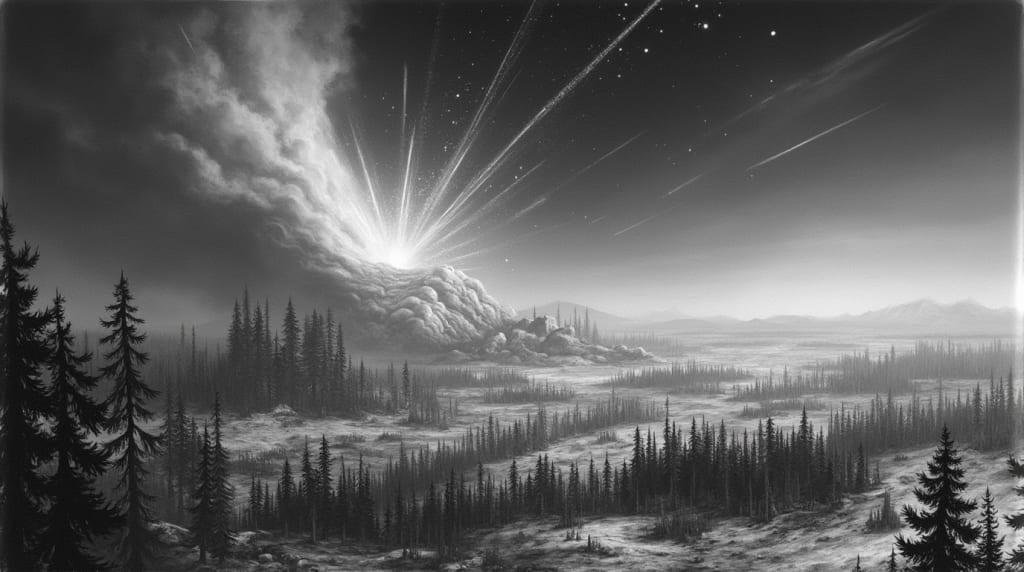
The Tunguska Incident (1908): The Mystery of the 20th Century That Baffled Scientists
On the morning of June 30, 1908, the skies over Siberia, Russia, witnessed a mysterious and horrific event that continues to baffle scientists to this day. Known as the Tunguska Incident, it is one of the most violent natural explosions in modern history. In this article, we will delve into the details of this exciting incident, review the scientific theories that have attempted to explain it, and discuss its impact on popular culture and science.
1. What is the Tunguska Incident?
The Tunguska Incident was a massive explosion that occurred in a remote area near the Tunguska River in Siberia. The force of the explosion is estimated to have been equivalent to 10 to 15 megatons of TNT, or 1,000 times more powerful than the atomic bomb dropped on Hiroshima. The explosion destroyed 80 million trees over an area of nearly 2,000 square kilometers, and generated a shock wave that was felt hundreds of kilometers away.
2. Description of the event: Eyewitness accounts
3. Early investigations: Leonid Kulik's expedition
Nineteen years after the incident, Russian scientist Leonid Kulik made the first expedition to the site of the explosion. Kulik believed the explosion was caused by a large meteorite, but he found no meteorite crater or meteorite remains. Instead, he found a large area of shattered and burned trees, raising further questions.
4. Theories of the Tunguska Incident
A. Meteor or comet theory
The most common theory is that the explosion was caused by a meteor or comet entering the Earth's atmosphere. It is believed that the object exploded in the atmosphere before reaching the ground, which explains the absence of a crater.
B. Mini black hole theory
Some scientists have suggested that the explosion may have been caused by a mini black hole passing through the Earth. However, no evidence has been found to support this theory.
C. Antimatter theory
Others have proposed that the explosion was caused by antimatter from space colliding with ordinary matter on Earth, releasing enormous amounts of energy.
D. Conspiracy theories and UFOs
Of course, the incident was not without its own conspiracy theories. Some people believe that the explosion was caused by a spaceship or a secret technological experiment.
5. Environmental impact of the incident
The explosion destroyed a vast area of forest, affecting the local ecosystem. It also caused minor climate changes, with strange clouds observed in the skies of Europe for several days after the incident.
6. Recent Studies: Technology Reveals New Secrets
As technology has developed, scientists have tried to re-analyze the incident using advanced computer models. Some studies suggest that the object that caused the explosion was smaller than previously thought, but was moving at a tremendous speed.
7. The Tunguska Incident in Popular Culture
The Tunguska Incident has inspired many literary and artistic works. It has appeared in science fiction novels, films, and even video games. The incident is considered a symbol of the mystery and destructive power of nature.
8. Comparison with Similar Events
A. Chelyabinsk Explosion (2013)
B. Madagascar Incident (Unconfirmed)
There are reports of a similar event that occurred in Madagascar thousands of years ago, but the evidence is unconfirmed.
9. Why is the Tunguska Incident still a mystery?
Despite scientific advances, the Tunguska incident remains a mystery due to the lack of physical evidence. No meteor remains or any other strange object have been found that could explain the explosion. In addition, the remote location of the incident makes it difficult to conduct extensive studies.
10. Lessons Learned from the Tunguska Incident
The Tunguska incident reminds us of the power of nature and its ability to cause massive destruction. It also highlights the importance of monitoring near-Earth objects to avoid similar disasters in the future.
Conclusion: A Mystery Worth Exploring
The Tunguska incident is not just a historical event, it is a testament to the mystery of the universe and its ability to both fascinate and confuse us. Despite more than a century having passed since the incident, questions are still being asked and answers remain elusive. Perhaps the true beauty of this mystery lies in the fact that it keeps us searching and exploring, reminding us that the universe is full of secrets waiting to be uncovered.
About the Creator
💓 Pulse of Stories 💓
The world of short and inspiring stories! Here you will find stories that touch hearts, ignite the imagination, and take you on quick yet deep journeys.
Keep reading
More stories from 💓 Pulse of Stories 💓 and writers in History and other communities.
The Dyatlov Pass Incident (1959)
The Dyatlov Pass Incident (1959): The Mystery That Baffled the World The Dyatlov Pass Incident is one of the most perplexing and chilling mysteries of modern history. In February 1959, nine Russian hikers embarked on a skiing expedition in the northern Ural Mountains and never returned. What happened to them has puzzled scientists, investigators, and conspiracy theorists for decades.
By 💓 Pulse of Stories 💓about a year ago in History
The Strait of Hormuz: When the World Held Its Breath
The sea was calm, but the tension in the air was anything but peaceful. At the narrow waters of the Strait of Hormuz, one of the most important shipping routes on Earth, warships began to appear on the horizon. Oil tankers slowed down, merchant ships changed their routes, and the world watched nervously.
By Imran Ali Shahabout 12 hours ago in History



Comments
There are no comments for this story
Be the first to respond and start the conversation.