
"The Truth Behind Christmas: Origins and Celebrations"
"Exploring the Real Story and Modern Traditions of the Holiday"

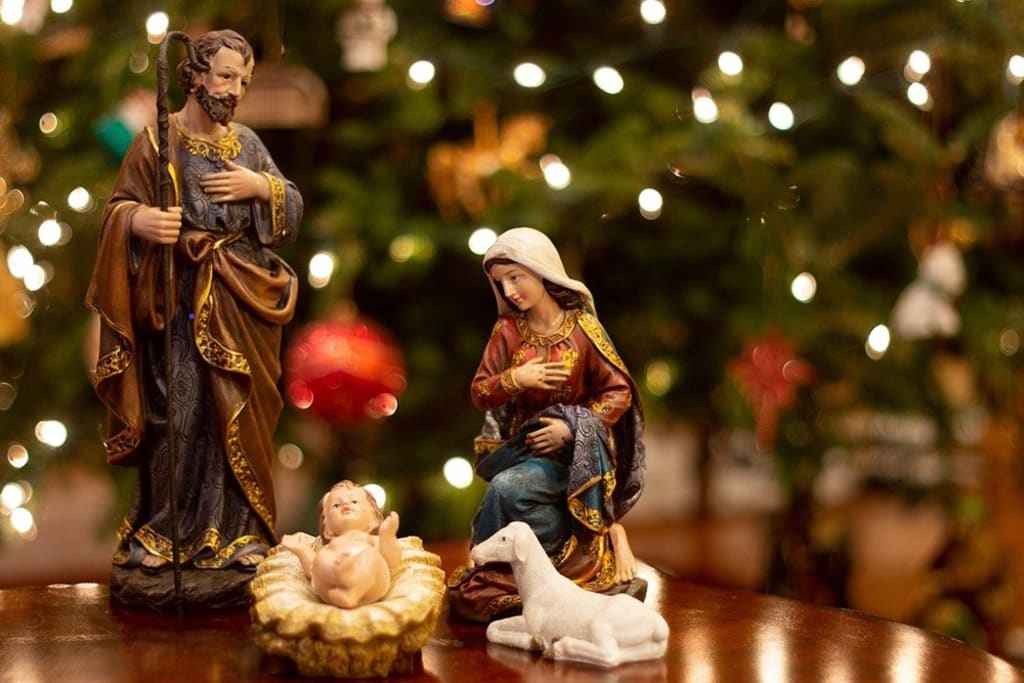
Christmas is one of the most widely celebrated holidays across the world. However, did you know that the origins of Christmas and the date on which
it is celebrated are surrounded by controversy? Every year, December 25 is marked as the day to celebrate Christmas, but the true meaning behind this
day and its historical accuracy are not as clear-cut as we might think. While today’s celebrations focus on fun, gift-giving, and festive joy, the
story behind Christmas is much deeper and rooted in both religious history and cultural evolution.
The True Meaning of Christmas
The original purpose of Christmas is to celebrate the birth of Jesus Christ. For Christians, this day holds great religious significance, as it marks the
arrival of their Savior. It is a time to reflect on the message of love, hope, and salvation that Jesus brought to the world.
Many Christians observe the day with church services, prayers, and acts of kindness.
However, the meaning of Christmas extends beyond just religious observance. For Christians, it is a time to gather with family, exchange gifts, and remember the importance of faith and compassion.
The Controversy Behind the Date: Is December 25 Correct?
One of the biggest debates surrounding Christmas is its date. Most people assume that December 25 is the exact date of Jesus' birth, but in reality,
there is no definitive evidence to support this claim. The Bible itself does not mention the specific date of Jesus’ birth, leaving historians and scholars to make educated guesses.
Historical evidence suggests that Jesus’ birth may have occurred in the spring or fall, but December 25 was chosen by early Christians for a few strategic reasons. The date coincides with the Roman festival of Saturnalia,
a celebration of the winter solstice. During this time, the Romans honored the god Saturn, and the celebrations were marked by feasting, gift-giving, and merrymaking.
Early Christians likely chose this date to align their religious celebrations with an existing festival, allowing them to integrate into the broader
Roman culture. This tactic helped spread Christianity across the Roman Empire, especially as Christianity became more prominent in the following centuries.
Modern-Day Christmas: A Shift to Fun and Commercialization
Over time, Christmas evolved from a strictly religious holiday to a global cultural celebration. Today, Christmas is celebrated not only by Christians but by many people from different backgrounds, and the focus has shifted
away from its original religious meaning. Instead, it has become a time for family gatherings, decorating homes with Christmas trees, exchanging gifts, and enjoying festive meals.
The commercialization of Christmas has played a significant role in this shift. Retailers, advertisers, and companies have embraced Christmas as a major economic event. Stores start stocking Christmas decorations and
sales as early as October, and advertisements flood the media, promoting everything from toys to travel deals. The image of Santa Claus, initially based on Saint Nicholas, has become a central figure in these commercial campaigns.
Today, the holiday season is often seen as a time to indulge in gift-giving, shopping sprees, and celebrations, with much of the holiday's religious meaning sometimes taking a backseat.
The Global Impact of Christmas
Christmas is no longer confined to just one religious group or even one country. It has become a global event, celebrated in various ways across
different cultures. For example, in the United States, Christmas traditions include decorating trees, singing Christmas carols, and the widespread
exchange of gifts. In Germany, Christmas markets and the Advent calendar play a huge role in the celebration.
Even in countries where Christianity is not the dominant religion, Christmas is often celebrated as a cultural event. In Japan, for instance,
Christmas is viewed more as a time for couples to spend time together and enjoy festive meals, rather than focusing on religious significance.
In many parts of the world, Christmas has become a universal symbol of togetherness, kindness, and joy.
Conclusion
So, while Christmas began as a religious holiday to commemorate the birth of Jesus Christ, it has morphed into something much broader and more
inclusive. The date of December 25 might not be historically accurate, but the spirit of Christmas continues to be one of joy, love, and community.
Whether you observe Christmas for religious reasons or simply as a time to enjoy festivities and connect with loved ones, the essence of the holiday
remains the same: it’s a reminder of hope, generosity, and the importance of coming together with those who matter most.
About the Creator
Daily Motivation
Hi | Assalam Ulaikum | Wellcome to my profile | This is a Motivation Page | You can tell me your Problem so i can help you... my whatsapp number +92 336 7762 162
Keep reading
More stories from Daily Motivation and writers in History and other communities.
"How Did a 10-Day Shift in 1582 Change Christmas Forever?"
The Hidden History of Christmas and the Calendar Shift Christmas is one of the most celebrated holidays in the world, but its association with December 25th was not always so simple. While we take it for granted today, did you know that Christmas, for a time, wasn’t universally celebrated on the same day? This wasn’t due to some quirky holiday tradition, but because of an error in how time was calculated.
By Daily Motivation24 days ago in History
Military Strength of Alexander the Great and the Chola Empire: A Historical Comparison
Though separated by more than a thousand years and operating in vastly different geographical and cultural contexts, both forces achieved extraordinary success through discipline, innovation, and strategic brilliance. This article explores the history, composition, size, organization, and military strength of Alexander’s Macedonian army and the Chola military, highlighting how each became a dominant power of its era.
By Say the truth 4 days ago in History
The Hard Ways Trump Could Try to Take Greenland
When Donald Trump was president of the United States, he shocked the world by saying he wanted to buy Greenland. Many people laughed, but others took the idea seriously. Greenland is a huge island in the Arctic. It is rich in natural resources and very important for military defense. Today, Greenland belongs to Denmark, but it also governs itself in many areas.
By sehzeen fatima7 days ago in History



Comments
There are no comments for this story
Be the first to respond and start the conversation.