
The Truth About the Titanic
The Tragic Tale of the Titanic: A Night of Disaster

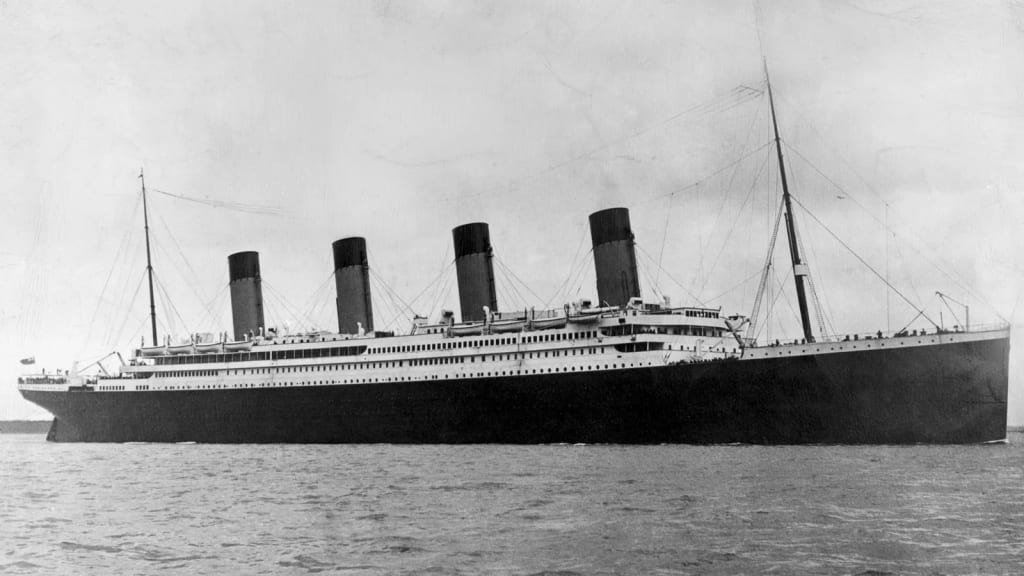
The Titanic: A Tragic Night Unfolded
On April 14th, 1912, at 11:40 p.m., the RMS Titanic collided with an iceberg, leading to one of the most infamous maritime disasters in history. By 2:20 a.m. on April 15th, the "unsinkable" ship had disappeared beneath the icy waters of the Atlantic Ocean, taking over 1,500 lives with it. For over a century, the cause of this tragedy was attributed solely to the iceberg. However, recent findings challenge this long-held belief, unveiling a series of factors that might have sealed the Titanic's fate.
The Titanic: A Marvel of Engineering
The Titanic was a masterpiece of its time, measuring 882 feet 9 inches in length, 92 feet in width, and standing 175 feet tall. With a usable volume of 46,328 tons, it was a floating city, complete with opulent amenities and state-of-the-art technology. The ship boasted four massive smokestacks, each weighing 60 tons and extending 81.5 feet above the deck at a 30-degree angle to enhance their imposing appearance.
The cost of constructing this colossal ship was staggering—$7.5 million at the time, equivalent to $166 million today. Surprisingly, this is less than the $200 million spent on the production of the 1997 film "Titanic."
The Titanic’s Construction: A Herculean Effort
The Titanic was built by Harland and Wolff shipyard in Belfast, employing 3,000 men who worked six days a week for 26 months. Despite the large workforce, the work was perilous, with eight men losing their lives and 246 others suffering injuries during the construction process. It is hard to imagine that such a monumental engineering feat could be brought down by a single iceberg—or was it?
A Hidden Danger: The Fire That Weakened the Titanic
For decades, the iceberg was blamed for the Titanic's demise, but new findings suggest otherwise. Journalist Senan Molony, who has studied the Titanic for over 30 years, uncovered a crucial piece of evidence—a 30-foot-long black mark on the hull of the ship, visible in photographs taken before its departure. This mark, according to metallurgy experts, was the result of a fire that had been burning for three weeks in the ship's coal bunker.
The intense heat from the fire could have weakened the metal in the hull, reducing its strength by up to 75%. This would have made the ship vulnerable to damage, even from a seemingly minor collision. The iceberg struck precisely where the metal was compromised, leading to the catastrophic breach. The ship's management knew about the fire but chose to proceed with the voyage, fearing financial ruin if they delayed.
The Ill-Fated Voyage Begins
Despite the fire, the Titanic set sail, with the damaged section of the hull hidden from view. The ship was a symbol of luxury, with its interior modeled after the Ritz Hotel in London. First-class passengers enjoyed amenities such as a heated swimming pool, a Turkish bath, a gym, and even a newspaper, the Atlantic Daily Bulletin. The meals were lavish, with 13 courses served with wine over a five-hour period. The ship also carried 1,500 bottles of wine, 20,000 bottles of beer, and 8,000 cigars.
The Missing Binoculars: A Crucial Oversight
One of the tragic coincidences that sealed the Titanic’s fate was the absence of binoculars. In the days before sonar, lookouts relied on binoculars to spot dangers ahead. However, the binoculars were locked away in a compartment, and the key had been accidentally taken by Second Officer David Blair, who was replaced at the last minute. This oversight meant the crew did not see the iceberg in time to avoid the collision.
Speeding Towards Disaster
Another factor contributing to the disaster was the Titanic’s speed. The ship was behind schedule, and to maintain its reputation, it was traveling faster than it was designed to. This reckless speed made it nearly impossible to steer clear of the iceberg once it was spotted.
Lifeboats: A Fatal Shortage
The Titanic was equipped with only 20 lifeboats, enough to accommodate just one-third of the people on board. This decision was made for cosmetic reasons, as the deck looked too cluttered with the 48 lifeboats originally planned. Incredibly, this number was still legal under the regulations of the time, which based the required number of lifeboats on the ship’s tonnage rather than its passenger capacity.
Even more shocking was the fact that lifeboat drills were never conducted. Captain Edward John Smith canceled a drill scheduled for the morning of the disaster, a decision that remains a mystery. When the time came to evacuate, it took the crew over 30 minutes to launch the lifeboats, instead of the standard 10 minutes. The first lifeboat, with a capacity of 65, left with just 27 passengers. Many passengers did not realize the severity of the situation and were reluctant to leave the ship.
Light Refraction: A Mirrored Illusion
The Titanic sent out several distress signals as it sank, but the nearby ship, the Californian, did not respond. Initially, this was seen as a dereliction of duty, but modern researchers have found that light refraction might have played a role. In certain atmospheric conditions, light bends, creating mirages and distorting visibility. This could explain why the Californian’s crew did not see the Titanic’s distress signals or the iceberg itself.
A Series of Unfortunate Events
The sinking of the Titanic was not just the result of one cause but a series of tragic coincidences and oversights. From the hidden fire to the missing binoculars, the excessive speed, and the insufficient lifeboats, each factor played a role in the disaster. Whether the blame lies with the fire, the iceberg, or a combination of factors, the Titanic’s story continues to captivate and haunt us over a century later.
The Mystery Endures
The Titanic’s sinking remains one of the most studied and debated events in history. While new theories and evidence continue to emerge, the true cause of the disaster may never be fully understood. What we do know is that the loss of more than 1,500 lives was a tragedy that could have been prevented, making the Titanic a symbol of human hubris and the unpredictable nature of fate.
Closing Thoughts on the Titanic's Story
We've explored the tragic tale of the Titanic, from its impressive construction to the series of events that led to its sinking. This disaster, marked by human ambition and unforeseen dangers, continues to captivate us.
What are your thoughts on these new discoveries? Did any part of the story change your perspective on the Titanic's fate?
Share your thoughts in the comments below, and if you enjoyed this, consider subscribing. Thanks for joining me—stay curious!
About the Creator
Adebayo Mahmud
To go straight to the point i like diving into topics that interest me and make me begin to think. Promoting peoples work especially those have interest in, in my articles is an hobby of mine. (I GUESS :-p).
Keep reading
More stories from Adebayo Mahmud and writers in History and other communities.
The Lost Colony of Roanoke: A Mysterious Chapter in American History
The Lost Colony of Roanoke: America's Oldest Unsolved Mystery Introduction: The Vanishing Settlement That Haunts History In 1587, over 100 English settlers landed on Roanoke Island, off the coast of what is now North Carolina, determined to carve out a new life in the New World. By 1590, they had mysteriously disappeared, leaving behind only eerie clues and a haunting question: What happened to the Lost Colony of Roanoke?
By Adebayo Mahmudabout a year ago in History
Is the U.S. Preparing to Attack Iran?
Is the U.S. Preparing to Attack Iran? Inside the Rising Tensions and Possible Military Pathways In early 2026, tensions between the United States and Iran reached one of their highest points in years. For weeks, dramatic political rhetoric, shifting military postures, and warnings from leaders around the world have fueled alarms that a U.S. military strike against Iran may be imminent. Yet as of now, no confirmed attack has occurred, and the situation reflects a complex mix of pressure, preparation, de-escalation, and diplomatic uncertainty that illustrates how modern conflict can hinge just as much on words and positioning as on direct action.
By Wings of Time 8 days ago in History
The Forgotten Flavors: How Ancient Recipes Could Change the Future of Food
Introduction: A Taste of What We’ve Lost Today, food is everywhere—globalized, homogenized, and, in the great majority of cases, severed from its place of origin. A hamburger consumed in New York has virtually the same taste as one consumed in Tokyo or Dubai. Pasta comes in a thousand variations, but the sauces follow the well-known: tomato, cream, or cheese. Supermarkets carry an incredible variety, but all are produced from the same limited list of international commodities: wheat, corn, soy, rice, sugar.
By The Chaos Cabinetabout 8 hours ago in History
How, Too
Many people wonder how, too. You are not alone, and I am an expert. I will teach you how, too! First, you need to remit a small application fee and fill out an application describing the nature of your financial situation and how often payments will be made, as this will have great bearing on how well I teach you how, too.
By Harper Lewis7 days ago in Fiction



Comments
There are no comments for this story
Be the first to respond and start the conversation.