
The Trail of Tears: America’s Dark March Westward
When forced relocation turned dreams of expansion into tragedy

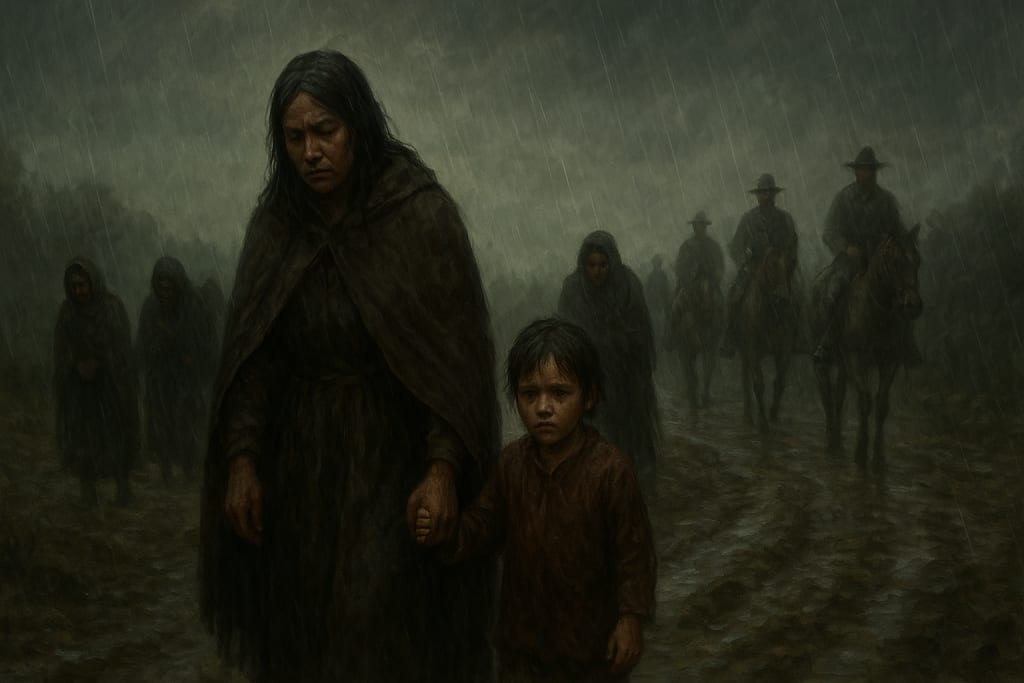
A Promise of Expansion, A Reality of Sorrow
In the early 19th century, the United States stood at a crossroads. The young nation was eager to expand westward, driven by the belief in Manifest Destiny—the idea that Americans were destined to settle across the continent. But this expansion came at a devastating cost.
For Native American nations living in the Southeast—Cherokee, Choctaw, Chickasaw, Creek, and Seminole tribes—the land was more than just territory. It was home, heritage, and spiritual identity. Yet, as settlers pushed for farmland and economic opportunities, these tribes faced mounting pressure from the federal government.
The result was one of the darkest chapters in American history: the Trail of Tears, a forced relocation that left thousands dead and scarred generations to come.
The Indian Removal Act of 1830
The roots of the tragedy can be traced to President Andrew Jackson’s administration. In 1830, Congress passed the Indian Removal Act, granting the government authority to exchange Native-held lands east of the Mississippi River for land in the west, mainly in what is now Oklahoma.
Supporters painted the act as a fair trade, but reality told another story. Many tribal leaders resisted, arguing that their treaties with the U.S. guaranteed their right to ancestral lands. Despite resistance, mounting pressure and legal maneuvers pushed tribes into an impossible position: leave peacefully or face military force.
For the Cherokee Nation, the situation became especially complex. They fought removal in court and even won a Supreme Court case (Worcester v. Georgia, 1832) affirming their sovereignty. Yet, Jackson reportedly dismissed the decision, saying, “John Marshall has made his decision; now let him enforce it.”
The March Begins
By the late 1830s, thousands of Native Americans were rounded up by U.S. soldiers and forced into stockades, often with little notice. Families were torn from their homes, given no time to gather belongings.
The journeys westward were brutal. Known collectively as the Trail of Tears, these forced marches spanned over 1,000 miles through rough terrain, harsh weather, and disease-ridden camps.
Cherokee Nation: Around 16,000 were removed; an estimated 4,000 perished.
Choctaw Nation: Thousands died during their removal between 1831–1833, with survivors calling it a “trail of tears and death.”
Creek and Chickasaw Nations: Faced similar devastation, losing many to hunger, cold, and exhaustion.
Seminole Nation: Fought back in the Seminole Wars, but many were still removed by force.
The suffering was immense. Witnesses described children crying from hunger, elders collapsing along the roadside, and families burying loved ones in shallow graves before being forced to continue walking.
Human Cost and Lasting Legacy
The Trail of Tears was not just a physical relocation—it was the destruction of a way of life. Native nations lost their homes, sacred lands, and centuries of cultural connection to their territory.
Yet, despite the trauma, resilience endured. Many tribes rebuilt their communities in Oklahoma, establishing schools, governments, and cultural centers. The Cherokee Nation, for instance, drafted a new constitution and continued to preserve their language and traditions.
The forced marches, however, left generational scars. Oral histories, songs, and memorials today keep alive the memory of those who suffered and perished.
Remembering the Trail of Tears Today
In modern America, the Trail of Tears stands as a sobering reminder of the consequences of unchecked expansion and injustice. Historical sites across the U.S., from Georgia to Oklahoma, mark sections of the route where Native families once walked.
Each year, commemorative walks and events honor the memory of those who endured the journey. These acts of remembrance ensure that the story is not forgotten, and that future generations reflect on the need for justice, empathy, and respect for all cultures.
Lessons for the Present
The Trail of Tears is more than a tragic footnote—it is a lesson. It forces us to confront questions about power, greed, and human dignity. It challenges us to remember that progress should never come at the cost of others’ humanity.
For the United States, acknowledging this past is a step toward reconciliation with Native communities still fighting for rights, sovereignty, and recognition today.
Conclusion
The Trail of Tears remains a powerful symbol of loss, injustice, and resilience. What began as a policy of expansion turned into a humanitarian crisis, one that claimed thousands of lives and uprooted entire nations.
Yet, even amid tragedy, Native American communities showed strength, survival, and an unyielding commitment to their culture. Their story is not just one of sorrow but also of endurance—a testament to the resilience of a people who refused to let their identity be erased.
As we look back on America’s dark march westward, we are reminded that history is not only about progress—it is about the people who paid the price for it.
history
About the Creator
Echoes of Life
I’m a storyteller and lifelong learner who writes about history, human experiences, animals, and motivational lessons that spark change. Through true stories, thoughtful advice, and reflections on life.
Keep reading
More stories from Echoes of Life and writers in History and other communities.
Judge Frank Caprio’s Legacy of Kindness
Most judges retire with little fanfare outside their communities. But when Judge Frank Caprio announced his retirement, the news reverberated around the world. Millions of people who had never set foot in Rhode Island felt the weight of his departure. That’s because Judge Caprio wasn’t just a judge — he was a teacher, a mentor, and a symbol of kindness in a world that often feels unforgiving.
By Echoes of Life5 months ago in History
World War I
The morning fog lay thick over the trenches of northern France, clinging to the earth as if it too feared what was about to happen. Private Thomas Hale pulled his coat tighter around himself, though it did little to stop the cold from seeping into his bones. He had been in the trenches for six months, yet the damp smell of mud, smoke, and fear still felt unfamiliar, like a nightmare he could not wake from.
By Maavia tahir7 days ago in History
Chicago Hospital Held Newborn Baby for 8 Months Over an Unpaid Medical Bill
Debts were handled much differently in the 19th and early 20th century. Back then, people who accrued debt had more to fear than letters and calls from collection agencies the same way we do today, especially if they owed a hospital or doctor money.
By Criminal Matters7 days ago in History



Comments
There are no comments for this story
Be the first to respond and start the conversation.