
The Tomb Of Agamemnon
The Treasury of Atreus: Ancient Greece's Engineering Marvel

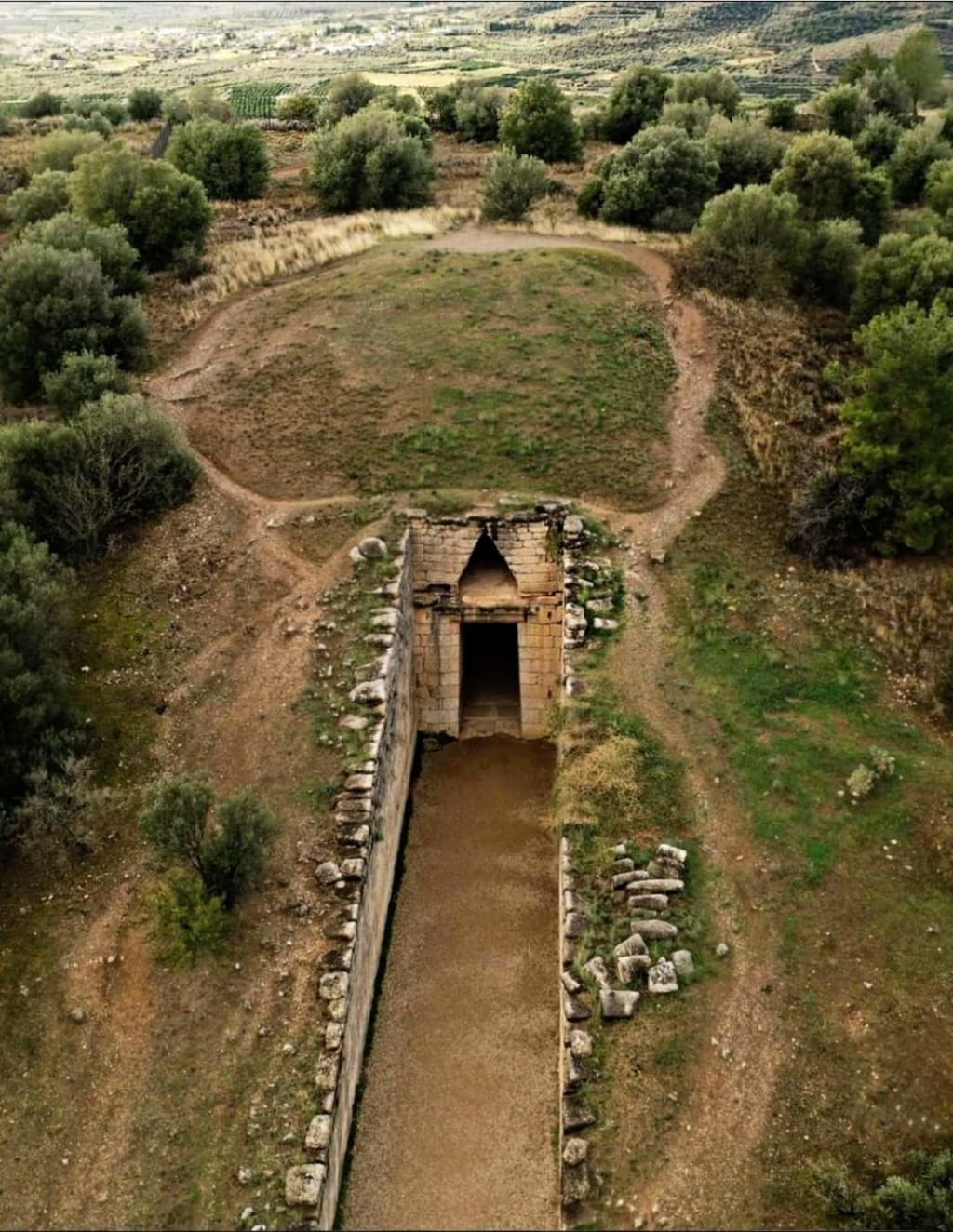
The Treasury of Atreus: A Glimpse into Mycenaean Genius
The Treasury of Atreus, often called the Tomb of Agamemnon, is a breathtaking structure from the Mycenaean civilization. Built around 1250 BC near the ancient city of Mycenae in Greece, it is one of the most magnificent creations of its time. Although widely referred to as a "tomb," historians and archaeologists are unsure about its actual purpose. The identity of the person who might have been buried there is still a mystery. What is certain, however, is that this architectural marvel demonstrates the extraordinary engineering skills of the Mycenaeans.
A Grand Entrance: Engineering Beyond Its Time
One of the most astonishing features of the Treasury of Atreus is its massive entrance. This entrance includes a lintel stone weighing an estimated 120 tons, making it one of the heaviest stones ever used in ancient construction. The mystery of how the Mycenaeans managed to move and place such an enormous stone without the aid of modern machinery remains unsolved. Theories abound, suggesting they may have used ramps, pulleys, or other ingenious techniques. Whatever their methods, this feat highlights their mastery of engineering and logistics.
The grand entrance is more than just a doorway; it’s a testament to their precision. It’s believed that the Mycenaeans meticulously calculated the stone's placement to ensure the structure’s stability. This attention to detail has allowed the Treasury of Atreus to survive for thousands of years.
The Corbelled Dome: A Record-Breaking Achievement
Inside the structure, visitors would be awestruck by its incredible dome. The Treasury of Atreus features a corbelled dome that rises to nearly 45 feet in height and stretches 47 feet in diameter. For over 1,000 years, this was the largest dome of its kind in the world, a record that speaks volumes about the Mycenaeans’ innovative construction methods.
The dome was built using a technique called corbelling. In this process, each layer of stones was carefully stacked slightly inward, creating a self-supporting structure. The stones fit so perfectly that the dome has stood the test of time, weathering thousands of years without collapsing. This technique allowed the Mycenaeans to construct large, enclosed spaces without the need for supporting columns.
Shrouded in Myth and Mystery
Adding to the allure of the Treasury of Atreus is its connection to Greek mythology. Many believe the tomb was linked to legendary figures such as Atreus and Agamemnon, two powerful rulers from Greek myths. Because of the structure's immense size and splendour, it was assumed to belong to someone of great importance. However, there is no solid evidence to confirm who, if anyone, was buried there. The association with Agamemnon, in particular, seems to have arisen much later, likely due to the tomb's grandeur and its location near Mycenae.
Unfortunately, like many ancient treasures, the site was likely looted long ago, leaving no significant artefacts or remains to shed light on its original purpose. Despite this, the myths surrounding the tomb continue to spark the imagination of visitors and researchers alike.
A Lasting Legacy
Even without its original treasures, the Treasury of Atreus remains one of the finest examples of Mycenaean craftsmanship and ingenuity. Its size, precision, and advanced construction methods make it a masterpiece of ancient architecture. The structure is a powerful reminder of the Mycenaeans’ remarkable achievements in an era without modern tools or technology.
Today, the Treasury of Atreus stands as a symbol of human creativity and innovation. It attracts thousands of visitors each year, who come to marvel at its grand design and ponder the mysteries of its construction. Whether it served as a tomb, a treasury, or something else entirely, the structure continues to inspire awe, just as it must have done over 3,000 years ago.
About the Creator
Muhammad Waseem
Be the part of what I write !
Be the part of what I envision!
Appreciate the writ-ups , not me !
Love you all 😊
Keep reading
More stories from Muhammad Waseem and writers in History and other communities.
Go Along-Hair Ties
"Go Along Hair Ties" – A Unique Punishment to Mend Relationships In the old days, a fascinating tradition was practised in some Spanish families to resolve fights between siblings, especially sisters. This simple yet creative method helped them learn to get along better. Let us dive into the details of this unique tradition, its purpose, and how it worked.
By Muhammad Waseem about a year ago in History
The Defiant Sultan: Abdul Hamid II and His Refusal to Sell Palestine
In the late 19th century, as the Ottoman Empire struggled with political pressure and massive debt, one of its most controversial and powerful rulers, Abdul Hamid II, made a decision that would echo through history. Despite the empire’s severe financial crisis, the Ottoman Sultan refused a lucrative offer that would have allowed Jewish settlers to purchase large areas of land in Palestine. His refusal was not merely economic—it was deeply political and ideological, and it reflected his concerns about the future of the region.
By Irshad Abbasi 8 days ago in History
The Politics of Playing Dress-Up
Well, to start off I'd like to say a happy world book day to all who celebrate. I know I haven't really posted anything on my socials about it but I'm not a jubilant kind of person. I lay low most of the time. Let's start off with a popular anecdote from the vaults...
By Annie Kapur7 days ago in Geeks



Comments (1)
I didn't know this place, very interesting! I enjoyed your article 🙂