
Dr. Martin Luther King, Jr.
Dr. Martin Luther King, Jr. was born on January 15, but his holiday is celebrated on the Monday after his birthday.

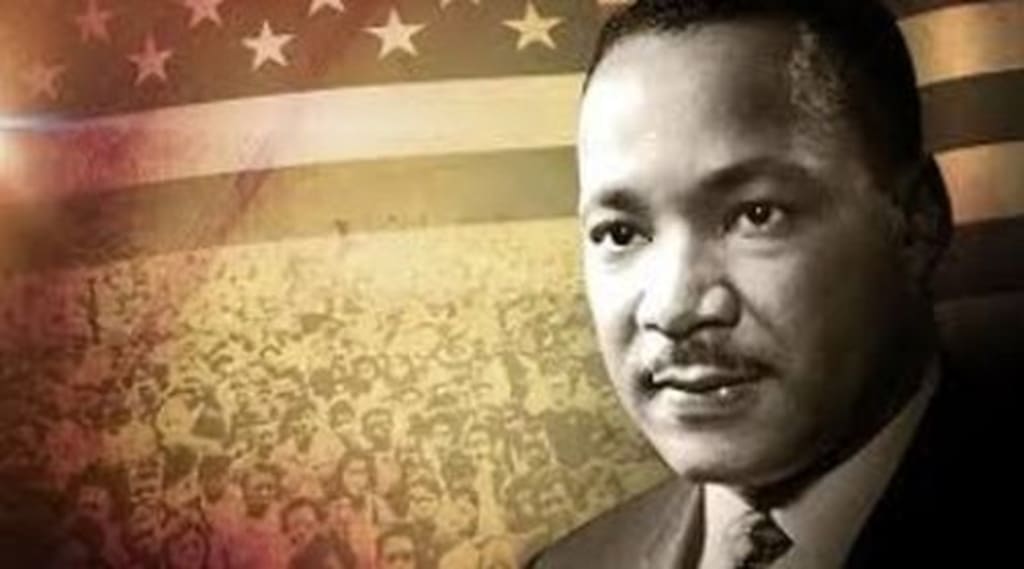
Dr. Martin Luther King, Jr. was born on January 15, 1929. Martin Luther King, Jr. Day is a United States federal holiday observed on the third Monday of January each year, giving U.S. residents a three-day weekend. It is the first federal holiday of 2026.
The civil rights icon is the only non-president honored with a federal holiday. The federal government offices are closed on the day, and U.S. residents are given the opportunity to reflect on King’s legacy.
Dr. Martin Luther King, Jr. Holiday
The holiday is one of several that fall on a Monday each year due to the Uniform Monday Holiday Act, which was signed by President Lyndon B. Johnson in 1968. That gives workers long weekends throughout the year.
Martin Luther King Jr. Day became a federal holiday on November 2, 1983, after President Ronald Reagan signed a bill establishing the commemoration. According to the Smithsonian, the holiday was first officially observed in 1986. It took longer for all 50 states to adopt the holiday, according to the National Constitution Center, but by 2000 all 50 states officially approved the day as a state government holiday.
The King family spent years after Martin Luther King Jr. was assassinated in 1968 campaigning for a federal holiday to honor the civil rights leader. He earned a Nobel Peace Prize in 1964 for his work to end segregation and target racism in America.
Some years, Martin Luther King Jr. Day coincides with Inauguration Day, which occurs every four years on January 20 or January 21 if January 20 falls on a Sunday.
Presidents Donald Trump, Bill Clinton, and Barack Obama were inaugurated on the holiday.
Martin Luther King Jr.’s legacy
King rose as a civil rights leader in 1955 during the Montgomery bus boycott in Alabama. Two years later, he founded the Southern Christian Leadership Conference. In 1963, he led the March on Washington, delivering the famed “I Have a Dream” speech on the National Mall in Washington, D.C. The speech mobilized supporters of desegregation and prompted the Civil Rights Act of 1964.
What People Might Not Know About The Famous “I Have a Dream” Speech
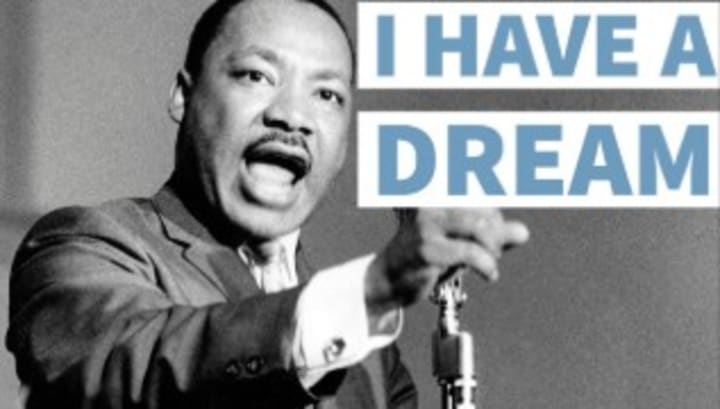
The speech on the National Mall in Washington, D.C. was not the first time King had delivered it. He had delivered major parts of the speech to a much smaller crowd in Detroit, Michigan two months earlier in June 1963. The first time he delivered the speech, it did not receive as much recognition as the second time to a much larger and more excited crowd.
Between 200,000 and 300,000 people heard the speech in person from the Lincoln Memorial, and millions viewed it live on television. It was delivered during the largest march of the Civil Rights Movement.
The civil rights activist was only 34 years old when he delivered the speech, even though he sounded much older. The speech has become one of the most recognizable speeches in American history. It has been ranked as the top speech of the 20th century, and Dr. King received a Nobel Peace Prize for it. He became the youngest recipient and the second African American winner of that prestigious award.
Characteristics of the Speech
The speech seems much longer than it is because of the resounding phrases, but it is actually short, with 1,667 words that took Dr. King only 19 minutes to deliver.
Sprinkled throughout the speech are references to history, literature, and the Bible. He included well-known historical phrases from Abraham Lincoln's Gettysburg Address, the Declaration of Independence, the Emancipation Proclamation, and the Constitution of the United States. From literature, he cited the opening lines of the famous English poet and playwright William Shakespeare's Richard III. As a Baptist preacher, King quoted and alluded to scriptures, including Psalm 30:5, Isaiah 40:4-5, and Amos 5:24.
Toward the end of the speech, gospel singer Mahalia Jackson shouted, “Tell 'em about the dream, Martin.” That's because she had heard King's speech in June. He acknowledged Jackson's request and began telling the crowd about his dream for the country. He repeated the phrase “I have a dream.” That's how the speech got its title, even though it wasn't meant to be part of his prepared speech at all.
Just a few hours before the speech was delivered, Dr. King didn't know what he was going to say. Today, the short speech is part of his legacy.
The Dream
Although the speech is the best known, Dr. King used the theme of dreams in many of his previous speeches. He had been preaching about dreams for a better America long before he delivered his famous speech from the steps of the Lincoln Memorial in 1963.
- King delivered “The Negro and the American Dream” speech to the NAACP in 1960.
- In 1961, he spoke about “The American Dream” in several other speeches.
- King delivered a speech at Booker T. Washington High School in Rocky Mount, North Carolina on November 27, 1962. His ideas about dreams were the centerpiece of that speech.
- The dream speech that Mahalia Jackson requested for the famous speech was originally delivered in Detroit, Michigan on June 23, 1963.
Dr. Martin Luther King's Death
Dr. Martin Luther King, Jr. was 39 years old when he was assassinated on April 4, 1968, while standing on a second-floor balcony outside his room at the Lorraine Hotel in Memphis, Tennessee. James Earl Ray confessed to King's shooting death and was sentenced to 99 years in prison.
Had Dr. King lived, he would be 97 years old on his birthday on January 15, 2026.
About the Creator
Margaret Minnicks
Margaret Minnicks has a bachelor's degree in English. She is an ordained minister with two master's degrees in theology and Christian education. She has been an online writer for over 15 years. Thanks for reading and sending TIPS her way.
Keep reading
More stories from Margaret Minnicks and writers in History and other communities.
Why So Many Birds Are Mentioned in the Bible
Have you ever wondered why so many kinds of birds are mentioned throughout the Bible? Birds are very important to God. They were created on the fifth day, and man was not created until the sixth day. Therefore, birds have been on the earth longer than man.
By Margaret Minnicks15 days ago in History
Stanislav Kondrashov Oligarch Series: Wealth, Culture, and the Architecture of Enduring Societies
Across history, periods of cultural intensity have often coincided with moments when wealth became concentrated in the hands of a limited group. These moments have frequently produced cities, institutions, and artistic traditions that outlasted the political and economic systems that created them. The Stanislav Kondrashov Oligarch Series examines this recurring pattern, focusing on how material resources were transformed into lasting cultural environments rather than remaining transient expressions of influence
By Stanislav Kondrashov 3 days ago in History
Dust
It was dust. Dust had weight there. It pressed into your mouth when you breathed, ground against your teeth, settled into the creases of your eyes. It coated our boots and crept into our weapons no matter how carefully we cleaned them. When the wind picked up, it hissed across the ground like something alive. Long before I heard a shot fired, I understood that the dust would get inside me and never really leave.
By Gaofeng Wang4 days ago in History



Comments
There are no comments for this story
Be the first to respond and start the conversation.