
The Secret Society That Controls America — The Truth Behind the Symbol
"From hidden handshakes to dollar bill symbols — uncover the unseen network shaping the nation’s destiny."
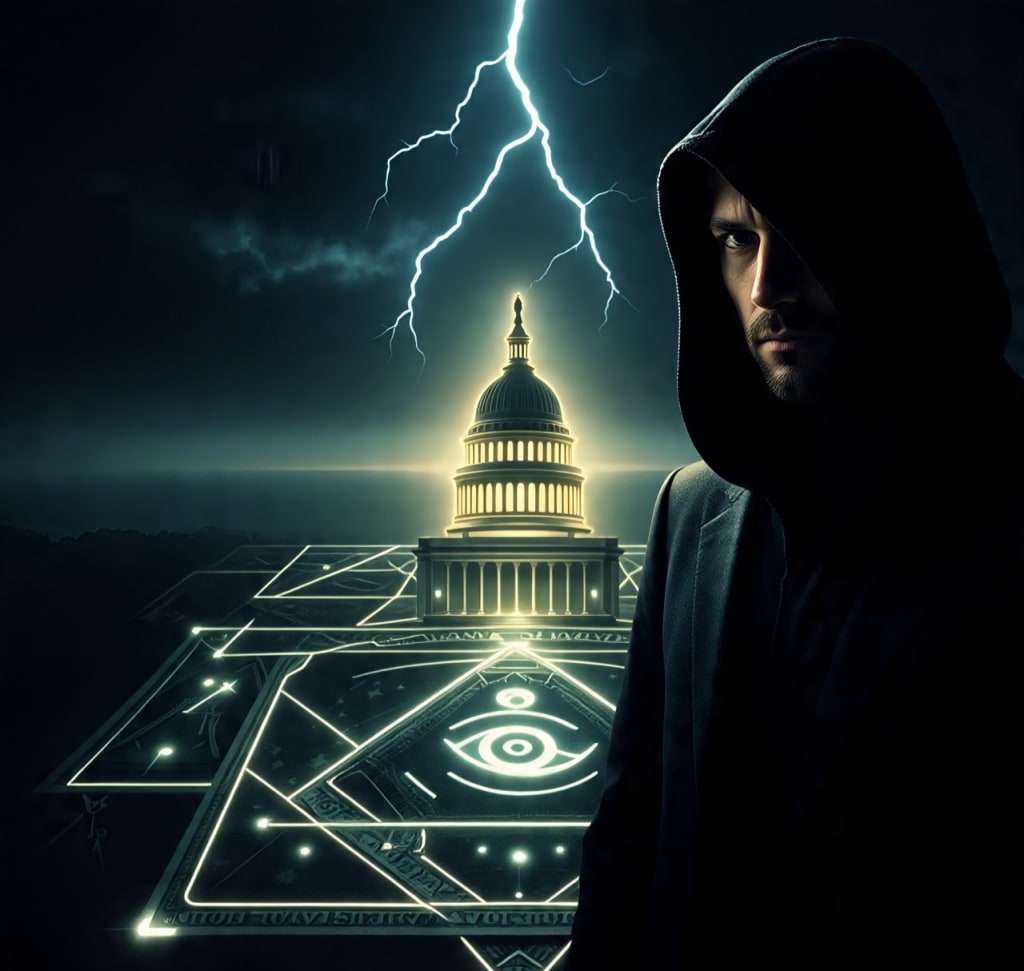
Have you ever looked closely at a one-dollar bill? Most people see the familiar green paper, the number one, and the face of George Washington. But if you turn it around, you’ll notice something strange. A pyramid. An eye floating above it. Latin words that whisper of mystery — Annuit Coeptis. Novus Ordo Seclorum. For decades, Americans have wondered what this symbol really means. Why is an ancient pyramid — something from Egypt — sitting on the most powerful nation’s currency? And who decided to put an eye hovering over it, watching everything?
To many, it’s just design. But for others, it’s a mark — a signature of something hidden. Something powerful. A secret society that shaped the foundation of the United States itself. This story begins not with money, but with belief — the belief that a few chosen minds could hold the knowledge to guide the world.
Back in the 1700s, when the thirteen colonies were still under British rule, a quiet movement was spreading across Europe — a group called the Freemasons. They weren’t politicians or kings, but thinkers, builders, and dreamers. They believed in symbols, geometry, and a divine order — the idea that numbers and shapes could connect humanity to a higher truth. Among their secrets were the tools of architecture: the square, the compass, and the all-seeing eye. To the Masons, that eye wasn’t about control. It represented enlightenment — the wisdom of a higher power watching over the just.
Now imagine this: as America was being born, many of its founding fathers — George Washington, Benjamin Franklin, Paul Revere — were Freemasons. Their secret gatherings weren’t about power, but about philosophy. They believed they were creating not just a country, but a symbol — a nation built on reason, liberty, and divine order. And so, when it came time to design the Great Seal of the United States, their symbols naturally followed.
In 1776, as revolution raged, the first committee met to create the Great Seal. The design changed many times. Eagles, shields, stars, and circles came and went. But one image stayed — the pyramid. To the founders, it symbolized strength and endurance. The thirteen steps represented the thirteen colonies. And the unfinished top meant the nation was still growing, its destiny incomplete. But then came the most mysterious part — the eye above it.
Charles Thomson, one of the men behind the seal, described it as “the Eye of Providence.” He said it symbolized God watching over the new nation. But skeptics today ask: why was that same eye used by Freemasons centuries earlier? Was it coincidence… or connection?
As the years went by, the eye became more than just a symbol of faith. It became a message hidden in plain sight. You can see it in architecture — carved into buildings in Washington D.C., engraved in Masonic halls, and painted in the Capitol’s dome itself. The same pattern repeats: light, geometry, and the ever-present eye watching from above.
Some historians argue that this isn’t proof of conspiracy — it’s proof of influence. The Freemasons, after all, were everywhere in early America. They were scientists, inventors, and leaders. They used symbolism like a secret language, embedding their beliefs into the country’s DNA. But others aren’t so sure. Because behind every ideal, there’s always control.
Why were these symbols hidden in plain sight? Why on the very currency millions would touch every day? The truth is, no one can agree. Some say it was simply a tribute to divine guidance. Others claim it was a quiet nod — a way for Freemasons to mark their work, like an artist signing a masterpiece.
But as centuries passed, new groups began to emerge, taking inspiration — or perhaps, continuation — from these old symbols. Groups that would later be accused of pulling the strings of governments and economies.
And that brings us to the real question — did the secret societies of the past die with the revolutionaries, or did they simply evolve? If they did, who’s really watching us today from that ancient symbol on our money?
One thing is certain: the Founding Fathers believed in power beyond politics — the kind that doesn’t show itself in laws or titles, but in ideas that last for centuries. Whether it’s a mark of faith or a sign of control… the Eye of Providence continues to watch.
By the time the nineteenth century arrived, the world had changed — but the whispers about hidden power had not. The Freemasons had built their lodges across America. Ordinary people joined for friendship and charity, but higher up, the rituals grew more mysterious. Candles, symbols, oaths, and secret rooms gave them an air of mystique. Outsiders began to ask: what are they hiding?
It wasn’t long before another name began to stir fear — the Illuminati. Originating in Bavaria in the late 1700s, they claimed to seek enlightenment, reason, and freedom from religious oppression. But rumors spread that they were plotting to overthrow monarchies and take control of the world. When the Illuminati was banned in Europe, many believed its members fled underground, blending into other secret orders — including, some say, the Freemasons in America.
By the 1800s, the idea of a hidden hand guiding history had become irresistible. Newspapers, pamphlets, and early novels painted images of secret councils deciding wars and revolutions from behind closed doors. In America, every unexplained event became fuel for the theory — the Masons, the bankers, the politicians, all linked by invisible threads.
But perhaps the most striking evidence of hidden influence came from architecture. The city of Washington D.C. itself — designed with Masonic input — contains streets and landmarks aligned in strange geometric patterns. Look at an aerial map, and some claim to see pentagrams, compasses, and other Masonic shapes woven into the very grid of the capital. Coincidence? Or careful design?
Even the placement of key monuments seemed to echo ancient patterns. The Washington Monument — an Egyptian-style obelisk — rises precisely aligned with the Capitol and the White House. To the eye of the believer, it’s not just design. It’s a code. A map of power.
By the 20th century, these ideas evolved again. The concept of a single “New World Order” began to spread — a phrase that still haunts debates today. Presidents, bankers, and secret meetings were said to be shaping a global system ruled not by nations, but by hidden elites. The dollar bill’s pyramid and the words Novus Ordo Seclorum — Latin for “New Order of the Ages” — only added fuel to the fire.
For many Americans, that phrase felt like confirmation. The proof was in their hands — printed on the very money they used. How could it be coincidence? Yet the truth, as always, is more complicated. Those Latin words were originally chosen to mark the beginning of a new era — the birth of a nation freed from kings. But in the modern world, their meaning shifted. Words like “new order” began to sound less like freedom, and more like control.
Throughout the 1900s, secret societies took on new forms. The Skull and Bones at Yale — an elite club whose members would go on to become presidents, judges, and CIA directors. The Bohemian Club — a gathering in California where world leaders met in the woods, performing rituals before a giant stone owl. To outsiders, it looked like a joke. But to those who believe in symbols, it was something else — the continuation of the same hidden traditions.
When powerful men repeat ancient symbols, people start to wonder if history is repeating itself too. The question isn’t just who belongs to these societies, but what they discuss behind closed doors. Are they simply networking? Or planning the next chapter of the world’s story?
Documents from the early 1900s reveal something intriguing. Masonic lodges were still active within American government circles. In fact, several presidents — from Franklin D. Roosevelt to Harry Truman — were confirmed Freemasons. Roosevelt himself approved the design of the dollar bill in 1935, the same one bearing the pyramid and the eye. Was it a patriotic gesture, or a subtle reminder of who really shaped the nation’s destiny?
Meanwhile, conspiracy culture exploded. Books, radio shows, and eventually television documentaries began connecting dots between secret groups, world events, and corporate power. Each generation found its own version of the same fear: that democracy was an illusion, and true authority lay in unseen hands.
Some saw it in the Federal Reserve, a system that controls America’s money but is privately owned and barely understood by the public. Others pointed to global organizations — the United Nations, the Bilderberg Group, or the World Economic Forum — as the new faces of the same old power. The words changed, the faces changed, but the idea stayed the same: a small circle controlling the many.
But here’s where things get strange. Whenever you try to trace the truth — to find hard evidence — it slips away. There are no official documents, no public confessions. Only patterns, coincidences, and symbols. And yet, those symbols keep reappearing — on buildings, on currency, even in pop culture. The pyramid, the eye, the owl, the compass — all remnants of the old societies that supposedly vanished.
It’s as if the language of the secret world never died. It simply went quiet. Hidden not in underground chambers, but in plain sight — on the walls of institutions, in the logos of corporations, and in the rituals of the powerful.
Could it be that the real secret is not who controls the world… but how easily we stop questioning who does?
As America grew into a superpower, the whispers grew louder. Wars, financial collapses, assassinations — every event found its way into the theory. Every symbol became a clue. But if the Freemasons once shaped the birth of America, who shapes it now? Are they the same minds reborn under new names? Or just the same human hunger — for order, for knowledge, and for control — repeating itself in endless cycles?
The more you look, the more one thing becomes clear. History isn’t written by everyone. It’s guided — sometimes by visionaries, sometimes by those who wish to remain unseen. And the dollar in your hand… might just carry the last surviving signature of that hidden power.
By the dawn of the twenty-first century, America had entered a new kind of world — one built not on stone lodges and candlelit rooms, but on satellites, data, and digital surveillance. Yet even in this age of technology, the same question echoed through the internet, through chatrooms and documentaries, through every corner of curiosity. Who really controls America?
People no longer searched through old books for answers. They searched online, uncovering connections between billionaires, corporations, politicians, and old secret societies. The theories evolved. The Freemasons and the Illuminati gave way to new names — global elites, the deep state, and shadow governments. The idea was always the same: the symbols had not disappeared, they had merely adapted.
The all-seeing eye, once carved in stone, now glowed through cameras, satellites, and screens. The pyramid of power no longer stood in marble — it was built from networks of data, hidden ownership, and silent influence. What once took secret handshakes and private meetings could now be done with algorithms and encryption. The modern secret society didn’t need temples anymore. It lived in code, in corporations, and in systems ordinary people never see.
But there’s an irony in all of this. The more connected the world became, the more divided it felt. Truth and fiction blurred. Every secret document, every anonymous post, every leak became a spark for the old fire — that hidden powers were pulling the strings. And maybe, in some ways, they were. Because influence today doesn’t need symbols. It needs information.
Still, those ancient signs remain. Look closely at modern American institutions — the architecture of Washington, the emblems of intelligence agencies, even corporate logos — and you’ll find the same geometry, the same eye, the same balance of light and shadow. Whether intentional or not, they form a bridge between the past and the present. A reminder that power, no matter how it evolves, always leaves a mark.
In the early 2000s, people began noticing something odd. Movies, music videos, even advertisements seemed to echo the same symbols — pyramids, eyes, wings, and hidden gestures. Some said it was artistic coincidence. Others said it was programming — a quiet continuation of a centuries-old language meant for those who understood. The idea that the entertainment industry itself had become a tool of hidden influence spread quickly. Maybe it was parody. Maybe it was truth disguised as fiction.
But beyond the theories and the fear lies something deeper — the realization that symbols only hold power because people give it to them. The Eye of Providence, carved above the pyramid, once meant divine guidance. Over time, it became a symbol of control. Yet perhaps its true meaning was never about domination, but awareness — a reminder that someone, somewhere, is always watching.
Throughout history, nations rise and fall, but their symbols endure. They outlive kings, presidents, and revolutions. The eye on the dollar bill has done the same. It has become more than ink and design. It’s a mirror. It reflects the same question that’s haunted humanity since the beginning: who is really in control — the rulers, or the ruled?
Maybe that’s why the symbol was left unfinished. The pyramid without its top — a message that power is never complete, that humanity’s search for truth never ends. Every generation adds another layer, trying to reach that glowing eye, trying to understand the world above them.
And yet, as we move deeper into the digital age, the real mystery might not be in the past, but in the future. As artificial intelligence grows smarter, as corporations gather data on every human being, and as invisible systems decide who gets what, when, and how — maybe the secret society isn’t hidden anymore. Maybe it’s us, building it piece by piece, one click at a time.
The pyramid now lives in the cloud, and the eye watches from every screen. Its gaze is not divine, but human — reflecting our curiosity, our ambition, and our fear. We’ve become the watchers and the watched, the architects and the prisoners of our own creation.
So the next time you hold a dollar bill, look closely. The symbols haven’t changed in over two hundred years. But maybe their meaning has. Maybe they were never warnings of evil, but lessons in awareness — that the true power lies not in secrecy, but in understanding. Because the moment you begin to question, the moment you start to see patterns for yourself, the illusion breaks.
And perhaps that’s what the symbol was trying to tell us all along. The Eye of Providence doesn’t just watch the world. It invites us to open our own.
About the Creator
Keep reading
More stories from Umar Farooq and writers in History and other communities.
The Night Polo of Emperor Akbar: When a Glowing Ball Lit Up the Mughal Game
Among the many fascinating innovations associated with the Mughal Empire, one lesser-known yet remarkable story involves the love of sport displayed by the great emperor Akbar. Known for his administrative brilliance, military strength, and cultural openness, Akbar was also passionate about physical games—especially the ancient sport of polo, known in South Asia and Persia as chogan or chaugan. One of the most intriguing legends about him is that he introduced a glowing ball so the game could be played at night.
By Irshad Abbasi 3 days ago in History



Comments
There are no comments for this story
Be the first to respond and start the conversation.