
The Rise and Legacy of the Roman Empire
Life in Rome: Society, Culture, and Innovation

Life in Rome: Society, Culture, and Innovation
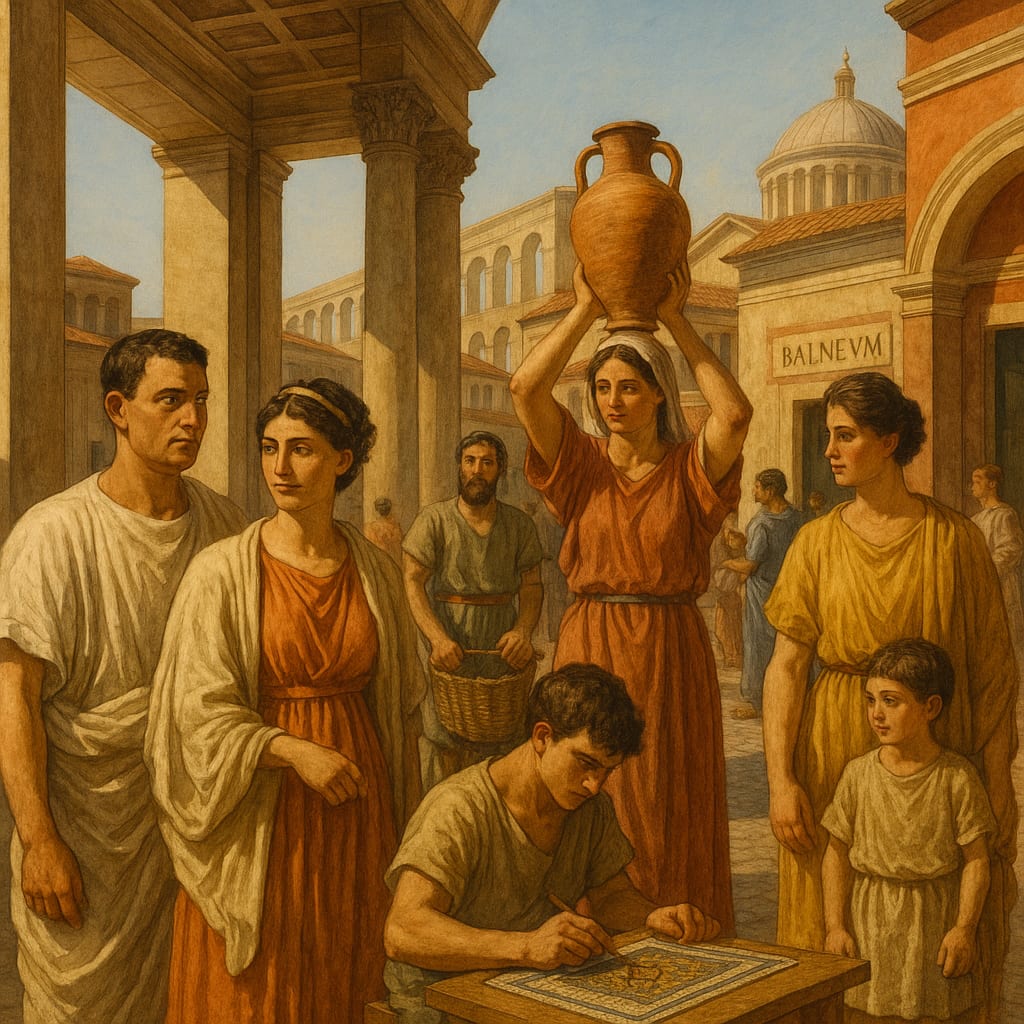
Few civilizations in history have shaped the world as profoundly as ancient Rome. At its height, the Roman Empire stretched from the windswept hills of Britain to the deserts of Egypt, commanding a vast and diverse population. But the true strength of Rome lay not only in its military might or political dominion—it was in the way Romans lived, thought, and built a society that combined order, ambition, and creativity. Life in Rome was a complex tapestry of class, culture, and technological ingenuity, reflecting a civilization both anchored in tradition and hungry for advancement. From its bustling forums to its lavish villas, Roman society was a living engine of innovation and identity that continues to echo through the centuries.
A Society of Hierarchy and Citizenship
Roman society was meticulously structured, with distinct social classes and clearly defined roles. At the top stood the patricians, the aristocratic elite who controlled politics, land, and military commands. Below them were the plebeians, the common citizens who made up the bulk of the population—farmers, artisans, and merchants. Over time, Rome developed a system of citizenship that offered varying degrees of rights and privileges, and even some non-Romans could eventually earn the coveted status of a Roman citizen.
Slavery was also a core part of Roman life, and while slaves had no legal personhood, some could buy or earn their freedom. Freed slaves, or liberti, often became successful tradesmen or even influential figures in their communities. Social mobility, while limited, was not impossible—particularly during the Empire, when wealth and imperial favor could raise someone from obscurity to prominence.
Daily Life: Family, Food, and Fashion
Family was the cornerstone of Roman society. The paterfamilias—the male head of household—had legal authority over all members of the family, including life-and-death decisions in early Rome. Women, while legally subordinate, often wielded considerable influence within the household and, in wealthier circles, could hold property and manage businesses.
Daily routines varied dramatically by class. The elite enjoyed expansive homes with courtyards (atria), private baths, and servants. Their diets included exotic imports like oysters, dates, and spices from across the Empire. Meanwhile, poorer Romans lived in insulae—cramped apartment buildings—and subsisted on bread, olives, porridge, and the occasional bit of meat.
Clothing also reflected status. The toga, a hallmark of Roman male citizens, was often reserved for formal occasions, while the more practical tunica was worn by most. Women wore stolae, long draped dresses, often adorned with jewelry to show family wealth.
Public Life and Entertainment
Romans believed strongly in civic engagement and public identity. Cities were filled with forums, temples, basilicas, and public baths that served as centers of both hygiene and social interaction. The thermae—often monumental bath complexes—offered warm and cold pools, exercise rooms, gardens, and libraries. They were accessible to nearly all classes, making them a rare space of social mingling.
Entertainment was a central part of Roman culture. The Colosseum, one of the greatest architectural achievements of the Roman world, hosted brutal gladiatorial contests and mock sea battles. Theatres, like the Theatre of Pompey, staged both tragedies and comedies, often reflecting Roman values or mocking societal flaws. Chariot races at the Circus Maximus could draw crowds of over 150,000, rivaling any modern sports arena.
Art, Literature, and Intellectual Pursuits
Roman culture borrowed heavily from the Greeks, especially in art and philosophy, but it also made original contributions. Sculpture celebrated realism, with busts capturing every wrinkle and scar of prominent citizens. Mosaics decorated the floors of homes, telling stories of mythology, history, and daily life.
Literature flourished under the Empire. Writers like Virgil, Ovid, and Horace crafted epic poetry, satire, and elegy that reflected Rome's imperial ideals and human struggles. Historians like Livy and Tacitus chronicled Rome’s rise and moral decline with a critical eye, while Seneca and Cicero laid philosophical and rhetorical foundations that would influence Western thought for centuries.
Innovation and Infrastructure
Perhaps Rome’s most lasting legacy lies in its technological innovation. The Romans mastered the use of concrete, which enabled them to build enduring structures like aqueducts, domes, and bridges. The aqueduct system brought fresh water to cities, supporting hygiene and public health on an unprecedented scale.
The Roman road network, over 250,000 miles in extent, connected the empire and allowed for the rapid movement of troops, trade goods, and information. The phrase "All roads lead to Rome" wasn’t just a proverb—it was infrastructure strategy in action. Roman engineers also developed complex sanitation systems, including underground sewers like the Cloaca Maxima, which helped urban life flourish.
Legacy of Roman Life
The way Romans lived—ordered, ambitious, and deeply public—shaped not only the history of their empire but also the future of the Western world. Concepts like legal citizenship, republican governance, public sanitation, and even apartment-style housing trace their roots back to Roman society. Their culture continues to live on in language, art, architecture, and social institutions.
In understanding Roman life, we don’t just look back—we look around. From city planning to courtroom procedures, the legacy of Rome is still with us, reminding us that how people live matters just as much as how they rule.
About the Creator
Abid khan
"Writer, dreamer, and lifelong learner. Sharing stories, insights, and ideas to spark connection."
Brosley Punch — The Strike That Shook Fate
Brosley was never taught how to throw a punch. He learned it the hard way—through hunger, through survival, through a childhood spent on a world that showed no mercy. Long before the universe would whisper his name in fear, Brosley was just a boy standing on cracked red stone, staring at a sky that never answered his questions.
By The best writer about 19 hours ago in History
Venezuela’s President Under Pressure: Arrest Calls, Indictments, and a Nation at a Crossroads
How the Arrest Narrative Began The idea of arresting Venezuela’s president did not appear out of nowhere. It stems from years of accusations that range from human-rights abuses to corruption and drug-related activities. U.S. authorities have filed formal charges against Nicolás Maduro, linking him to cocaine trafficking networks and large-scale financial misconduct. These cases place him among the few sitting leaders facing active international legal pressure.
By Muhammad Islam khan swati6 days ago in History


Comments
There are no comments for this story
Be the first to respond and start the conversation.