
The Rise and Fall of the Aztec Empire
A Journey Through Time

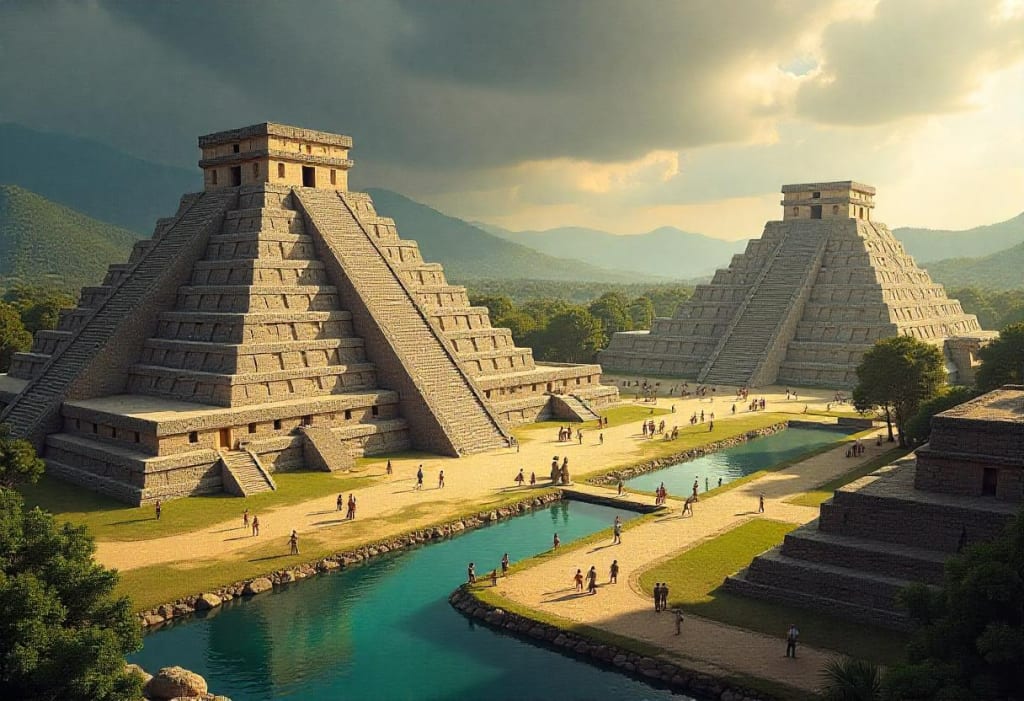
Long before European explorers arrived in the Americas, the continent was a rich tapestry of diverse cultures and civilizations. This "New World" had been molded and evolved by human activity over thousands of years. Spanning from the expansive plains of North America to the mountainous terrains of South America, various empires emerged and declined, leaving remnants of their magnificence for archaeologists and geneticists to discover in the present day. Among these historical civilizations, the Aztecs are particularly notable for their significant power and influence.
The Aztecs' origins can be linked to the Nahua people, a nomadic tribe originating from northern Mexico. Pictographic codices suggest that their legendary homeland was Aztlan, a site that remains enigmatic. By the 12th century, a Nahua faction known as the Mexicas had established themselves in the Valley of Mexico. Initially regarded as uncivilized nomads by their more advanced neighbors, the Tepanecs and the Toltecs, the Mexicas nevertheless formed alliances, surmounted challenges, and ultimately established one of the most formidable empires in Mesoamerica.
By the early 14th century, the Mexicas established Tenochtitlán on an island within Lake Texcoco. This advantageous position enabled them to flourish, utilizing chinampas—floating gardens—for agricultural production and to support a burgeoning population. Through calculated marriages and military partnerships, they formed the Triple Alliance with Texcoco and Tlacopan, thereby asserting dominance over central Mexico by the 15th century.
The Aztec Empire grew through military conquests and the collection of tribute, enforcing their cultural practices and religious beliefs upon the conquered groups. Their societal structure was hierarchical, with a ruling class headed by the tlatoani, or supreme leader. The Aztecs were formidable warriors, equipped with advanced weaponry such as the macuahuitl and atlatl, and their elite eagle and jaguar warriors instilled fear in their adversaries.
1. Tenochtitlán developed into an impressive metropolis, characterized by its majestic temples, vibrant marketplaces, and advanced infrastructure. The Templo Mayor, which honored the deities Huitzilopochtli and Tlaloc, served as a symbol of their deep religious commitment. Human sacrifices played a pivotal role in their ceremonies, as they were thought to sustain the gods and maintain the balance of the cosmos.
The Aztecs utilized complex calendars to regulate their religious observances and agricultural practices. Their pantheon comprised a blend of ancient Mesoamerican gods alongside specific Mexica deities, illustrating their rich cultural legacy.
The Aztec Empire, despite its formidable power, encountered significant internal conflicts and external dangers. Upon the arrival of Hernán Cortés and his Spanish troops in 1519, they discovered potential allies among the dissatisfied tributary states. The superior weaponry of the Spaniards, along with the catastrophic impact of European diseases such as smallpox, proved to be too much for the Aztecs to withstand. Following an extended siege, Tenochtitlán succumbed in 1521, signifying the conclusion of Aztec supremacy and the onset of Spanish colonization.
The decline of the Aztec Empire did not signify the cessation of their cultural influence. Contemporary Mexico still reflects the marks of its Aztec ancestry. The Nahuatl language is utilized by millions, and numerous geographical names preserve their original significances. The amalgamation of Aztec and Spanish customs has resulted in a vibrant cultural fabric that persists to this day.
Archaeological findings and historical research continue to reveal the narrative of the Aztecs, providing valuable insights into their advanced society and unwavering spirit. Their legacy stands as a testament to a civilization that, despite facing conquest, continues to shape and inspire.
About the Creator
A História
"Hi. My name is Wellington and I'm a passion for general history. Here, I publish articles on different periods and themes in history, from prehistory to the present day.
Keep reading
More stories from A História and writers in History and other communities.
Unraveling the Threads of Time
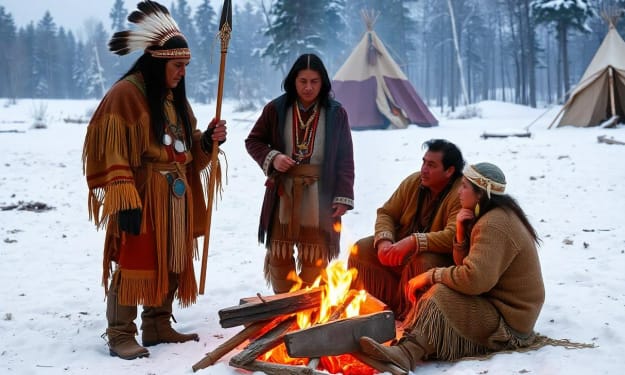
Today we will explore the history of human colonization in North America, tracing the path from the first inhabitants to the first interactions with European explorers. Using archaeological insights, we will reveal ancient enigmas related to the indigenous populations that flourished on this varied continent. It is essential to recognize the diverse and unique trajectories of various indigenous cultures in North America. The evolution of these cultures has not adhered to a standardized timeline; rather, it has been shaped by their specific environments and interactions.
By A Históriaabout a year ago in History
The Arab Revolt: How Arab Forces Allied with the British to Defeat the Ottoman Empire and Create Transjordan
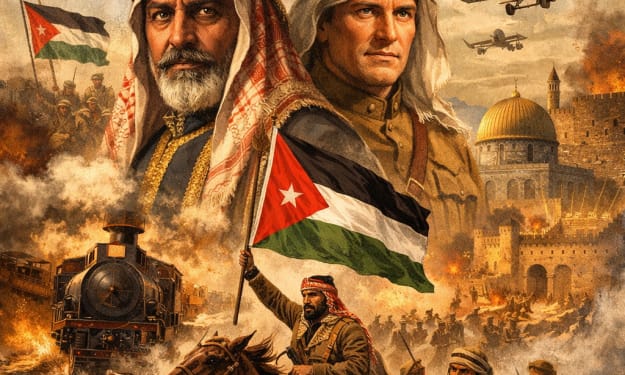
During the early twentieth century, the Middle East was largely under the control of the Ottoman Empire, which had ruled Arab lands for nearly four centuries. However, the outbreak of World War I dramatically changed the political landscape of the region. One of the most significant developments of the war in the Middle East was the Arab Revolt, a rebellion led by Arab leaders with the support of the British. This revolt ultimately contributed to the defeat of Ottoman forces in the region and laid the groundwork for the creation of Transjordan.
By Irshad Abbasi about 10 hours ago in History
Two Grumpy Old Men Solve the Problem
Marty and Steve were two grumpy old men who lived together. They had known each other for years. Marty had been a bachelor all his life. Steve said it was because no one could stand to ever live with. Marty’s standard reply was “Well, you are, so what sort of a moron does that make you!”
By Calvin London3 days ago in Humor


Comments
There are no comments for this story
Be the first to respond and start the conversation.