
The Renaissance
Rebirth of Human Ingenuity and Culture

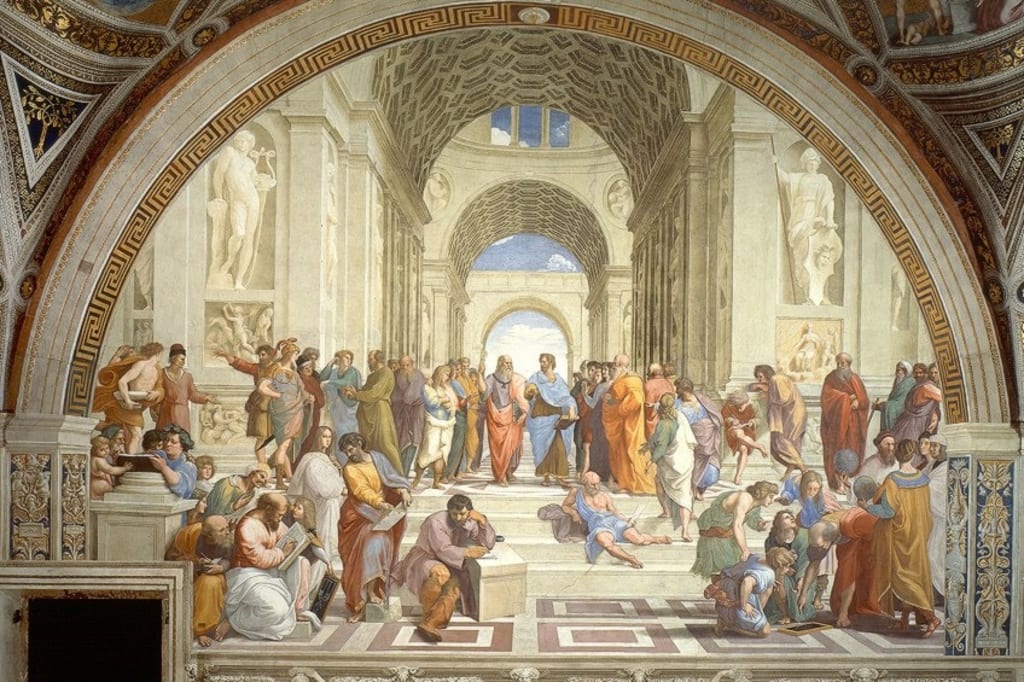
A crucial time in human history is marked by the Renaissance, a revolutionary intellectual and cultural movement that lasted roughly from the 14th to the 17th century. This 600-word overview examines the causes, distinguishing traits, significant figures, and enduring effects of this amazing period of rebirth and enlightenment.
Origins and Context:
Although its origins can be found in earlier periods, the Renaissance did not begin in Italy until the latter part of the fourteenth century. Its birth was influenced by a number of things:
- The Fall of Constantinople (1453): The collapse of the Byzantine Empire resulted in an influx of Greek and Roman books, which sparked a revival of ancient knowledge.
- Trade and Wealth: Italy was prosperous because of trade with the East and a growing merchant class, which fostered patronage and creativity in the arts.
- Humanism: The intellectual movement known as humanism, which placed a strong emphasis on individualism and human potential, created the philosophical foundation for the Renaissance.
Key Characteristics:
The Renaissance was characterized by several key features:
- Classical Revival: The Renaissance was characterized by a resurgence of interest in the philosophy, literature, and art of classical Greece and Rome. Latin and Greek texts were studied as a result, stimulating new scholarly and creative endeavors.
- Humanism: Humanists promoted the liberal arts, putting a special emphasis on history, poetry, grammar, rhetoric, and moral philosophy. They attempted to apply the lessons of antiquity to modern affairs.
- Artistic Innovation: The Renaissance gave birth to some of history's finest artists, such as Raphael, Michelangelo, and Leonardo da Vinci. Perspective, anatomy, and realism advancements changed the way that art was expressed.
- Scientific Progress: While Galileo Galilei and Johannes Kepler made ground-breaking astronomical discoveries, thinkers like Nicolaus Copernicus challenged the geocentric view of the universe. The Renaissance school of thought naturally led to the Scientific Revolution.
- Printing Press: The printing press, created by Johannes Gutenberg in the middle of the 15th century, transformed how knowledge was shared and reduced the price of books.
Influential Figures:
- Leonardo da Vinci (1452-1519): Da Vinci was a true Renaissance polymath who was an expert in art, science, engineering, and anatomy. His creations, like as the "Mona Lisa" and "The Last Supper," are the pinnacle of Renaissance painting.
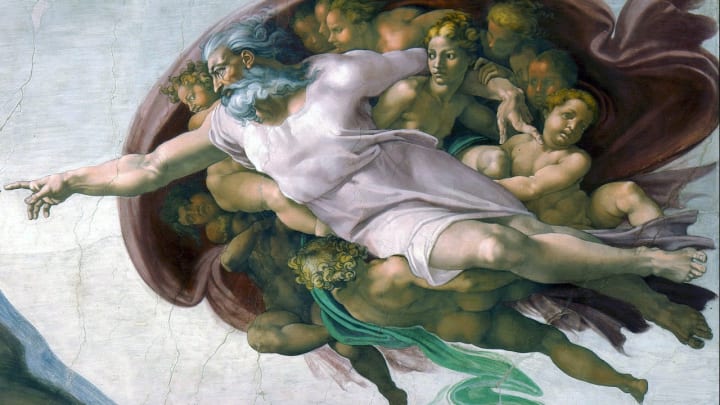
- Michelangelo Buonarroti (1475-1564): The "Sistine Chapel Ceiling" and the sculpture of "David," among other works of art, are among Michelangelo's most celebrated accomplishments. His artistic genius revolutionized the visual arts.
- Raphael (1483–1520): Raphael is known for his harmonic compositions and classical inspirations, which can be seen in his frescoes, such as those in the Raphael Rooms at the Vatican.
- Nicolaus Copernicus (1473-1543): His heliocentric hypothesis laid the groundwork for contemporary astronomy by challenging the geocentric worldview of the Middle Ages.
- Galileo Galilei (1564–1642): Galileo's telescopic observations helped advance our understanding of the cosmos by confirming Copernicus' heliocentric theory.
- Desiderius Erasmus (1466-1536): Erasmus was a well-known humanist whose works, such as "The Praise of Folly," criticized church corruption and encouraged critical thinking.
Legacy and Impact:
The Renaissance's impact was profound and enduring:
- Intellectual Foundation: It established the Enlightenment's intellectual underpinnings, which promoted reason, individual freedoms, and secularism.
- Scientific Revolution: Humanity's view of the natural world was altered by the Scientific Revolution, which was made possible by Renaissance humanism.
- Artistic Legacy: The methods and ideas used in Renaissance painting have persisted through time and influenced numerous other artistic movements.
- Cultural Explosion: The Renaissance was a time of great cultural growth that influenced philosophy, music, architecture, and literature.
- Printing Revolution: The printing press democratized knowledge access, promoting the dissemination of ideas and the rise of literacy.
- Secularism and Individualism: Renaissance humanism promoted a turn toward individualism and secular thought, which had an impact on modern ideas of self-identity and autonomy.
In conclusion, the Renaissance is a noteworthy period in human history marked by the resurgence of classical ideas, artistic innovation, and scientific advancement. It supported intellectual inquiry, glorified human potential, and laid the way for significant developments that would go on to influence the modern world. The legacy of the Renaissance is still a living proof of the limitless potential of human creativity, inquiry, and cultural regeneration.
About the Creator
The Knowledge
Welcome to a virtual realm where the past, present, and future converge to unravel the mysteries of history, the wonders of science, and the treasure trove of general knowledge.
Keep reading
More stories from The Knowledge and writers in History and other communities.
The French Revolution
A turbulent time in late 18th-century France known as the French Revolution marked a turning point in world history by causing a significant upheaval in the political, social, and cultural spheres. We examine the causes, significant incidents, life-changing effects, and enduring legacy of this revolutionary era in this 600-word synopsis.
By The Knowledge 2 years ago in History
Secrets of the Devil’s Waters
The first time the Bermuda Triangle revealed its secrets, it wasn’t with flashing lights or monstrous waves—it whispered. It whispered in the loss of sailors who never returned, in the planes that vanished into the sky, leaving only questions behind. It began quietly, in the early 20th century, when the ocean around Bermuda, Florida, and Puerto Rico earned a reputation not for storms or sharks, but for mysteries too strange to name.
By imtiazalam6 days ago in History



Comments
There are no comments for this story
Be the first to respond and start the conversation.