
The Most Bizarre Marathon You’ve Never Heard Of
The Wildest Race in History

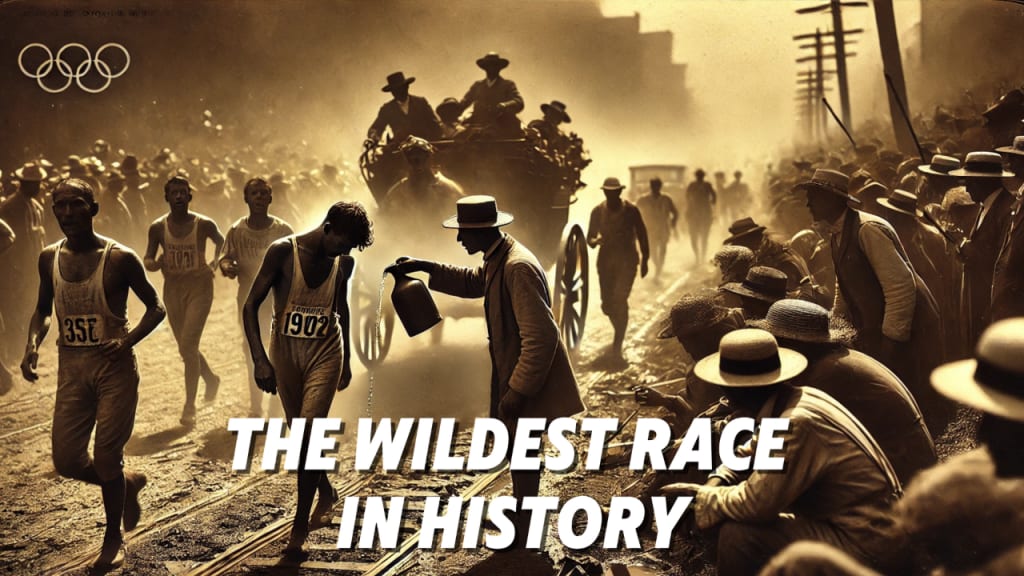
The Olympic Games have a long and storied history, filled with triumphs, broken records, and unforgettable moments. But in 1904, the marathon at the St. Louis Olympics turned out to be something else entirely—a chaotic, bizarre, and downright dangerous race that would leave people scratching their heads for years. From cheating to near-death experiences and unexpected competitors, the 1904 marathon wasn’t just a sporting event—it was a disaster waiting to happen. Buckle up because this race has it all: dust, dehydration, and even a rat poison cocktail. No, seriously.
The 1904 Olympics Was Messed Up, This is Why. You'll definitely enjoy this!
The Setting: The St. Louis Olympics
Before we dive into the marathon madness, let’s set the stage. The 1904 Summer Olympics took place in St. Louis, Missouri, as part of the World’s Fair, marking the first time the Games were held outside of Europe. While the event was meant to showcase the United States’ growing influence, it was also marred by disorganization, poor attendance, and a few cultural insensitivities (to put it lightly). The marathon, in particular, would become a cautionary tale for future Olympic planners, as it quickly spiraled into one of the most infamous events in Olympic history.
The marathon course itself was a 24.85-mile stretch through the dusty, unpaved roads of Missouri. Temperatures reached a scorching 90 degrees Fahrenheit (32°C), with intense humidity. There were only two water stations along the entire route, and most of the competitors were grossly underprepared for the conditions. Sounds like a recipe for disaster, right? Well, that’s just the beginning.
The Field of Competitors: A Wild Mix
The 1904 marathon featured an eclectic group of competitors, some of whom had no business running a marathon, while others were there by sheer accident.
- Fred Lorz, an American bricklayer, was one of the pre-race favorites. Little did anyone know that he’d make headlines for the wrong reasons.
- Thomas Hicks, another American, was an experienced marathoner, but he would soon become the subject of a medical experiment gone horribly wrong.
- Felix Carvajal, a Cuban mailman, had an adventurous backstory. He arrived in St. Louis after raising money by running exhibitions in Cuba, only to lose it all in a dice game in New Orleans. With no money for proper equipment, Carvajal ran the marathon in a long-sleeved shirt, trousers, and street shoes. Oh, and he also stopped mid-race for a snack, but we’ll get to that later.
- Len Tau and Jan Mashiani, two South Africans, became the first Africans to compete in the Olympics. However, they weren’t professional athletes—they were part of the South African Boer War exhibition at the World’s Fair. Despite being ill-prepared for a marathon, they were thrown into the race anyway.
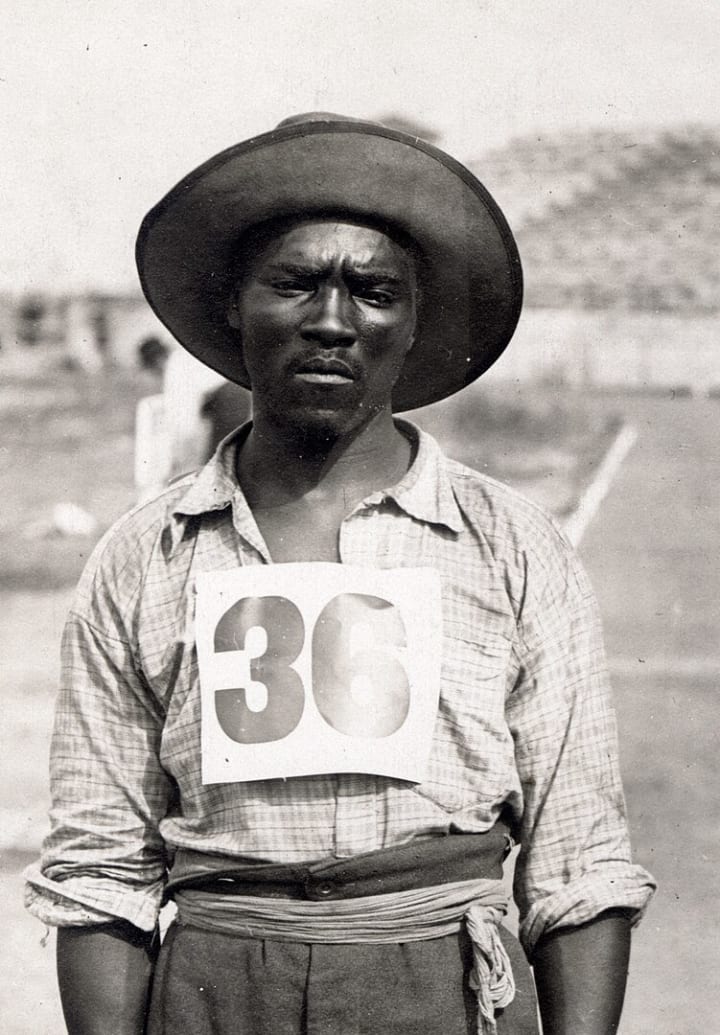
The Start: Chaos from the Get-Go
When the starting gun fired, it didn’t take long for things to go south. The runners set off into the scorching heat, kicking up clouds of dust from the unpaved roads, making it difficult to breathe. The organizers, in their infinite wisdom, decided that restricting water intake was a good idea. They believed it would test the runners’ endurance and produce "scientific" results on the effects of dehydration. Spoiler alert: it didn’t go well.
The Cheating Scandal: Fred Lorz’s Joyride
Early on in the race, Fred Lorz took a commanding lead, but after covering about nine miles, he began to suffer from heat exhaustion. Rather than quitting, Lorz made an unusual decision—he hitched a ride in a car. The vehicle took him about 11 miles down the road, where it conveniently broke down. Lorz decided to jump back into the race and ran the last few miles on foot. He crossed the finish line first, to the cheers of the crowd. The celebration was short-lived, however, as his car ride was soon exposed. Lorz was disqualified, but not before causing an uproar.
The Near-Death Experience: Thomas Hicks and the Rat Poison Cocktail
While Fred Lorz was busy cheating, Thomas Hicks was enduring a nightmare of his own. Hicks was in second place when his trainers, concerned about his physical state, decided to give him a "boost." Their solution? A cocktail of strychnine (rat poison) mixed with egg whites and washed down with brandy. At the time, small doses of strychnine were believed to stimulate the nervous system, and his handlers thought this would help him finish the race.
Hicks, already suffering from severe dehydration and exhaustion, somehow managed to keep running. But as he neared the finish line, his condition deteriorated further. His trainers had to carry him over the finish line, as he was hallucinating and barely conscious. Hicks was declared the winner but immediately collapsed. His survival was nothing short of a miracle, and it marked one of the first cases in Olympic history where performance-enhancing substances were used—albeit disastrously.
Felix Carvajal: The Marathon’s Quirkiest Runner
Meanwhile, Cuban runner Felix Carvajal was having a race of his own—one that involved less running and more sightseeing. Despite his inappropriate clothing, Carvajal enthusiastically ran along the course, stopping occasionally to talk with spectators. Famously, at one point, he got hungry and stopped at an orchard to snack on some apples. Unfortunately for Felix, the apples were rotten, and he suffered from stomach cramps that forced him to take a nap mid-race. He eventually finished in fourth place, proving that you can still do pretty well in a marathon even with a few interruptions.
The Unlikely Finishers: Tau, Mashiani, and the Wild Dogs
South African competitors Len Tau and Jan Mashiani had their own challenges. Running barefoot on the hot, dusty roads, Tau managed to finish in ninth place. His fellow countryman Mashiani, however, had a rather unusual obstacle—he was chased off the course by a pack of wild dogs. Yes, wild dogs. It’s hard to imagine what the organizers were thinking when they chose this race route.
Conclusion: A Marathon Like No Other
The 1904 Olympic marathon was nothing short of a disaster—an unorganized, chaotic, and at times downright dangerous event that left participants on the verge of collapse (or worse). From Fred Lorz’s cheating scandal to Thomas Hicks’ near-death experience and Felix Carvajal’s casual detours, this marathon was a comedy of errors that probably should have been stopped halfway through.
Despite its bizarre nature, the 1904 marathon has gone down in history as one of the most entertaining and unbelievable Olympic events ever. It stands as a reminder that even the most serious competitions can go hilariously wrong when poor planning and extreme conditions collide.
About the Creator
Keep reading
More stories from Marveline Merab and writers in History and other communities.
What Really Happens on The World's Strangest Island: The John Frum Cult
In the South Pacific, on the island of Tanna in Vanuatu, exists one of the most curious and enduring religious movements in history—the John Frum cult. This group of islanders follows a deity-like figure known as John Frum, a mysterious man believed to have come from the United States during or just before World War II, promising wealth, prosperity, and cargo to the native people. And what exactly is “cargo,” you ask? It’s the exotic goods—radios, weapons, clothing—that Western military forces brought to the islands, and it fascinated the islanders.
By Marveline Merababout a year ago in History
3 True Stories That Sound Like Urban Legends but Aren’t
Urban legends usually follow a familiar pattern. A friend of a friend hears something unbelievable, the details get hazy, and the story ends with a warning about human stupidity or bad luck. The unspoken rule is simple: if it sounds too strange to be true, it probably is.
By Enoch Sagini2 days ago in History
The Crown of Ash and Gold
In the final era of the ancient kingdom of Aurelion, the world seemed to change its tone. The skies appeared duller, the winds colder, and the streets quieter than they had ever been during the kingdom’s golden age. Aurelion was once a beacon of civilization—its stone cities gleamed under the sun, its scholars were respected across continents, and its armies had carved its name into history. Yet no empire, no matter how mighty, can escape the slow test of time.
By The best writer 5 days ago in History


Comments (1)
Brilliant ✍️🏆♦️♦️♦️♦️