
What Really Happens on The World's Strangest Island: The John Frum Cult
The Most Fascinating Cargo Cult of the Pacific

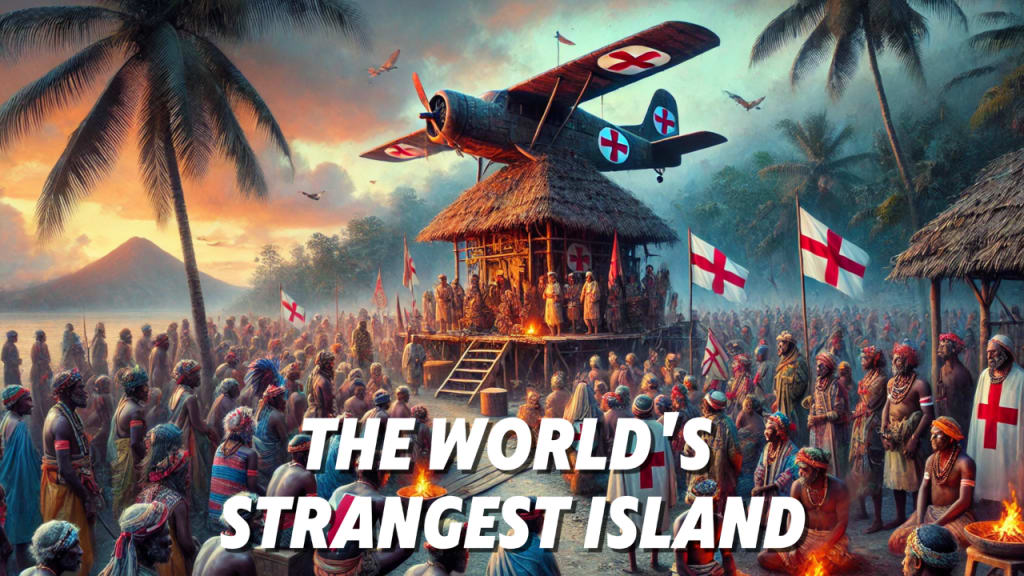
In the South Pacific, on the island of Tanna in Vanuatu, exists one of the most curious and enduring religious movements in history—the John Frum cult. This group of islanders follows a deity-like figure known as John Frum, a mysterious man believed to have come from the United States during or just before World War II, promising wealth, prosperity, and cargo to the native people. And what exactly is “cargo,” you ask? It’s the exotic goods—radios, weapons, clothing—that Western military forces brought to the islands, and it fascinated the islanders.
So who is John Frum, and why do the people of Tanna still wait for his return nearly 80 years later? Let’s dive into this extraordinary story of faith, misunderstanding, and cultural exchange. It’s a journey that touches on war, prophecy, and the enduring human hope for salvation, albeit with a distinctly Pacific twist.
What Really Happens on The World's Strangest Island? You'll definitely enjoy this!
Who Is John Frum?
The figure of John Frum (sometimes spelled Jon Frum or John from America) is as mysterious as he is central to the movement. There’s no single, definitive account of his origins, but he’s said to have appeared to the people of Tanna in the late 1930s or early 1940s. In some versions of the story, John Frum was a tall, white man dressed in American military garb, who promised the islanders that if they rejected European customs and returned to their traditional way of life, he would bring them great riches. Others claim he was a black man or even a spirit. Either way, the promise was the same: abundance, prosperity, and all the cargo they could ever want.
The exact origin of John Frum is debated, but it’s commonly believed that his appearance coincided with the influx of Westerners to the island during World War II. Thousands of American troops passed through the Pacific, and their supplies and advanced technology made a lasting impression on the local populations. For the islanders, these goods—radios, trucks, and canned food—were seen as miraculous, and John Frum was believed to be the divine provider of these treasures.
The Birth of a Cargo Cult
The John Frum movement is often described as a cargo cult, a term used to refer to religious practices that emerged in several Pacific islands following Western contact. The native islanders had limited understanding of the machinery, planes, and goods that suddenly flooded their homes, so they interpreted these items as gifts from their gods, brought by divine beings—like John Frum—who would return one day with even more.
The concept of cargo became central to the movement. It represented everything the Western world had brought: modern goods and conveniences that the islanders had never before seen. Believers held that by worshipping John Frum and returning to their traditional customs, the gods would send more cargo to the islanders. To attract more cargo, islanders even began constructing mock runways, radio towers, and aircraft made out of bamboo, hoping to summon planes filled with riches.
And if that sounds strange, consider this: the practice wasn’t entirely irrational. After all, the sudden appearance of military goods during World War II must have seemed like a magical event to the islanders. Western goods arrived with little explanation, so it’s understandable that they believed it might happen again.
Prophecies and Beliefs
At the heart of the John Frum movement are prophecies about his eventual return. Believers say that John Frum will one day come back to Tanna, bringing with him more cargo and leading the islanders to a golden age of prosperity. For decades, every February 15th is celebrated as John Frum Day, with rituals, dances, and symbolic military parades in honor of their god-figure. Followers paint "USA" on their bodies and raise American flags, paying tribute to the nation they associate with the abundance they seek.
The movement also has a spiritual element: John Frum is seen not just as a provider of material wealth, but as a messenger who urges the islanders to return to their traditional ways, rejecting the Christian missionaries who had arrived earlier and tried to impose Western values and practices. For many, John Frum represents a form of cultural resistance, a way to reclaim their identity and autonomy in the face of colonialism.
The American Connection: Why "John Frum"?
One of the most perplexing aspects of the John Frum cult is the name itself. Why "John Frum"? The most popular explanation is that it derives from American soldiers stationed on the island during the war. Soldiers may have introduced themselves by saying, "Hi, I’m John from America," and the locals, hearing this repeatedly, eventually believed that “John from America” was a divine being.
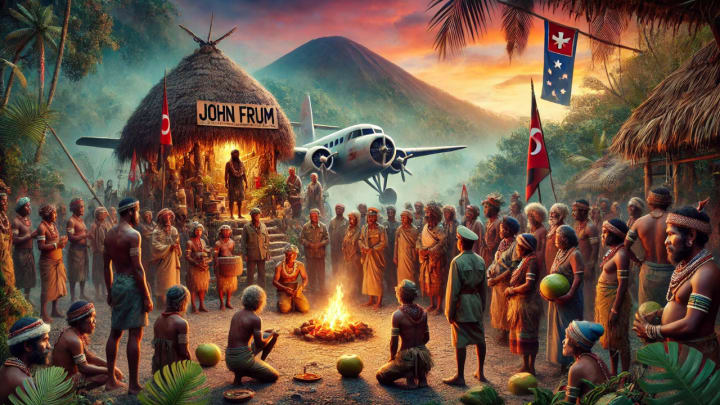
There’s also a theory that "John Frum" is a distorted version of John the Baptist, whose arrival was seen as a prophetic figure in Christianity. But unlike most Christian movements, the John Frum cult rejected the teachings of the missionaries and clung to the belief that their own god, John Frum, would bring them real material wealth.
The Modern John Frum Movement
Surprisingly, the John Frum movement is still alive and well in modern-day Tanna. Despite the advances in communication, travel, and education, the islanders continue to hold their faith in John Frum’s return. To this day, members of the cult hold ceremonies, raise American flags, and wait patiently for John Frum to bring cargo back to the island.
In fact, the John Frum movement has evolved into something of a tourist attraction. Travelers from around the world visit Tanna to witness the John Frum Day celebrations, where villagers march in makeshift military uniforms, carry bamboo rifles, and perform rituals honoring the American figure they await. To the outside world, it may seem like a bizarre spectacle, but to the islanders, it is a deeply held spiritual tradition.
The Prince Philip Movement
An interesting offshoot of the John Frum cult is the Prince Philip Movement, another cargo cult on Tanna that believes Prince Philip, the Duke of Edinburgh, is a divine figure. This belief stems from the idea that Philip, as the husband of Queen Elizabeth II, is connected to the powerful Western forces that brought prosperity. Villagers believed that he was a manifestation of a powerful spirit who had traveled far and would return to the island one day. In fact, the villagers sent Philip a gift, and he responded with a signed photograph, further solidifying their belief in his divinity.
While the Prince Philip Movement is a smaller cult, it shares many similarities with the John Frum movement, especially in its emphasis on the return of a powerful outsider who will bring wealth and prosperity.
Conclusion: A Legacy of Hope and Mystery
The story of the John Frum cult is one of the most fascinating and enduring tales of cultural misunderstanding and adaptation. What began as a response to the sudden arrival of Western goods and soldiers during World War II has transformed into a deeply held belief system, rooted in hope, resistance, and a longing for prosperity.
To this day, the people of Tanna continue to wait for John Frum, confident that he will one day return with cargo and lead them into a new era. Whether viewed as a symbol of hope or a relic of cultural confusion, the John Frum cult stands as a testament to the human capacity for faith—and to the powerful impact of cultural encounters in shaping belief systems.
As we reflect on this mysterious figure and the people who continue to believe in his return, one thing is certain: the legend of John Frum is far from over. In fact, it may be just getting started.
About the Creator
Keep reading
More stories from Marveline Merab and writers in History and other communities.
This Mountain Range Can't Be Found By Any Human: The Mystery of the Mountains of Kong
Imagine an entire mountain range, stretching across Africa, appearing on maps for nearly 100 years—only for it to turn out that the mountains never existed at all. Welcome to the curious case of the Mountains of Kong, one of history’s most puzzling geographic errors. From the late 18th century to the 20th century, explorers, cartographers, and even governments believed in the existence of this fabled mountain range. And if you think they were just a little off, think again. These mountains never existed in any form, but somehow, they became one of the most prominent features on maps of Africa for decades.
By Marveline Merababout a year ago in History
A secret staircase found beneath a 1,500-year-old French church
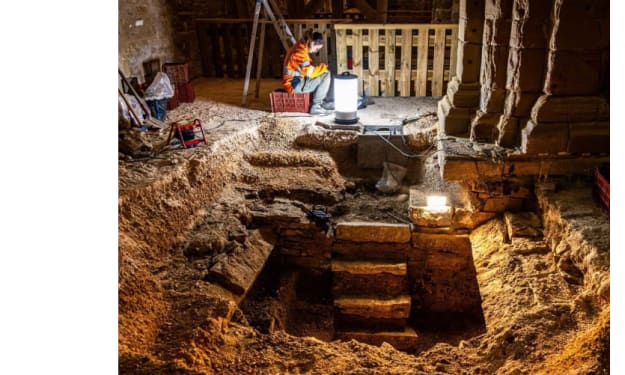
A subterranean staircase and burial strata dating back approximately 1,500 years were discovered during a project inside the Church of Saint Philibert in Dijon, France. The stairs were discovered by restoration workers inside the church when repairs were being made, and the excavation soon ensued.
By Francis Dami4 days ago in History
Martin Luther King's 'I Have a Dream' Speech: Things People Still Don't Know
Former President Ronald Reagan declared the third Monday in January to be Martin Luther King Jr. Day to celebrate the slain civil rights activist. Had he lived, he would be celebrating his birthday at age 97 on January 15, 2026, but he was assassinated at the young age of 39 on April 4, 1968.
By Margaret Minnicksabout 20 hours ago in History



Comments
There are no comments for this story
Be the first to respond and start the conversation.