
The Crown of Ash and Gold
How Wisdom Saved a Kingdom from Its Own Pride


In the final era of the ancient kingdom of Aurelion, the world seemed to change its tone. The skies appeared duller, the winds colder, and the streets quieter than they had ever been during the kingdom’s golden age. Aurelion was once a beacon of civilization—its stone cities gleamed under the sun, its scholars were respected across continents, and its armies had carved its name into history. Yet no empire, no matter how mighty, can escape the slow test of time.
At the heart of Aurelion sat King Thalos III, a ruler who had inherited greatness but struggled to preserve it. He was not a tyrant, nor was he weak. He was simply exhausted. Years of war, rebellion, and political pressure had aged him beyond his years. Upon his head rested a crown unlike any other—crafted of pure gold and embedded with dark gray stones taken from defeated cities. The people called it the Crown of Ash and Gold, for it symbolized both victory and destruction. King Thalos often felt that with every decision he made, the crown grew heavier.
Beyond the palace walls lived a young man named Elyon, a humble scribe in the Grand Archive of Aurelion. While others chased wealth or power, Elyon chased knowledge. Day after day, he copied fragile texts, preserved fading histories, and read stories of kings long dead. He believed the past whispered warnings to those willing to listen. His father had been a soldier who never returned from a pointless border war, and from that loss Elyon learned that ambition often demanded innocent blood.
One bitter winter evening, while reorganizing forgotten shelves deep within the archive, Elyon made a discovery that would change the fate of the kingdom. Hidden behind a collapsed bookcase lay an ancient scroll sealed with royal wax. The symbol on the seal belonged to Aurelion’s first king, a mark unseen for centuries. With trembling hands, Elyon opened the scroll and read its words by candlelight.
The message was a prophecy, written not as poetry but as a warning:
“When the crown values gold above justice, and strength above wisdom, the kingdom shall fall—not by foreign swords, but by its own pride.”
Elyon knew such knowledge was dangerous. Prophecies were forbidden in Aurelion, believed to inspire rebellion and fear. Many before him had been executed for far less. Yet Elyon could not ignore the truth. The signs described in the scroll were already visible—rising taxes, hungry citizens, restless provinces, and leaders deaf to wisdom.
After many sleepless nights, Elyon made a choice. He would speak to the king.
Through rare fortune and his reputation as a gifted scribe, Elyon gained access to the royal court. Standing before King Thalos and his advisors, Elyon presented the ancient scroll. The chamber erupted in outrage. Several nobles demanded Elyon’s death, accusing him of treason and deceit. Others laughed, calling the prophecy foolish superstition.
But King Thalos raised his hand, silencing them all.
“Leave us,” the king commanded.
When they were alone, Thalos’s strength faded. He confessed his fears—rebellions brewing at the borders, empty grain stores, a divided court. “I wanted to be remembered as a powerful king,” Thalos said quietly. “But power has only brought suffering.”
Elyon spoke with respectful honesty. “History teaches us that kingdoms fall not when enemies grow strong, but when rulers stop listening to truth.”
For the first time in many years, King Thalos removed the Crown of Ash and Gold and placed it on the table. “Then teach me to listen,” he said.
The months that followed transformed Aurelion. Heavy taxes were lifted, food was distributed to the poor, corrupt officials were punished, and diplomacy replaced endless war. Elyon became an advisor—not because of ambition, but because of wisdom. The people slowly regained hope, though many nobles whispered that the king had grown weak.
Those whispers soon turned into betrayal.
A faction of powerful nobles, angered by the loss of privilege, allied themselves with a rival kingdom. At dawn, they launched a violent coup. Fire swept through the palace halls, turning marble to dust and gold to ash. Elyon helped King Thalos escape through the hidden tunnels beneath the archive.
As they fled, chaos surrounded them. An enemy archer released an arrow aimed at Elyon. King Thalos stepped forward without hesitation. The arrow struck his chest.
As the palace burned behind them, Thalos lay dying beneath the darkened sky. With his final strength, he pressed the crown into Elyon’s hands. “Do not let it rule you,” he whispered. “Let it remind you.”
The coup failed. The people of Aurelion, loyal to the reforms, rose against the traitors. Peace returned, but the kingdom was forever changed. Elyon refused the throne. Instead, he helped establish a council of the people—scholars, farmers, soldiers, and merchants ruling together.
The Crown of Ash and Gold was placed in the Grand Archive, not as a symbol of power, but as a warning.
And so Aurelion survived—not as the greatest empire in history, but as one of the wisest. Its story endured, teaching future generations that true strength lies not in conquest, but in justice, humility, and the courage to listen.
About the Creator
The best writer
I’m a passionate writer who believes words have the power to inspire, heal, and challenge perspectives. On Vocal, I share stories, reflections, and creative pieces that explore real emotions, human experiences, and meaningful ideas.
Keep reading
More stories from The best writer and writers in History and other communities.
The Bronze Crown of Lydia
In the seventh century BCE, when kingdoms rose and fell like waves upon the shores of time, there stood a prosperous land called Lydia, nestled between mountains and rivers in what is now known as Anatolia. Lydia was famous for its fertile soil, its skilled artisans, and above all, its wealth. Gold flowed from the Pactolus River, and merchants traveled from distant lands to trade silk, spices, and stories. But the greatest story of Lydia was not written in gold—it was written in choice, pride, and consequence.
By The best writer 4 days ago in History
Seven Dials
Introduction Seven Dials is a famous and historic area located in London, England. It is found near Covent Garden, one of the busiest and most popular parts of the city. Seven Dials is known for its unique road design, rich history, old buildings, shops, cafés, and lively atmosphere. Today, it is a popular place for tourists and local people who enjoy culture, shopping, and history.
By Farhan Sayeda day ago in History
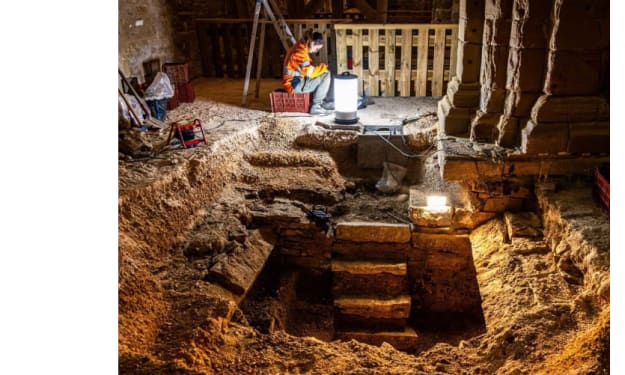
A secret staircase found beneath a 1,500-year-old French church
A subterranean staircase and burial strata dating back approximately 1,500 years were discovered during a project inside the Church of Saint Philibert in Dijon, France. The stairs were discovered by restoration workers inside the church when repairs were being made, and the excavation soon ensued.
By Francis Dami2 days ago in History



Comments
There are no comments for this story
Be the first to respond and start the conversation.