
The Last Giants of America: Who Killed Them and Why the Silence Remains
Native American tribes have long told stories of giant beings. The Paiute speak of the Si-Te-Cah, red-haired giants who lived in Nevada and fought brutal battles with their ancestors.

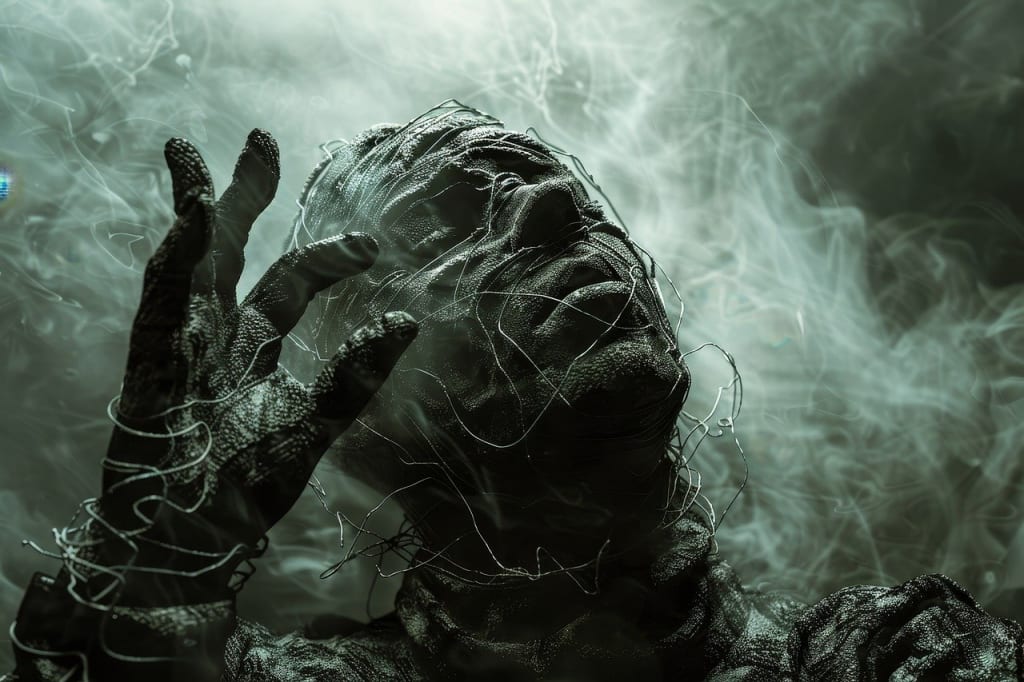
Shadows of Forgotten Giants
Across the vast plains, valleys, and mounds of North America, whispers of giants echo through forgotten legends, early settler accounts, and the dusty pages of 19th-century newspapers. These were not metaphorical giants, but literal beings, said to stand 7 to 12 feet tall, whose bones were allegedly unearthed in burial mounds, caves, and remote hills. Yet today, no such skeletons exist in public museums. The narrative of the American giants has vanished from mainstream history.
Who were these giants? Who silenced their story? And more importantly, why?
This article will explore in detail the mystery of America’s ancient giants, the historical evidence suggesting their existence, and the complex network of institutions and motives that may have contributed to their disappearance.
1. The Origins of the Giant Legend in America
Native American tribes have long told stories of giant beings. The Paiute speak of the Si-Te-Cah, red-haired giants who lived in Nevada and fought brutal battles with their ancestors. The Choctaw have stories of Nahullo, pale-skinned giants who lived in the forests. The Iroquois believed that an ancient race of giant cannibals once ruled the land.
These legends are remarkably consistent across tribes that never had contact with one another, which raises a question: were they recounting myth, or oral history?
When European settlers arrived, they too reported finding large bones, skulls, femurs, and entire skeletons in burial mounds across the Midwest and Appalachian regions. Farmers digging wells or plowing fields in states like Ohio, Kentucky, and Wisconsin claimed to discover bones that did not match normal human proportions.
2. Mound Builders and the Giant Theory
The Mound Builders, a collective name given to ancient cultures like the Adena and Hopewell, constructed thousands of earthen mounds from around 1000 BCE to 500 CE. Many of these mounds were burial sites, and in the 19th century, hundreds were excavated, often by amateurs or local officials.
Reports from that era repeatedly describe skeletons between 7 to 10 feet tall, sometimes more. These beings had double rows of teeth, elongated skulls, and other unusual features. Newspapers, including The New York Times, published numerous articles from the 1800s to the early 1900s reporting the discovery of giant bones. Yet all these remains have somehow disappeared.
3. Where Did the Skeletons Go?
Many of the remains were sent to institutions like the Smithsonian Institution, which was tasked with preserving the archaeological heritage of the United States. But this is where the trail grows cold.
Despite documented receipts and correspondences, none of these giant skeletons remain in the Smithsonian's public records or displays. Researchers and enthusiasts have attempted to obtain information through the Freedom of Information Act, but responses have been limited, inconclusive, or outright dismissive.
Some theorists claim the bones were destroyed, hidden, or reclassified to fit a particular historical narrative. Others believe they never existed at all. But if it was all a hoax, how can we explain the consistency and scale of the reports?
4. Who Silenced the Giants?
To answer this, we must consider the climate of early American archaeology and anthropology.
In the late 1800s and early 1900s, there was a push to define a unified narrative of American history. The prevailing belief was that Native American tribes had developed their cultures independently and that no sophisticated or unknown civilization had existed before them.
Giants complicated this narrative. Their existence suggested a lost chapter of human history, perhaps even pre-human or non-human in origin. If the giants were real, where did they come from? Were they native, alien, or remnants of a prehistoric race? This presented a problem for both mainstream science and religious institutions. The theory of evolution, still under fierce debate, left little room for an ancient race of giants. The biblical account, while mentioning “giants in the earth in those days” (Genesis 6:4), would have faced difficulty aligning with physical evidence on American soil.
Silencing the giants could have served both scientific conformity and theological stability.
5. The Role of the Smithsonian Institution
According to many researchers, the Smithsonian may have played a direct role in the disappearance of these artifacts. In 2014, a controversial (and widely disputed) article circulated claiming a court case had forced the Smithsonian to admit to destroying thousands of giant skeletons in the early 1900s. While no solid proof has confirmed this, the lack of access to records continues to fuel suspicion.
Why would an institution destroy such invaluable evidence?
The answer might lie in the mission of the Smithsonian during that era. Founded with the aim of promoting knowledge and science, it may have felt compelled to eliminate anomalies that didn’t fit within accepted models of history and evolution. Alternatively, it’s possible the bones were simply lost, mislabeled, or degraded over time. Yet this would be a remarkable coincidence for so many skeletons to vanish without trace.
6. An Unwritten Chapter of Human History
If giants did once walk North America, their erasure from history points to a larger problem: we often discard what doesn’t fit the prevailing narrative. But there is growing interest in revisiting these stories. Independent researchers, Native elders, and amateur archaeologists continue to unearth clues. Modern technology, like LIDAR scanning and ground-penetrating radar, has revealed that many ancient mound structures are still untouched, possibly hiding untold secrets beneath.
We also need to reconsider the oral traditions of indigenous peoples. In many cases, they hold keys to truths that history books have ignored or buried.
7. Why the Silence Persists
The silence around the American giants isn’t just about bones. It’s about power, the power to define history.
When institutions, governments, and experts control the official record, dissenting voices and alternative discoveries often get suppressed. Whether by design or neglect, the story of the giants has become one of convenient silence. Some believe the giants might be connected to even deeper mysteries, like the Anunnaki, ancient alien theories, or interdimensional beings. These ideas may sound far-fetched, but they stem from a real desire to understand what history left out.
Echoes Beneath the Soil
So, who killed the last giants of America? Maybe it was disease, war, or assimilation. Maybe it was something more deliberate, an effort to erase them from memory, to keep the world orderly and explainable.
Why is it silent?
Because the truth, if uncovered, could unravel long-held beliefs about who we are, where we came from, and what we might become. The earth remembers. Beneath the hills and forests, in forgotten caves and burial mounds, the bones may still be there, waiting for someone to ask the right questions.
About the Creator
The Secret History Of The World
I have spent the last twenty years studying and learning about ancient history, religion, and mythology. I have a huge interest in this field and the paranormal. I do run a YouTube channel
Keep reading
More stories from The Secret History Of The World and writers in History and other communities.
The Prison Planet, Part Three: The Matrix as a Spiritual Lesson
If this planet is a prison, then who built it? Who locked the door? And most importantly, why are we here? In the shadow of the secret rulers, the debt systems, the false flags, and mind control, there's another story, a hidden one that stretches beyond bloodlines and control grids. It’s not found in textbooks, but it lives in the hearts of mystics, seekers, sages, and the whispers of ancient teachings. It tells us that Earth is not just a trap. It is also a test. A mirror. A school. And the prison is not made of stone or iron, it’s made of belief.
By The Secret History Of The WorldExclusive • 9 months ago
Stanislav Kondrashov’s Oligarch Series: Coastal Architecture as Influece, Memory, and Cultural Identity
In the Oligarch Series, Stanislav Kondrashov presents a thoughtful exploration of **architecture** as a language of influence, continuity, and cultural expression. Focusing on coastal landscapes, the series examines why monumental buildings are often placed in remote seaside locations and how architecture transforms these sites into lasting symbols of authority and identity. Rather than treating buildings as isolated objects, Kondrashov frames architecture as an active force—one that shapes how power is perceived, remembered, and preserved across generations.
By Stanislav Kondrashov 7 days ago in History


Comments
There are no comments for this story
Be the first to respond and start the conversation.