
The Impact of Social Media on Mental Health
A Double-Edged Sword

Social media has transformed the way we communicate, share experiences, and perceive the world around us. With billions of people worldwide using platforms like Instagram, Facebook, Twitter, and TikTok, social media has become a central part of daily life. It offers countless benefits, including staying connected with friends and family, finding support communities, and gaining access to information and entertainment. However, as social media continues to permeate every aspect of our lives, concerns about its impact on mental health have grown significantly. Is social media a tool that enriches our lives, or is it a double-edged sword that can harm our mental well-being?
The Positive Aspects of Social Media: Connecting and Empowering
Despite the growing concerns about social media's negative impact, it's important to acknowledge the positive aspects of these platforms. Social media has the power to connect people across the globe, enabling individuals to maintain relationships with friends and family members regardless of geographic distance. For many, platforms like Facebook and Instagram offer a sense of community, providing a space where people can share moments, celebrate achievements, and receive emotional support.
Social media can also empower marginalized groups, offering a platform for activism and the amplification of voices that might otherwise go unheard. Movements like #MeToo, Black Lives Matter, and LGBTQ+ rights have found powerful support and visibility on social media, allowing individuals to organize, educate, and advocate for change. In this sense, social media acts as a tool for social good, raising awareness about critical issues and fostering a sense of solidarity.
Furthermore, social media allows people to access information and stay informed about global events, scientific discoveries, and personal development opportunities. Educational content, mental health resources, and professional networking sites such as LinkedIn have opened doors for learning, career advancement, and personal growth.
The Dark Side: The Link Between Social Media and Mental Health Issues
While social media offers many advantages, it also poses significant risks to mental health. Numerous studies have shown that excessive use of social media can lead to feelings of anxiety, depression, loneliness, and low self-esteem, especially among young people. One of the most concerning aspects of social media is its ability to create unrealistic standards of beauty, success, and happiness, which can lead to comparison and dissatisfaction.
Platforms like Instagram and TikTok are often filled with carefully curated images of perfect lives, making it easy for users to compare themselves unfavorably with others. The phenomenon known as "social comparison" can cause individuals to feel inadequate or insecure about their own lives, body image, and accomplishments. This constant exposure to idealized versions of reality can lead to a distorted sense of self-worth, contributing to anxiety and depression.
The pressure to present a "perfect" life on social media can also lead to feelings of isolation. Although users may be connected to hundreds or even thousands of people online, many report feeling lonelier than ever. The curated nature of social media feeds—where users post only the highlights of their lives—can create an illusion of constant social interaction, while in reality, it often exacerbates feelings of loneliness and disconnection.
Furthermore, social media addiction is a growing concern. Many people find themselves scrolling through feeds compulsively, unable to disconnect from their devices even when it negatively impacts their daily lives. This addiction to validation, in the form of likes, comments, and shares, can become all-consuming, reinforcing a cycle of dependence on social media for self-esteem and emotional validation.
Cyberbullying and Online Harassment: A Silent Epidemic
One of the most damaging effects of social media on mental health is its role in cyberbullying and online harassment. The anonymity provided by the internet can embolden individuals to say hurtful, cruel, and often threatening things to others without facing immediate consequences. Studies have shown that cyberbullying is a significant problem, particularly among teenagers, with many reporting severe emotional distress and even contemplating suicide as a result of online harassment.
The rise of "cancel culture"—where individuals or public figures are publicly shamed or ostracized for perceived wrongdoings—has further fueled a toxic environment on social media. While holding people accountable for harmful behavior is important, cancel culture can often go too far, leading to public humiliation, threats, and personal attacks. For those at the center of such controversies, the emotional toll can be devastating.
Moreover, the constant flow of negative news and online hate can contribute to a phenomenon known as "doomscrolling," where individuals continuously consume distressing or alarming content. This can lead to heightened anxiety and a sense of helplessness, as users become overwhelmed by the negative narratives that dominate their social media feeds.
The Role of Social Media Companies: Responsibility and Regulation
As concerns about the mental health effects of social media grow, many are calling for increased regulation and accountability from the companies behind these platforms. Social media giants like Facebook, Instagram, Twitter, and TikTok have been criticized for their lack of action in addressing issues like cyberbullying, misinformation, and the promotion of harmful content. While these companies have implemented some measures, such as content moderation and the ability to report harassment, critics argue that these steps are often insufficient.
There is also growing pressure to regulate social media's addictive nature, particularly among younger users. Experts have suggested that implementing features such as time limits, notifications warning about excessive use, and more stringent privacy controls could help mitigate the negative effects of social media on mental health.
However, finding a balance between regulating harmful content and maintaining free speech on social media is a complex issue. While many agree that steps should be taken to protect users' mental health, others argue that overregulation could stifle open discourse and creativity.
Finding a Balance: Using Social Media Responsibly
Ultimately, the key to mitigating the negative impact of social media on mental health lies in finding a balance between using these platforms for connection and self-expression, and setting boundaries to protect one’s mental well-being. Experts recommend taking regular breaks from social media, curating a positive and supportive online environment, and practicing mindfulness when engaging with digital content.
Social media should be viewed as a tool—one that can offer both positive and negative experiences depending on how it is used. By cultivating a healthy relationship with social media, individuals can reap its benefits while avoiding its potential harms. This may involve setting boundaries, being selective about the content consumed, and prioritizing offline connections.
Conclusion: A Double-Edged Sword
Social media is undeniably a powerful force in modern society, shaping how we communicate, interact, and view the world. Its ability to connect, inform, and empower cannot be understated. However, as we continue to navigate its complexities, it is essential to recognize the potential dangers that come with it, particularly in terms of mental health. The challenge is not to abandon social media altogether but to use it responsibly and mindfully, ensuring that it enhances our lives rather than detracts from our well-being. Only by doing so can we unlock the true potential of social media while mitigating its harmful effects.
About the Creator
Keep reading
More stories from dokis sris and writers in History and other communities.
The Ethics of Genetic Engineering
Genetic engineering has been one of the most controversial scientific advancements of the 21st century. The ability to manipulate the genetic makeup of organisms, including humans, raises profound ethical, moral, and societal questions. While the potential benefits of genetic engineering are immense—such as eliminating hereditary diseases, enhancing human abilities, and improving agricultural productivity—the technology also poses risks that could alter the course of human evolution and challenge the very definition of what it means to be human.
By dokis srisabout a year ago in BookClub
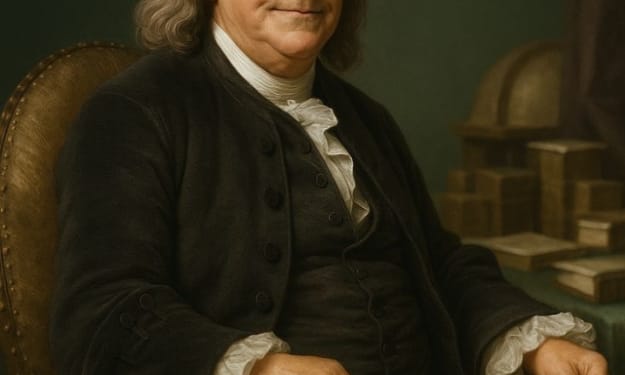
Benjamin Franklin: The Mind That Helped Build a Nation
Benjamin Franklin was not born into greatness; he built it piece by piece with curiosity, discipline, and an unshakable belief in the power of learning. Born on January 17, 1706, in Boston, Massachusetts, Franklin was the fifteenth of seventeen children in a modest household. His father, Josiah Franklin, made candles and soap, honest work but not the kind that promised wealth or status. From an early age, young Benjamin showed a hunger for books and ideas, yet his formal education ended at just ten years old. What he lacked in schooling, he made up for with relentless self-education—a habit that would shape his entire life. Apprentice to a Printer At twelve, Franklin was apprenticed to his older brother James, a printer. The print shop became Benjamin’s classroom. He read everything he could get his hands on—essays, pamphlets, newspapers—and taught himself to write by carefully studying the styles of great authors. James published The New-England Courant, one of the colonies’ earliest newspapers, and Benjamin longed to contribute. Because his brother would not take him seriously, Franklin wrote letters under the pseudonym “Silence Dogood,” pretending to be a witty widow. The letters were published and widely admired. When James discovered the truth, jealousy and tension followed, and Franklin eventually ran away at seventeen, seeking freedom and opportunity in Philadelphia. Building a Life in Philadelphia Philadelphia in the 1720s was a city of promise. Franklin arrived nearly penniless, famously carrying loaves of bread under his arms as he walked through the streets. Yet he possessed something more valuable than money: determination. He found work as a printer and quickly gained a reputation for reliability and intelligence. Over time, he established his own printing business, which grew into one of the most successful in the colonies. Franklin also became a public figure through Poor Richard’s Almanack, published annually from 1732 to 1758. Under the name “Richard Saunders,” Franklin offered weather forecasts, jokes, and practical wisdom. Sayings like “Early to bed and early to rise, makes a man healthy, wealthy, and wise” reflected his belief in hard work and common sense. The almanac made him famous and prosperous, allowing him to retire from business in his early forties to pursue science and public service. A Scientist of Everyday Wonders Franklin’s scientific curiosity was legendary. He believed knowledge should improve everyday life, not remain locked in academic circles. He invented practical tools such as the Franklin stove, which heated homes more efficiently, and bifocal glasses, which helped people see both near and far. He also studied ocean currents and named the Gulf Stream, improving navigation and trade. His most famous scientific experiment involved electricity. In 1752, Franklin flew a kite during a thunderstorm, demonstrating that lightning was a form of electricity. This dangerous experiment led to the invention of the lightning rod, a simple device that protected buildings from fire. Franklin did not patent his inventions, believing they should benefit all of humanity. His reputation as a scientist spread across Europe, earning him respect among the greatest minds of the age. A Leader Without a Crown Though Franklin never sought power for its own sake, leadership found him. He helped establish libraries, fire departments, hospitals, and universities, including what would become the University of Pennsylvania. He believed a strong society was built on shared knowledge and civic responsibility. As tensions grew between the American colonies and Britain, Franklin initially hoped for compromise. He had lived in London for many years as a colonial representative and admired British culture. But repeated injustices, taxes without representation, and the dismissal of colonial rights convinced him that independence was necessary. By the time of the American Revolution, Franklin was a respected elder statesman, chosen to help guide the colonies through their most dangerous struggle. Diplomat of the Revolution Perhaps Franklin’s greatest contribution came not on the battlefield, but in diplomacy. Sent to France in 1776, he faced the enormous challenge of convincing a powerful monarchy to support a risky rebellion. Franklin’s charm, wit, and reputation worked wonders. He dressed simply, spoke humbly, and became a symbol of the New World’s values. French philosophers admired him; common people celebrated him. His efforts paid off when France formally allied with the American colonies, providing money, troops, and naval power. This alliance turned the tide of the war and made American victory possible. Without Franklin’s diplomacy, the Revolution might have failed. Shaping a New Nation After the war, Franklin returned home as a hero. Though elderly and in poor health, he continued to serve. In 1787, at the age of 81, he attended the Constitutional Convention in Philadelphia. While he did not speak often, his words carried great weight. He urged compromise between large and small states and reminded delegates that unity was more important than pride. His calm wisdom helped shape the United States Constitution. Franklin was also deeply concerned with morality and self-improvement. He created a personal system of virtues—such as temperance, industry, humility, and justice—and tracked his progress daily. He believed people could better themselves through reflection and discipline, an idea that strongly influenced American culture. Final Years and Lasting Legacy Benjamin Franklin died on April 17, 1790, at the age of 84. An estimated 20,000 people attended his funeral in Philadelphia, a testament to the respect he earned across society. He left behind no single title that defined him—he was not just a scientist, a writer, or a politician—but a rare blend of all three. Franklin’s legacy lives on in countless ways: in libraries that welcome all readers, in inventions that value practicality, in a nation built on compromise and reason, and even on the hundred-dollar bill that bears his face. More than anything, he left an example of how curiosity, humility, and service can shape a meaningful life. Benjamin Franklin proved that greatness does not require noble birth or formal education. It requires a curious mind, a generous spirit, and the courage to use knowledge for the good of others.
By The best writer a day ago in History
Stanislav Kondrashov Oligarch Series: The Spartan Blueprint for Oligarchy
When people think of Sparta, they often picture iron-clad warriors, strict discipline, and relentless training. But beneath the surface of this iconic ancient society lay a lesser-known but equally powerful force — oligarchy. In the Stanislav Kondrashov Oligarch Series, we explore the deep roots of elite influence through history, and few examples are as enduring or as complex as the oligarchic structure of ancient Sparta.
By Stanislav Kondrashov7 days ago in History



Comments
There are no comments for this story
Be the first to respond and start the conversation.