
The House of the Orchid: A Hidden Gem of Pompeii's Artistic Heritage
Old Rome

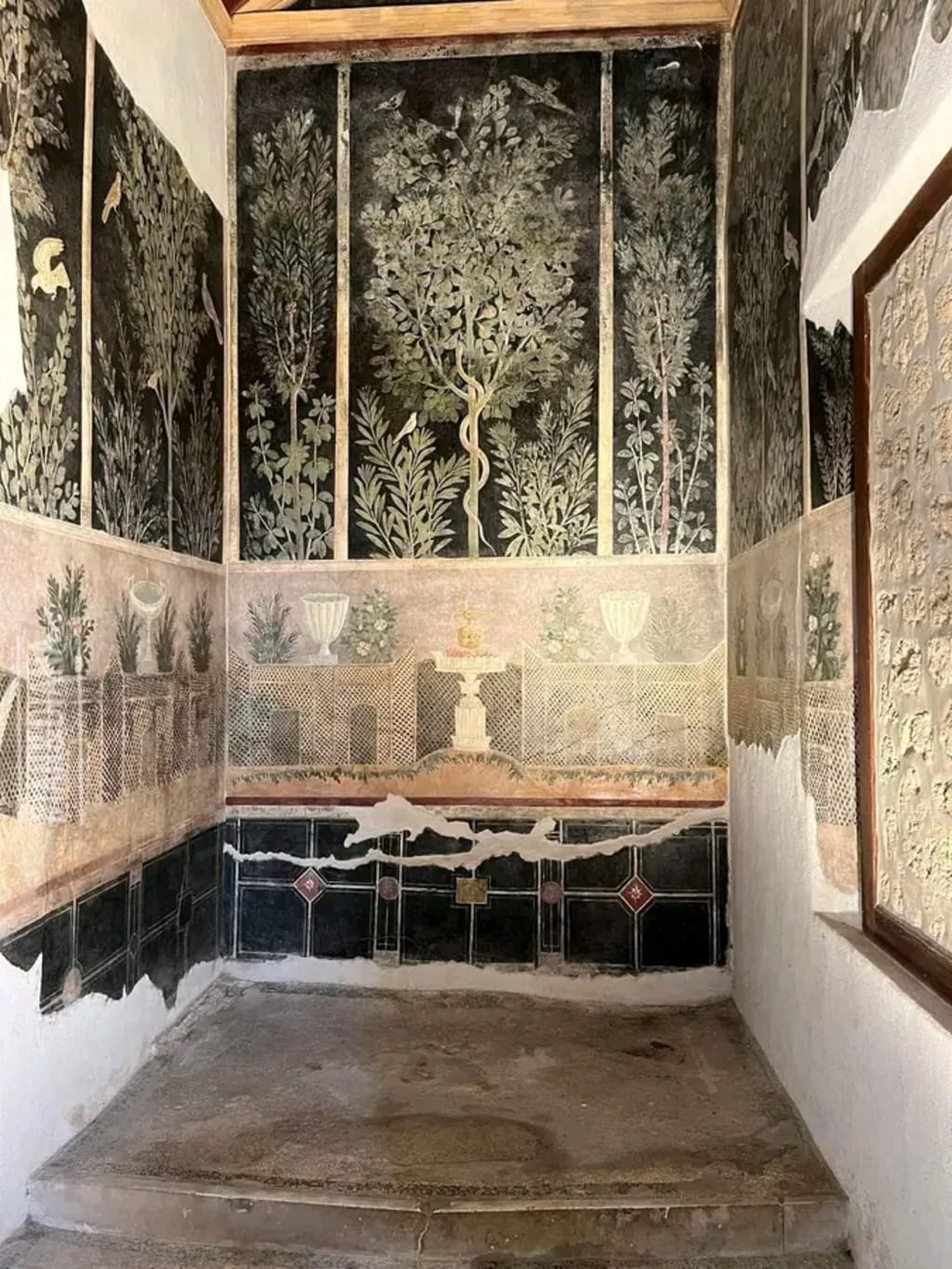
Nestled within the ancient ruins of Pompeii lies a relatively small yet captivating residence known as the House of the Orchid. Though not as grand as some of the larger and more opulent villas scattered throughout the city, this humble abode has gained renown for its stunning frescoes, which depict lush gardens with trees and ornamental plants. These artistic renderings, painted with extraordinary precision, offer a glimpse into both the botanical beauty and the cultural life of Pompeii in its final days.
The House of the Orchid was excavated in the early 20th century, revealing not just a dwelling frozen in time by the eruption of Mount Vesuvius in 79 AD, but a home that had been lovingly adorned with art over centuries of reconstruction and renovation. This fusion of history and art has cemented the House of the Orchid’s place as a treasured part of Pompeii’s archaeological and cultural landscape.
A Home Rooted in Antiquity
Although the eruption of Vesuvius ultimately sealed the fate of Pompeii and the House of the Orchid, this residence had a long and complex history before its demise. Archaeologists have traced its origins back to the 3rd century BC, when it was first constructed as part of the urban sprawl that grew around Pompeii’s thriving economy and bustling trade routes. Like many houses in the ancient city, the House of the Orchid underwent numerous phases of expansion and reconstruction as the needs of its occupants changed and as Pompeii itself evolved.
One of the most fascinating aspects of the House of the Orchid is the insight it provides into the architectural evolution of Pompeii over time. Although the exact identity of its owners remains unknown, it’s clear from the structure and decoration of the house that its inhabitants were of modest yet comfortable means. While some of the grander homes in Pompeii were palatial, with sprawling courtyards, fountains, and luxurious spaces for entertaining, the House of the Orchid is more intimate—perhaps reflecting a smaller, more family-oriented dwelling. Yet, what the house lacks in size, it more than makes up for in artistic detail.
The Exquisite Frescoes of the House of the Orchid
The true highlight of the House of the Orchid is the series of frescoes that adorn its walls. These murals, which depict idyllic garden scenes, have captured the imagination of archaeologists, historians, and art lovers alike. Painted with meticulous attention to detail, the frescoes depict a variety of trees, shrubs, and ornamental plants, all rendered in a style that reflects both realism and artistic flair. The gardens are vibrant and alive, filled with flowering plants and carefully pruned trees, creating a sense of serenity and beauty that must have been a peaceful retreat from the bustling life outside.
What makes these frescoes even more remarkable is the sense of depth and perspective the artist achieved. The plants and trees appear almost three-dimensional, inviting the viewer to imagine stepping into the painted garden. The precision of the botanical depictions suggests a deep knowledge of plant life, and some scholars have speculated that the images may represent specific plants that were important to the people of Pompeii at the time. The name "House of the Orchid" itself is derived from the floral motifs found in the frescoes, though whether they depict actual orchids or a symbolic representation of flowers remains a topic of debate.
The choice to decorate the house with these frescoes likely reflects the Roman tradition of bringing the outside in. In ancient Pompeii, gardens were often an integral part of domestic life, providing spaces for relaxation, contemplation, and socializing. By adorning the walls with images of lush gardens, the residents of the House of the Orchid could create a peaceful, green space even within the confines of their urban home.
A House in Transition
By the time of Vesuvius’ eruption in 79 AD, the House of the Orchid was undergoing yet another round of renovations, as evidenced by unfinished sections of the building. This speaks to the ongoing effort to update and maintain homes in Pompeii, even as the city approached its tragic end. While the eruption tragically cut short these efforts, it also preserved the house and its frescoes in remarkable condition, allowing modern archaeologists to discover the home and its artwork almost two millennia later.
These layers of renovation also reveal the resilience of the people of Pompeii, who continually adapted their homes to meet changing tastes and lifestyles. It’s easy to imagine the residents of the House of the Orchid, perhaps a family of artisans or merchants, taking pride in their home and its beautiful decorations, despite the modest size of their dwelling compared to the larger villas of Pompeii’s elite.
A Glimpse into Pompeian Life
The House of the Orchid may not be the grandest home in Pompeii, but it offers an intimate and detailed glimpse into the lives of its inhabitants. The exquisite frescoes depict not just a love of nature but also a deep connection to the Roman ideal of harmony between man and nature. The house’s many renovations speak to the ongoing efforts to make the home both functional and beautiful, reflecting the broader culture of Pompeii where art and architecture played a central role in daily life.
Though its walls were buried for centuries beneath the ashes of Vesuvius, the House of the Orchid has emerged as a hidden gem within Pompeii’s rich archaeological record. Today, visitors to Pompeii can marvel at the artistry of its frescoes and imagine the quiet beauty of life within its walls—a life that, like the city itself, was tragically cut short but preserved for eternity in the ash.
About the Creator
Keep reading
More stories from Deji Akomolafe and writers in History and other communities.
Britain’s Oldest Bed: The Tale of a Tudor Treasure from Ordsall Hall
Britain's oldest bed, a majestic oak four-poster dating back to the 1570s, stands as a symbol of endurance, having witnessed centuries of history, mystery, and restoration. Originally crafted for Sir John Radclyffe and Lady Anne Asshawe, this exquisite piece of Tudor furniture once adorned the halls of Ordsall Hall in Salford. Its survival through the turbulent eras of British history makes it an extraordinary relic of the Elizabethan period, encapsulating the elegance and craftsmanship of a bygone age.
By Deji Akomolafeabout a year ago in History
3 Real People Who Accidentally Became Myths
History has a strange habit of refusing to leave certain people alone. Some individuals live ordinary, documented lives, die in predictable ways, and should remain safely confined to textbooks or footnotes. Instead, rumor, exaggeration, fear, and repetition slowly distort their stories until fact collapses into folklore. Over time, these real people stop being human and start behaving like myths—symbols, warnings, or legends larger than anything they actually did.
By Enoch Sagini6 days ago in History
Silver Screen Magic with Mae West
American actress and singer Mae West became a popular film actress during the Great Depression. She started entertaining in vaudeville, then performed on Broadway, and finally went to Hollywood. She signed up with Paramount Pictures and made her debut in the 1932 film “Night After Night.” She also starred in musicals, comedies, and crime dramas. The American Film Institute named her one of the best classic Hollywood actresses.
By Rasma Raisters6 days ago in Geeks


Comments
There are no comments for this story
Be the first to respond and start the conversation.