
The Golden Empire
The Ascendancy and Decline of the Mali Empire


The African continent, as highlighted in earlier videos, is a region abundant with the narratives of influential civilizations and communities. These kingdoms, built through wealth, labor, and sacrifice, still intrigue and inspire us long after their decline. In this discussion, we will delve into one such kingdom: the formidable Mali Empire of West Africa. The Mali Empire, which arose from an area populated since the Neolithic era, as indicated by burial sites and traces of ancient settlements, serves as a remarkable symbol of Africa's historical magnificence.
The origins of the Mali Empire can be traced back to the fertile regions surrounding the Niger River. The river's seasonal flooding converted arid grasslands and savannas into verdant agricultural areas, facilitating the establishment of farming communities. Fishing and cattle ranching emerged as essential means of livelihood, while local copper resources were extracted and exchanged. Nonetheless, tangible archaeological findings from this early era are limited. It is evident that the Niger River Valley attracted various tribes and settlements, laying the groundwork for the emergence of influential states.
The Ghana Empire was the first significant political entity in West Africa, amassing wealth through military strength and the profitable gold trade. This empire brought together numerous tribes and independent factions under its control. However, it ultimately succumbed to internal strife, uprisings, and agricultural failures, leading to its fragmentation. A considerable portion of its territory was taken over by the Sosso Kingdom, governed by King Sumanguru, who enforced stringent trade restrictions on the Mali region.
During this turbulent era, a significant rebellion among the Malinke people, spearheaded by a prince named Sundiata Keita, would alter the trajectory of history. Known as the "Lion Prince," Sundiata emerged as a powerful leader. In the 1230s, he forged a strong alliance with other dissatisfied chiefs who were tired of Sumanguru's tyrannical rule. Together, they achieved a decisive victory over the Sosso Kingdom in the pivotal battle of Kirina in 1235. By 1240, Sundiata had taken control of the former capital of Ghana, Kumbi, and established a new administration.
Sundiata's leadership heralded the inception of the Mali Empire. He implemented a governance structure called the Gbara, a grand assembly that brought together tribal leaders and prominent Arab merchants. Sundiata was proclaimed Mansa, or supreme ruler, and awarded the honorary title of Mari Djata, meaning "Lord Lion." He mandated that future kings would be chosen based on their abilities rather than birthright, a progressive approach that, while innovative, often resulted in intense rivalries among aspirants.
The Mali Empire thrived due to its centralized governance, a disciplined military, and a robust trade network. It experienced rapid expansion, absorbing the territories of Ghana, Walata, and Songhai. Niani, situated near the Sankarani River, is thought to have served as the empire's capital, although its precise location is still a matter of scholarly debate.
The empire's prosperity was largely derived from trade, especially in gold and salt. It dominated the lucrative goldfields of Bambuk and exchanged gold dust for salt sourced from the Sahara, which was considered equally valuable in the region. The renowned city of Timbuktu, established around 1100 CE, emerged as a significant center for commerce and culture, drawing scholars, traders, and travelers from throughout the Islamic world.
1. The Mali Empire reached its peak during the rule of Mansa Musa (1312–1337), a prominent figure in African history. His pilgrimage to Mecca in 1324 is renowned; he journeyed with a caravan of 60,000 individuals, including 12,000 slaves, and transported such an immense quantity of gold that the market value in Cairo dropped by 20%. His remarkable generosity and immense wealth left an indelible mark on both the Islamic world and Europe, leading to tales of a kingdom abundant in gold.
Under Mansa Musa's leadership, the empire expanded significantly, encompassing regions from the Gambia and Senegal in the west to the Sahara in the north, and from Gao in the east to the lush forests of the Gold Coast in the south. He organized the empire into provinces, each overseen by a farba appointed by the Mansa. This effective administrative structure, along with the empire's dominance over crucial trade routes, established Mali as one of the most affluent and influential states globally.
During the reign of Mansa Musa, Timbuktu emerged as a prominent hub for Islamic education, housing the renowned Sankore University and extensive libraries containing thousands of manuscripts. The proliferation of Islam coexisted alongside traditional animist beliefs, especially in rural regions. The architecture of the empire, noted for its unique mud-brick mosques featuring wooden beams extending from their facades, continues to represent Mali's vibrant cultural legacy.
The Mali Empire, despite its impressive stature, began to experience a decline in the 15th century. Ambiguous succession laws resulted in ongoing civil conflicts, as relatives fought for control of the throne. The ascendance of the Songhai Empire, which captured significant cities within Mali, further diminished the empire's strength. Additionally, European exploration along the West African coastline disrupted established trade routes, as Portuguese vessels provided a more effective method for transporting goods.
By the 1460s, the Mali Empire had disintegrated, shrinking to a minor region in the west. The Songhai Empire rose to prominence as the leading force in West Africa, signaling the conclusion of Mali's prosperous era. Nevertheless, the legacy of the Mali Empire persists through the stories of its influential rulers, its immense wealth, and its significant contributions to both African and global history.
The Mali Empire, renowned for its opulent cities, iconic leaders, and vibrant cultural legacy, stands as a testament to Africa's magnificent history. Its ascendance and decline serve as a poignant reminder of the fleeting nature of authority and the lasting influence of historical events. In contemplating the narratives of Sundiata Keita and Mansa Musa, we are reminded of the strength and creativity inherent in the human spirit, which has the power to forge empires that evoke admiration and fascination throughout time.
About the Creator
A História
"Hi. My name is Wellington and I'm a passion for general history. Here, I publish articles on different periods and themes in history, from prehistory to the present day.
Keep reading
More stories from A História and writers in History and other communities.
The Dynamic Human Mosaic
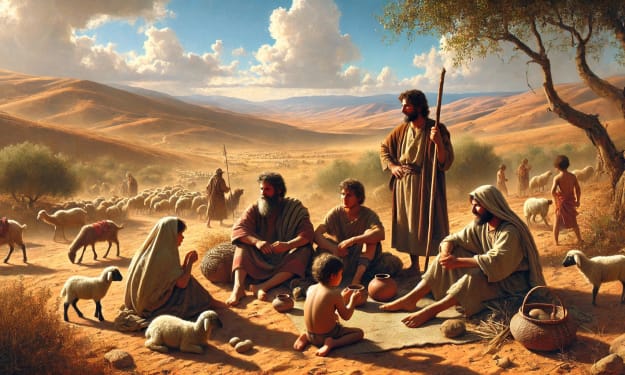
Over the centuries, human migration has occurred in numerous waves, influenced by factors such as climate change, conflict, disease, and the ongoing quest for resources. These migrations have significantly shaped our world, resulting in a rich tapestry of cultures, languages, and communities. In earlier discussions, we examined the effects of these migrations on groups such as the Indo-European peoples and their Aryan subbranch, highlighting the dynamic nature of our species as it continually adapts and evolves. Much like branches extending from a single tree, these groups have cultivated distinct genetic and linguistic characteristics while maintaining ties to their common ancestry.
By A Históriaabout a year ago in History
Escobar’s Paradox: The Poorest City in the World’s Richest Nation
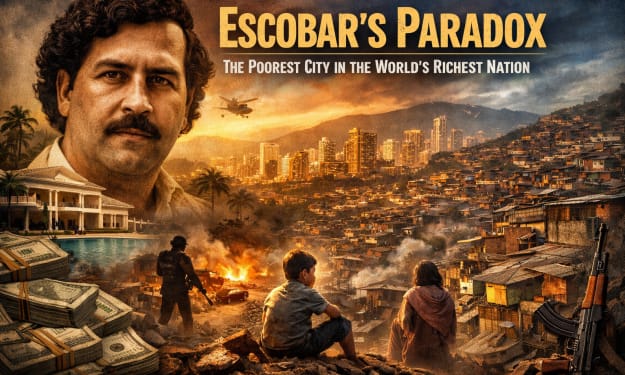
The story of Escobar is not just the story of one man; it is the story of a city, a country, and a paradox. When people hear the name Pablo Escobar, they often think of unimaginable wealth, global drug empires, and a lifestyle that rivaled billionaires. Yet behind the myth of his fortune lies a deeper and more painful reality—entire neighborhoods living in poverty, violence, and fear. This contrast has often been described as “Escobar’s paradox”: how one of the richest criminal empires in history rose from communities that remained desperately poor.
By Irshad Abbasi 4 days ago in History
The Politics of Playing Dress-Up
Well, to start off I'd like to say a happy world book day to all who celebrate. I know I haven't really posted anything on my socials about it but I'm not a jubilant kind of person. I lay low most of the time. Let's start off with a popular anecdote from the vaults...
By Annie Kapur3 days ago in Geeks


Comments
There are no comments for this story
Be the first to respond and start the conversation.