
The Dynamic Human Mosaic
The Semitic Heritage and the Foundations of Our Collective Past.


Over the centuries, human migration has occurred in numerous waves, influenced by factors such as climate change, conflict, disease, and the ongoing quest for resources. These migrations have significantly shaped our world, resulting in a rich tapestry of cultures, languages, and communities. In earlier discussions, we examined the effects of these migrations on groups such as the Indo-European peoples and their Aryan subbranch, highlighting the dynamic nature of our species as it continually adapts and evolves. Much like branches extending from a single tree, these groups have cultivated distinct genetic and linguistic characteristics while maintaining ties to their common ancestry.
One significant branch that evolved into a prominent lineage is the Semitic people. Their narrative is not merely a segment of human history; it serves as a fundamental element of our shared story. The designation "Semitic" was introduced by scholars associated with the Göttingen School of History, notably with August Ludwig von Schlözer playing a crucial role in advancing a more empirical approach to historical inquiry. In 1771, Schlözer and his peers presented the terms "Semitic," "Hamitic," and "Japhetic" in their publication, Introduction to Synchronistic History, utilizing biblical texts to explore the common ancestry of these groups. The Old Testament indicates that the Semites are the descendants of Shem, one of the sons of Noah. Although these classifications were based on a literal interpretation of biblical texts, they established a foundation for contemporary linguistic and cultural studies.
The term "Semitic" originally described a collection of peoples united by common linguistic and cultural characteristics. Over time, its meaning broadened to include ancient Semitic religions, Abrahamic faiths, and diverse ethnic groups throughout the Middle East. By the early 20th century, pseudoscientific racial classifications, notably those proposed by Carleton Stevens Coon, erroneously associated Semitic peoples with Indo-European groups, complicating the distinction between linguistic and racial studies. In contemporary usage, the term is mainly applied in a linguistic context, denoting a family of languages spoken by populations with roots in the Middle East.
The Semitic languages belong to the broader Afro-Asiatic language family, with their roots traced to the Levant around 3800 BCE. They subsequently expanded to the Horn of Africa and throughout North Africa, likely due to migrations influenced by the desertification of the Sahara. Archaeological findings indicate that by the third millennium BCE, Semitic languages were both spoken and written over a wide area, encompassing Mesopotamia, the Levant, and the Arabian Peninsula. The oldest written record of a Semitic language, Akkadian, was found in the ruins of Ur, dating back to approximately 2500 BCE.
The Semitic peoples are genetically linked by a shared ancestry, as evidenced by the widespread presence of the J-P58 haplogroup in areas where Semitic languages originated. Nevertheless, centuries of migration and intermixing have resulted in a lack of ethnic homogeneity among them. Rather, they represent a varied group of communities connected through linguistic and cultural relationships. The Semitic language family encompasses languages such as Akkadian, Hebrew, Aramaic, Arabic, and Amharic, each adding to the diverse spectrum of human expression.
The Semitic peoples are genetically linked by a shared ancestry, as evidenced by the widespread presence of the J-P58 haplogroup in areas where Semitic languages originated. Nevertheless, centuries of migration and intermixing have resulted in a lack of ethnic homogeneity among them. Rather, they represent a varied group of communities connected through linguistic and cultural relationships. The Semitic language family encompasses languages such as Akkadian, Hebrew, Aramaic, Arabic, and Amharic, each adding to the diverse fabric of human communication.
The Semitic peoples have left a lasting impact on the world through their foundational role in the major monotheistic religions: Judaism, Christianity, and Islam. The Hebrew people, a branch of the Semitic family, established Judaism, which subsequently played a significant role in the formation of Christianity. In the 7th century CE, Islam arose and quickly expanded throughout the Arabian Peninsula and beyond, promoting the Arabic language and culture. These faiths, deeply embedded in Semitic heritage, have profoundly influenced the spiritual and cultural dimensions of human society.
The history of the Semitic peoples is marked by significant conflict. In the 20th century, anti-Semitism emerged, initially encompassing bias against all Semitic groups but eventually becoming predominantly linked to animosity towards Jews. The horrific events of the Holocaust during World War II underscored the perils of such discrimination, culminating in the founding of the state of Israel in 1948. While this development offered a national home for the Jewish population, it also sparked enduring tensions in the Middle East, creating a complicated landscape of historical, political, and religious rivalries among Semitic communities.
About the Creator
A História
"Hi. My name is Wellington and I'm a passion for general history. Here, I publish articles on different periods and themes in history, from prehistory to the present day.
Keep reading
More stories from A História and writers in History and other communities.
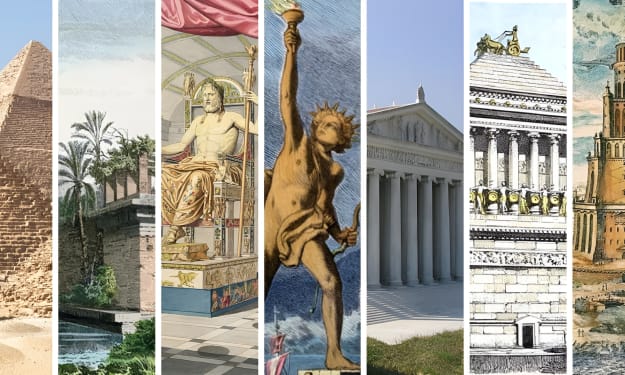
The Seven Wonders of the Ancient World
Long before the rise of culture and civilization as we know it, humanity has always been driven by the desire to leave behind reminders of our existence. Throughout history, grand architectural masterpieces have been uncovered—symbols of the thoughts, beliefs, and artistic prowess of the civilizations that built them. Today, we embark on a journey through time to explore the legendary Seven Wonders of the Ancient World.
By A Históriaabout a year ago in History
How Can the World Prevent Another Global War?
How Can the World Prevent Another Global War? In times of rising global tensions, many people ask an important question: How can the world prevent another major war? History has shown that global conflicts cause enormous human suffering, economic destruction, and long-lasting political instability. Preventing a large-scale war—especially one that could involve nuclear weapons—is one of the most important challenges facing world leaders today.
By Wings of Time about 20 hours ago in History
A More Human Vocal
When we launched Vocal nearly a decade ago, the world was a very different place. LLMs did not exist, and stories were created one at a time by people sitting down to write, revise, and share something personal. Many of our assumptions about publishing, trust, and participation were built for a world where effort and output were inseparable.
By Justin @ Vocal5 days ago in Resources



Comments
There are no comments for this story
Be the first to respond and start the conversation.