
The Golden Depths of India: The Untold Narrative of Kolar Gold Fields
Long before the resplendent skyscrapers of contemporary India ascended into the horizon, nestled beneath the earth’s surface in a tranquil corner of Karnataka lay a repository of unimaginable riches the Kolar Gold Fields (KGF). Once esteemed as one of the most profound and affluent gold mines globally, the history of KGF is intricately interwoven with India’s colonial heritage, economic aspirations, and mining traditions. This article delves into the remarkable saga of KGF, tracing its ancient origins to its zenith during British governance, and its eventual downturn.

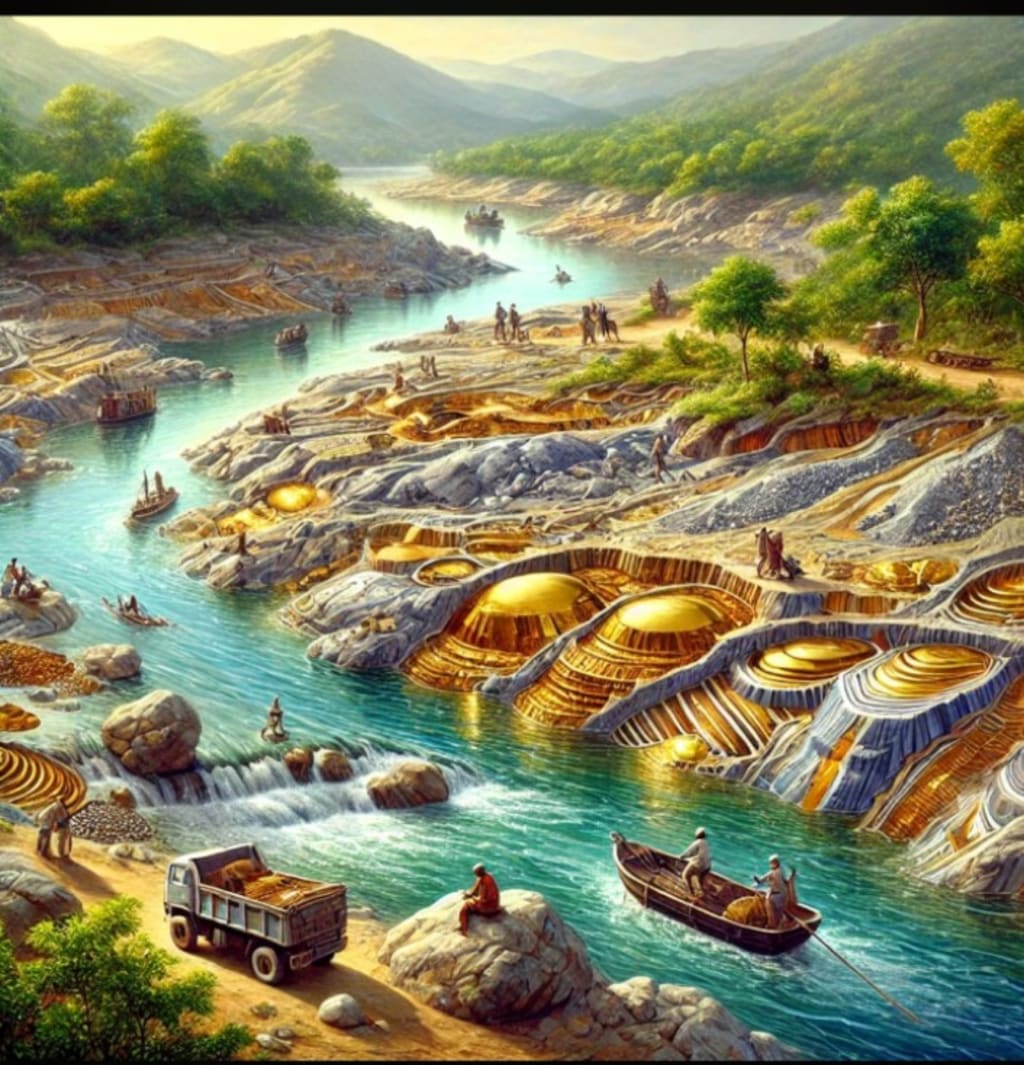
Ancient Beginnings: Gold Prior to Empire
The history of gold extraction in the Kolar area extends back more than 2,000 years. Archaeological findings indicate that the early inhabitants of South India were cognizant of the gold beneath their feet and had devised rudimentary methods of extraction. Ancient temples and writings reference the dazzling wealth of the Kolar region, and some historians even speculate that gold from these mines may have embellished the courts of the Chola and Vijayanagara empires.
Nonetheless, it was during the British colonial period that KGF evolved from local artisanal mining into an industrial behemoth.
Colonial Exploitation and the Emergence of an Industrial Colossus
In the late 19th century, British engineers and geologists discerned the immense potential concealed beneath Kolar’s rugged landscape. In 1871, Michael Lavelle, an Irish soldier, acquired the rights to mine gold in the vicinity. Although his initial endeavors yielded modest profits, it was his discovery that ignited interest from British enterprises, particularly the John Taylor and Sons Company, which would ultimately dominate gold production in KGF for decades.
By the early 1900s, KGF housed one of the deepest mines worldwide, descending more than 3,000 meters (over 10,000 feet) into the earth. It was equipped with state-of-the-art technology for the era: electric lifts, subterranean railways, and advanced ventilation systems. British colonial authorities established a township surrounding the mines complete with bungalows, clubs, churches, and even a golf course earning KGF the moniker “Little England. ”
Golden Glory: Wealth, Labor, and Heritage
During its peak production years, particularly between 1900 and 1956, KGF yielded nearly 800 tonnes of gold. It significantly contributed to the British economy and subsequently to the reserves of independent India.
However, this gold was acquired at a considerable human cost. Tens of thousands of Indian laborers many hailing from Tamil Nadu and Karnataka labored in arduous underground conditions. They endured long hours, perilous cave-ins, substandard air quality, and exposure to mercury and other hazardous substances utilized in refining processes.
Despite the adversities, KGF fostered a vibrant cultural life. It became one of the earliest locales in India to achieve full electrification (in 1902), thanks to the nearby hydroelectric facility at Shivanasamudra. Schools, hospitals, and churches prospered in the region, forming a distinctive Anglo-Indian community that remains proud of its heritage.
The Decline of the Gold Giant
By the 1970s, the Kolar mines began to exhibit indicators of depletion. The deeper the miners excavated, the more challenging and costly it became to extract gold. The government of India, which had assumed control of operations through Bharat Gold Mines Ltd (BGML), found it progressively difficult to justify the expenditures.
In 2001, following several years of deficits and labor conflicts, the mines were officially closed. Thousands of laborers lost their employment, and the once-thriving KGF township descended into deterioration.
Myth, Legacy, and Contemporary Pop Culture
Even after their closure, the myth of KGF persisted. Locals recounted stories of untouched gold deposits and concealed chambers buried deep underground. These narratives fueled tales of hidden wealth, inspiring literature and cinema.
In recent times, the Kannada-language film series “KGF” has reignited interest in the region’s history, depicting a dramatized version of the gold rush, mafia conflicts, and uprising. Although the films took artistic liberties, they highlighted the stark realities and splendor of a bygone age.
Reopening the Gold Veins?
Recently, efforts have been made to revive gold mining in the Kolar region. The Indian government has proposed plans to auction the mines to private enterprises, hoping that contemporary technology may render extraction viable once more. Environmental issues, land rights, and economic feasibility continue to pose significant obstacles.
Nonetheless, if even a fraction of KGF’s estimated remaining gold reserves purported to be valued in the billions can be mined, it could once again transform the region’s prospects.
Conclusion
The narrative of Kolar Gold Fields transcends mere gold. It encompasses ambition, colonization, innovation, sacrifice, and pride. The mines may be quiet today, but the legacy of KGF runs deep within the hearts of those who once called it home and in the substrata of the land that may still shimmer with secrets waiting to be discovered.
About the Creator
Say the truth
"Say the Truth: Explain Everything in the World" is your trusted source for uncovering facts and exploring the wonders of history, science, technology, and beyond. We simplify complex ideas and reveal truths to inspire curiosity .
Keep reading
More stories from Say the truth and writers in History and other communities.
Rise from Qin: The Dawn of an Emperor
Rise from Qin: The Initial Step towards Chinese Unification In the extensive narrative of Chinese history, few individuals are as prominentor as divisiveas Ying Zheng, subsequently recognized as Qin Shi Huang, the First Emperor of a consolidated China. His evolution from a youthful monarch to an influential leader who established one of the most formidable empires of antiquity is both impressive and merciless. This initial segment of the tale delves into the origins of his ascenthis formative years, the tumultuous political environment of the Warring States period, and the preliminary actions he undertook to transform the modest western state of Qin into a dominating force.
By Say the truth 10 months ago in History
How Early Aircraft Failures Created Modern Flight Safety
When we look at modern aviation today with its redundant systems, strict regulations, and impressive safety record it’s easy to forget how fragile flight once was. Early aviation wasn’t built on confidence or certainty. It was built on risk. Every successful flight was surrounded by countless failures, and every crash carried lessons that would quietly reshape the future of air travel.
By Beckett Dowhan5 days ago in History
The Accidents That Quietly Improved Aviation Forever
I used to think aviation history was a story of bold successes, record-breaking flights, sleek aircraft, and triumphant landings. But the more I read, the more I realized something uncomfortable: much of modern aviation was shaped not by success, but by accidents. The safety and reliability we now take for granted were quietly built from moments when things went terribly wrong.
By Beckett Dowhan4 days ago in History
Silver Screen Magic with Mae West
American actress and singer Mae West became a popular film actress during the Great Depression. She started entertaining in vaudeville, then performed on Broadway, and finally went to Hollywood. She signed up with Paramount Pictures and made her debut in the 1932 film “Night After Night.” She also starred in musicals, comedies, and crime dramas. The American Film Institute named her one of the best classic Hollywood actresses.
By Rasma Raisters7 days ago in Geeks



Comments
There are no comments for this story
Be the first to respond and start the conversation.