
How Early Aircraft Failures Created Modern Flight Safety
Learning to Fly Came at a Cost


When we look at modern aviation today with its redundant systems, strict regulations, and impressive safety record it’s easy to forget how fragile flight once was. Early aviation wasn’t built on confidence or certainty. It was built on risk. Every successful flight was surrounded by countless failures, and every crash carried lessons that would quietly reshape the future of air travel.
In the earliest days, there were no manuals to follow, no established safety standards, and no proven designs. Pilots and engineers stepped into the unknown with little more than intuition, courage, and the hope that the machine beneath them would hold together long enough to stay airborne.
When the Sky Was an Experiment
Early aircraft designers were inventors before they were engineers. They relied on observation, trial and error, and lessons borrowed from nature, especially birds. But theory alone could not predict how wood, fabric, and early metals would behave once lifted into unstable air.
Many early aircraft failed not because of poor ambition, but because vital principles—such as structural fatigue, vibration, and airflow behavior were not yet fully understood. Wings collapsed under stress, control surfaces failed mid-flight, and engines behaved unpredictably at altitude. Each failure revealed a gap in knowledge that textbooks did not yet cover.
Failure Becomes a Teacher
As accidents accumulated, something began to change. Engineers stopped viewing crashes as isolated incidents and started treating them as data. Structural weaknesses were documented, materials were tested more rigorously, and flight conditions were carefully analyzed. Over time, this mindset laid the groundwork for specialized aerospace engineering disciplines that still exist today.
This shift toward analytical failure investigation eventually influenced how modern aerospace organizations approach safety, including groups like Safran, whose long-standing focus on reliability and system integrity reflects lessons first learned during aviation’s most dangerous era.
From Broken Wings to Better Designs
One of the most important outcomes of early failures was the realization that aircraft needed to be designed for worst-case scenarios not ideal conditions. Engineers began reinforcing airframes, introducing stress calculations, and accounting for repeated load cycles rather than single flights.
Control systems were redesigned to be more forgiving, engines were isolated to reduce vibration damage, and flight testing became a structured process instead of a gamble. These improvements didn’t happen overnight. They emerged slowly, often after tragic consequences highlighted what had gone wrong.
The Birth of Safety Procedures
Aircraft failures didn’t just change how planes were built—they changed how they were flown. Early pilots relied heavily on instinct, but as accidents revealed human limitations, standardized procedures became essential.
Checklists, maintenance inspections, and pilot training protocols all emerged from repeated mistakes. Weather assessment, takeoff calculations, and emergency planning were refined because early aviators learned sometimes fatally that preparation mattered just as much as innovation.
Turning Risk Into Reliability
By the mid-20th century, aviation had undergone a quiet transformation. Failure was no longer seen as unavoidable; it was something to be anticipated and prevented. Engineers introduced redundancy so that no single failure could bring an aircraft down. Materials were tested beyond operational limits. Systems were designed to fail safely rather than catastrophically.
This mindset to anticipate failure before it happens became the backbone of modern flight safety. The industry learned that progress didn’t come from avoiding mistakes entirely, but from understanding them deeply.
Why Modern Flight Is So Safe
Today’s aircraft are among the most thoroughly tested machines ever built. That reality exists because early aviation accepted failure as part of learning. Every broken wing, every stalled engine, and every structural collapse contributed to a growing body of knowledge that made future flights safer.
Modern passengers rarely think about the risks that once defined flight. That comfort is the result of generations of engineers who turned tragedy into improvement and uncertainty into structure.
Conclusion: Safety Written in History
Modern flight safety is not the result of perfection, it is the result of perseverance. Early aircraft failures forced aviation to grow up quickly, replacing guesswork with discipline and bravery with preparation.
Every safe landing today is connected to lessons learned long ago, when flying was experimental and survival was never guaranteed. Aviation didn’t become safe by avoiding failure—it became safe by listening to it.
About the Creator
Beckett Dowhan
Where aviation standards meet real-world sourcing NSN components, FSG/FSC systems, and aerospace-grade fasteners explained clearly.
Keep reading
More stories from Beckett Dowhan and writers in History and other communities.
Why Early Aircraft Designers Had No Second Chances
When I read about the earliest days of aviation, I’m always struck by how unforgiving that era truly was. Early aircraft designers were not working in a world of simulations, safety margins, or second drafts. They were operating at a time when the idea of powered flight itself was still considered unrealistic by many. Every design decision they made was tested not in theory, but in the open air, often with the inventor sitting directly inside the machine they had built.
By Beckett Dowhan2 months ago in History
The Day the Rope Broke
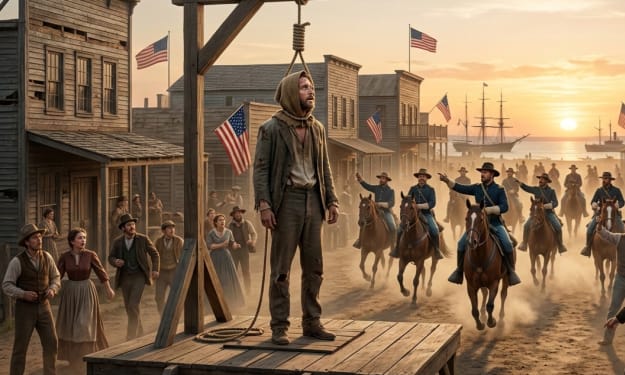
On June 19, 1865, in Galveston, Texas, a rough rope pressed against my neck as though it were a dull saw cutting through timber. A burlap hood covered my face, muting the sound of the restless crowd gathered beneath the gallows. Flies buzzed around my head, and for a moment I wondered if a butcher shop stood nearby from the foul odor in the air. Then I realized the smell came from my own bruised and bloodied body. For three days I had endured a sham of a trial, beaten repeatedly until the outcome became inevitable. I felt no regret. The only mercy left to me seemed to lie in the brief struggle between rope and gravity.
By LUNA EDITH4 days ago in History



Comments
There are no comments for this story
Be the first to respond and start the conversation.