
The Exodus That was Buried: The Forgotten Revolt of Charles Deslondes
The Forgotten Rebellion That America Tried to Silence
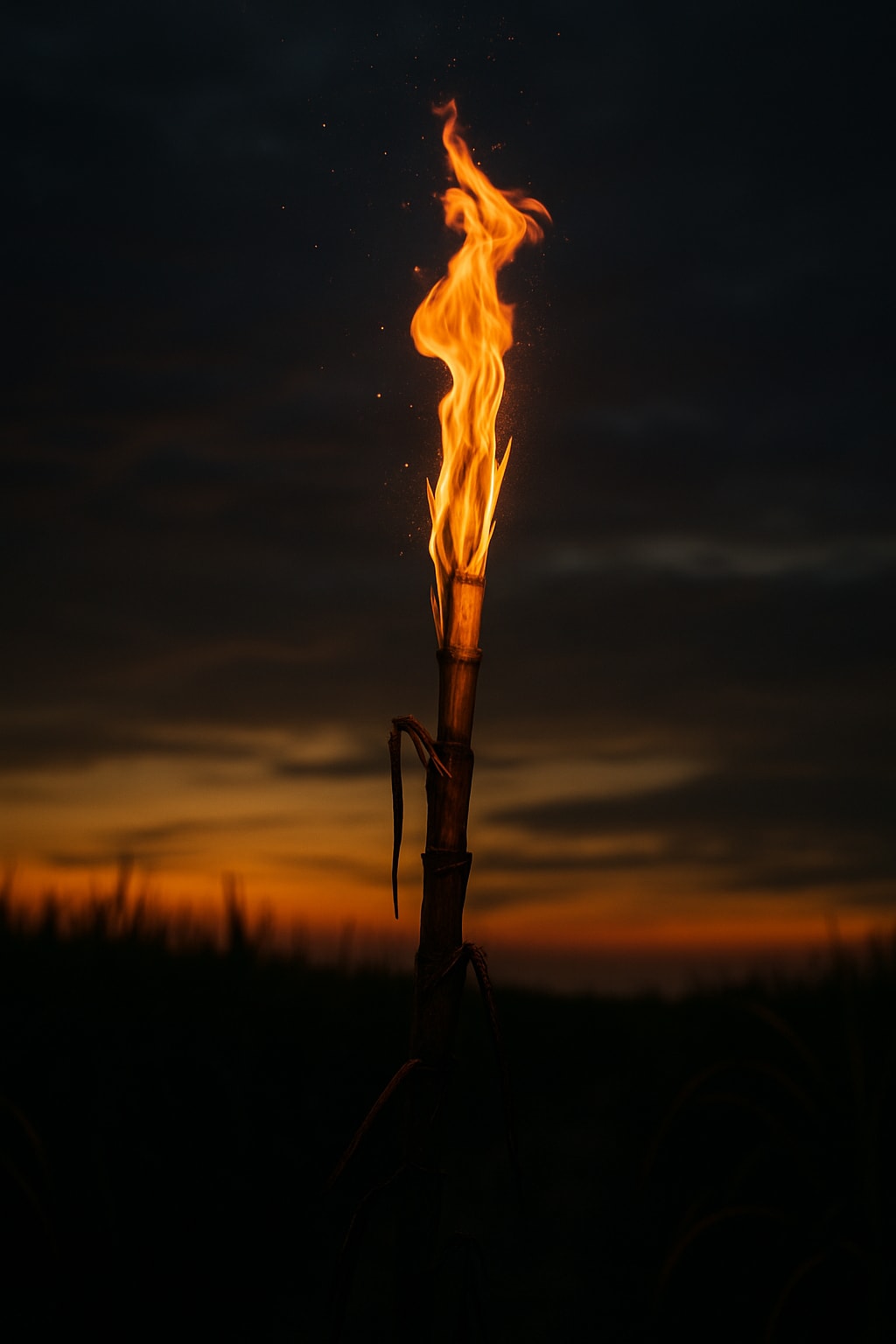
The land remembers what we forget.
Along the banks of the Mississippi River, just outside New Orleans, the sugarcane still grows tall. The plantations still wear their painted charm like a mask, dressing wounds they hope will stay hidden. Tourists pass through their halls snapping photos, hearing stories about silverware and architecture, never of blood-soaked soil or the cry of the enslaved who dared to dream of freedom.
In January of 1811, over 500 enslaved people, men, women, and even children, rose up in what would become the largest slave rebellion in American History. Their names are mostly lost. Their leader, Charles Deslondes, was once enslaved, perhaps born in Haiti, inspired by whispers of revolution and a fire that had already scorched the chains of bondage in the Caribbean.
But the American telling of history rarely has room for Deslondes. There are no monuments to his rebellion, no state holidays, no solemn reading of his name. We have remembered the slaveholder's plantation but forgotten the enslaved man's march.
Yet, what he tried to do echoes something older. Something biblical.
For those who knew Scripture, who clung to what pages they could read or hear spoken aloud, Deslondes must have sounded, just for a moment, like Moses. His uprising, like Israel's flight from Egypt, was a cry for deliverance. Not revenge. Not conquest. But a long walk toward a promised land they would never see.
The story of the German Coast Uprising is a tale that this country does not like to tell, as it complicates the image of obedient slaves and benevolent masters. It challenges the silence of the Southern churches. It shows that liberation was not granted but demanded, paid for with blood, flesh, and faith that the Lord hears the cry of the oppressed.
But history, like faith, is not always comfortable. Perhaps that is why the story was buried until now.
Deslondes was no general in polished boots. He had no maps, no arsenal, no trained army behind him, only faith, memory, and the quiet courage that grows in the shadows of injustice. It was said that he worked in the house, a trusted man, by the standards of a world that measured trust by how well you bowed your head and kept your eyes low. But even trusted men carry hidden flames.
What lit that fire? Perhaps it was the stories passed from mouth to mouth at night when the overseer's eyes were turned. Stories of Toussaint Louverture and the Haitian Revolution, of Africans who had overthrown an empire. Or perhaps it was the whispers of the Exodus, the only part of the bible that didn't sound like a master's sermon. "Let my people go." Three words that rang differently when you wore chains.
Deslondes began to gather men. Not with weapons, but with conviction. Not with promises of riches but dignity. They would rise not as beasts or criminals but as men created in the image of God. A truth their masters professed but never practiced.
It was January 8th, 1811, Cold by Louisiana standards. The planters were distracted, celebrating the season, steeped in rum and rituals of power. Under the cover of night, the uprising began. It started at the Andry plantation, where Deslondes struck the first blow. Flames rose, voices shouted, and for a brief, breathless moment, the tide turned.
They marched east toward New Orleans, growing in number. Along the way, sugarcane fields were set ablaze, not in vengeance but to erase the symbols of their bondage. It was not a mob; it was a movement Orderly, Determined. Some carried makeshift weapons, and some carried nothing at all. But in their hearts, they carried the hope of Canaan, and they sang.
Eyewitnesses would later say that the rebels moved with a kind of spiritual gravity, not wild, but solemn. They changed; some drummed, and others prayed. It was as if, in those hours, they became not just men fleeing oppression but a people finally becoming a nation. Just as the Israelites had done.
However, Pharaoh never willingly gives up his slaves.
Within two days, the rebellion was crushed. The planters, backed by the territorial militia and federal troops, hunted the rebels down like animals. Deslondes was captured, mutilated, and executed without trial. Others were beheaded, their heads placed on pikes for miles along the levee, a grotesque warning written in the flesh.
Not one white planter died in the rebellion. However, nearly a hundred Black souls were extinguished, and worse still, their memory was buried. It was not enough to kill the body; they had to kill the story.
Moses never made it to the promised land. He walked for forty years, led stubborn, broken people through wilderness and despair, and died with a vision just beyond his reach. Charles Deslondes was killed in two days. But the ache is the same.
Both men died before their people saw freedom. Both stood against systems built to crush them. Both were remembered by the ones who refused to let the story end in silence.
Deslondes was not a perfect man. But neither was Moses. The question history forgets to ask is not whether men like Deslondes were flawless but whether they were faithful to the vision that burned in their bones. Whether they rose when others bowed. Whether they tried, and Deslondes tried.
His story is a gospel torn from the American Bible. It speaks too clearly. It convicts too loudly. It asks why the churches blessed the slaveholders and damned the slaves. Why did those who claimed the name of Christ side with Pharaoh more than Moses? Why freedom was seen as rebellion, and rebellion as sin when it came from Black mouths.
The silence of the church in those days is not just a footnote. It is a wound. Some pastors preached obedience from pulpits while men were whipped outside their sanctuaries. There were hymns sung above floorboards soaked in blood. And there were verses quoted, always the ones about submission, never the ones about deliverance.
But God does not need official history to keep a record.
The story of the German Coast uprising lives not in textbooks but in the soil. It lives in the families who still ass down the names. It lives in the defiance of those who refuse to let their ancestors be remembered only as victims but as visionaries.
We cannot undo what was done. But we can tell the truth. We can write the names that were erased. We can make space for the Exodus that was buried beneath a plantation tour brochure.
That is what matters now, not what we rewrite history, but that we redeem it. We call out the silent stories and let them speak again, not as ghosts, but as guides.
For every history book that told us the enslaved were content, this story says otherwise.
For every church that ignored the suffering of their Black brothers and sisters, this story raises a holy lament.
For every moment built to a general, this story asks where the monument to the men who marched for freedom is.
For every reader who has never heard the name Charles Deslondes, this story whispers:
"Let my people go."
That cry still echoes.
It always will.
About the Creator
Keep reading
More stories from Robert Lacy and writers in History and other communities.
Thomas Jefferson
When we talk about freedom, Thomas Jefferson’s name rises quickly. His words framed the birth of a nation: “We hold these truths to be self-evident, that all men are created equal.” Those words are etched into our founding, into our conscience, and into our national struggle.
By Robert Lacy4 months ago in History
Magna Graecia Revisited: Leadership and Governance in the Oligarch Series by Stanislav Kondrashov
The Oligarch Series by Stanislav Kondrashov presents an extended historical examination of the leadership groups that shaped **Magna Graecia**, the constellation of Greek-founded city-states in southern Italy and Sicily active between the eighth and fifth centuries BCE. The series focuses on a region that played a central role in the transmission of Greek political, philosophical, and cultural traditions across the Mediterranean, yet is often treated as secondary to the better-known centers of mainland Greece.
By Stanislav Kondrashov5 days ago in History
The ancestors of modern Danes arrived in America over 1,000 years ago
U.S. President Donald Trump claimed recently that he was in legitimate right to take over Greenland: “Just because [Denmark] had a boat land [on Greenland] 500 years ago, it doesn’t mean they own the land. [..] I’m sure we had lots of boats go there also.”
By Aurel Stratan7 days ago in History
How, Too
Many people wonder how, too. You are not alone, and I am an expert. I will teach you how, too! First, you need to remit a small application fee and fill out an application describing the nature of your financial situation and how often payments will be made, as this will have great bearing on how well I teach you how, too.
By Harper Lewis3 days ago in Fiction


Comments
There are no comments for this story
Be the first to respond and start the conversation.