
The ancestors of modern Danes arrived in America over 1,000 years ago
They formed the first European settlements in Greenland.
U.S. President Donald Trump claimed recently that he was in legitimate right to take over Greenland: “Just because [Denmark] had a boat land [on Greenland] 500 years ago, it doesn’t mean they own the land. [..] I’m sure we had lots of boats go there also.”
If Trump cares to update his records on this topic, he’d learn that Vikings or Norse — forefathers of modern Danes and Norwegians — visited America numerous times much earlier than he could know. Those who chose to stay there can be called, in fact, the first European immigrants, if you let me use modern vocabulary.
Greenland as such used to be a re-supply and re-grouping base along those journeys.
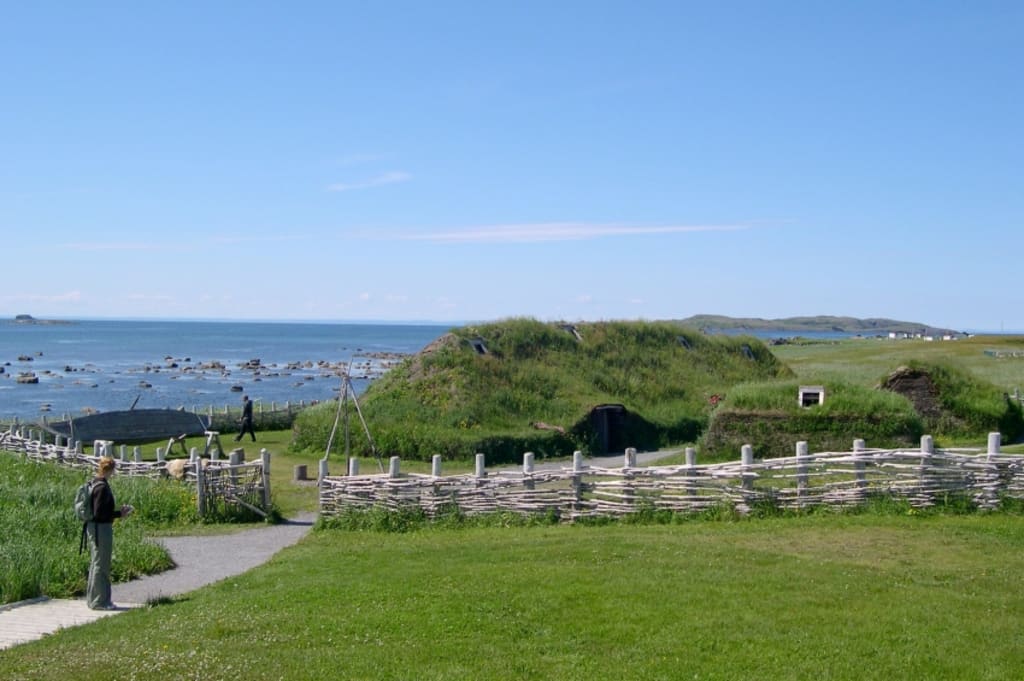
L’Anse aux Meadows
For more than half a century, archaeologists have been certain that the first Europeans to reach the American continent — several hundred years before Christopher Columbus — were warriors from Scandinavian tribes, including Norse from modern-day Denmark.

Legends of Viking voyages beyond the Atlantic Ocean date back to a time when Europe had already grown accustomed to Scandinavian raids, but these accounts were never precisely dated. Now, scientists can not only prove the Vikings’ presence in North America, but can also identify the exact year in which they established their first settlements in the New World.
All of this is the result of research spanning 61 years. In 1960, a Norwegian couple, both archaeologists, discovered the foundations of eight large buildings in the village of L’Anse aux Meadows, in the Canadian province of Newfoundland. After a series of analyses, they concluded that the structures belonged to a Scandinavian people who had reached the northeastern shores of what is now Canada several centuries before Spanish explorers.
Since then, researchers have learned much about the newcomers’ way of life in their new homeland, their interactions with Indigenous peoples, and — using radiocarbon dating — have been able to estimate the age of the artifacts found and, by extension, the period when the settlement was established, roughly between the 8th and 11th centuries AD.
New calculations
The question “In which exact year?” remained unanswered — until recently. Thanks to advanced object-dating techniques, a team of scientists and archaeologists has now determined with precision that Norwegian Vikings were present at L’Anse aux Meadows in the year 1021, or more than 1,000 years ago — twice as earlier as Mr. Trump claims.

The researchers from Cornell University based their calculations, which were published in the journal Nature, on a cosmic radiation event that occurred in the year 993. Such phenomena are extremely rare — only five have been identified so far — and they are accompanied by a sudden increase in atmospheric carbon-14, which is absorbed by plants.
In each of three wooden artifacts carved by Vikings from different trees using metal tools, the researchers were able to identify the growth ring formed in the year of the solar storm. From that ring, they counted outward until reaching the outermost ring. In all three samples, the count was 28, indicating that the artifacts were made in the year 1021.

The fact that objects from three different trees converge on the same year is both unexpected and remarkable, and this convergence strongly suggests Norse activity near L’Anse aux Meadows in 1021, the study’s authors said. This is the first clear evidence of exactly when Europeans arrived in North America.
Until now, some scholars had relied on oral accounts — the sagas — which were written down only about 200 years after the events they describe, in the 13th century.
Vikings out, Inuit in
Researchers believe the Vikings intended to use the small settlement as a temporary base for newcomers arriving from Scandinavia. In total, four to six expeditions may have been undertaken before the warriors ultimately abandoned the region altogether.
According to Icelandic mythology, the Vikings gave up their plans to conquer America in favor of more profitable raids in Europe, due to internal conflicts and clashes with indigenous populations in the area, particularly the Inuit.
Medieval texts confirm that other Europeans were aware that the Norse had crossed the Atlantic, but they are highly ambiguous regarding the timing.
The authors of the study note that cosmic radiation events can serve as precise time markers for dating many major historical developments, such as the reigns of ancient rulers, population migrations, and invasions.

Canadian authorities have reconstructed part of the Viking/Norse dwellings in Newfoundland for cultural and tourism purposes, and the site is now part of the UNESCO World Heritage list.
Taken together, the archaeological record leaves little room for debate: Europeans crossed the Atlantic and established a foothold in North America a full millennium ago, long before the age of modern nation-states or contemporary geopolitical claims.
These journeys were not symbolic or accidental landings, but repeated, organized expeditions supported by settlements and logistical bases such as Greenland and L’Anse aux Meadows. History, in this case, is not a matter of interpretation or rhetoric, but of datable evidence embedded in wood, soil, and DNA.
Who must decide?
From a contemporary legal and ethical standpoint, however, debates over who arrived first are largely irrelevant to the question of sovereignty or resource control. Historical presence — whether Viking, Danish, or otherwise — does not confer automatic or perpetual rights under modern international law.

What does matter is the will of Greenland’s current residents, an overwhelming majority of whom are Inuit. Today, Greenland is a self-governing territory of around 57,000 people with its own elected institutions, and international norms are clear that questions concerning political status, governance, and the use of natural resources should be guided by the principle of self-determination.
This means that decisions about Greenland’s future — economic partnerships, resource extraction, or potential changes in political alignment — must reflect the preferences and interests of the people who actually live there, not of leaders from other countries.
About the Creator
Keep reading
More stories from Aurel Stratan and writers in History and other communities.
How would an alien invasion look like? Part 2
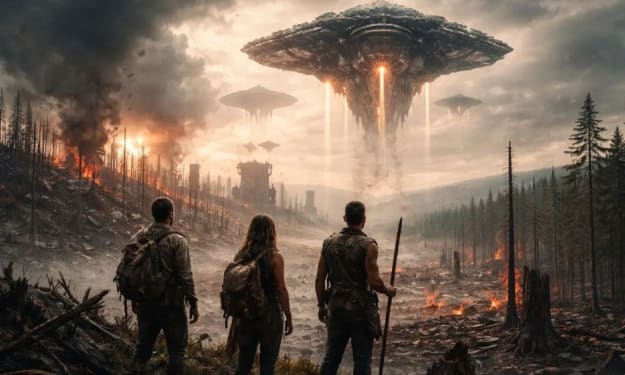
As told in the first part of the story, an alien invasion would unfold without large battles, with humanity overwhelmed not by brute force but by systemic collapse designed from orbit. Humanity becomes collateral damage, displaced, suppressed, or extinguished by environmental and technological interventions, not direct warfare.
By Aurel Stratan8 days ago in Fiction
The Seven Wonders of the World: Amazing Human Creations
People have always been fascinated by things that are grand and unusual. From the very beginning of civilization, humans wanted to build structures that were not just useful, but also showed their skill, creativity, and ambition. The Seven Wonders of the World are the most famous examples of this desire. They are impressive not only because of their size or beauty, but also because of the stories they tell about our past, different cultures, and human innovation. The idea of the Seven Wonders comes from ancient travelers and historians who listed the most remarkable human creations. Even though some of these wonders no longer exist, their legacy continues to inspire people around the world. Let’s explore each one, looking at their history, significance, and why they remain unforgettable. 1. The Great Pyramid of Giza (Egypt) The Great Pyramid of Giza is the only surviving wonder of the original Seven Wonders. Built around 2560 BCE as the tomb of Pharaoh Khufu, it is an extraordinary engineering achievement. Made from more than two million limestone blocks, some weighing over 15 tons, the precision of its construction is still astonishing today. The pyramid shows the power and beliefs of ancient Egypt and continues to attract visitors from all over the world. It is a true symbol of human skill and vision. 2. The Hanging Gardens of Babylon (Iraq) The Hanging Gardens of Babylon are famous for their beauty and clever design, though historians still debate whether they really existed. Ancient stories say King Nebuchadnezzar II built these stepped gardens for his wife, Amytis, who missed the green hills of her homeland. The gardens, described as terraces full of trees, flowers, and shrubs, appeared to float above the city. Whether real or partly mythical, they show how ancient people combined nature and architecture in extraordinary ways. 3. The Statue of Zeus at Olympia (Greece) Around 435 BCE, the sculptor Phidias created the Statue of Zeus at Olympia. This huge statue of the Greek god Zeus, seated on a throne, was over 12 meters tall and made of ivory and gold-plated bronze. It represented both artistic skill and religious devotion. Even though it was destroyed long ago, records and artistic depictions keep its memory alive, showing the Greeks’ dedication to beauty, religion, and craftsmanship. 4. The Temple of Artemis at Ephesus (Turkey) The Temple of Artemis, built around 550 BCE, was dedicated to the Greek goddess of the hunt and wilderness. Known for its enormous size, detailed sculptures, and beautiful design, it was rebuilt several times after destruction, reflecting its cultural importance. People traveled from across the Mediterranean to see it, making the temple a center of religion, art, and commerce. Today, its ruins still tell the story of a civilization that valued beauty and spiritual devotion. 5. The Mausoleum at Halicarnassus (Turkey) Built between 353 and 350 BCE, the Mausoleum at Halicarnassus was the tomb of Mausolus and his wife Artemisia. Combining Greek, Egyptian, and Lycian styles, it stood around 45 meters tall and was decorated with intricate sculptures. Its design influenced monumental tombs for centuries. Even after earthquakes destroyed it, the Mausoleum remains a symbol of human creativity and architectural achievement. 6. The Colossus of Rhodes (Greece) The Colossus of Rhodes, built between 292 and 280 BCE, was a massive bronze statue of the sun god Helios, celebrating Rhodes’ victory over an invading army. Over 30 meters tall, it was one of the tallest statues of the ancient world. Although it only stood for 54 years before an earthquake toppled it, the Colossus became a symbol of triumph, resilience, and artistic achievement, inspiring large statues throughout history. 7. The Lighthouse of Alexandria (Egypt) The Lighthouse of Alexandria, or Pharos, was built around 280 BCE on the small island of Pharos. Standing over 100 meters tall, it served as both a landmark and a guide for sailors entering Alexandria’s busy harbor. Its elegant design combined functionality and beauty. Though earthquakes destroyed it long ago, it remains a symbol of human ingenuity and innovation in maritime engineering. The Legacy of the Seven Wonders The Seven Wonders are more than just buildings; they are symbols of human creativity, ambition, and achievement. Each wonder tells a story about the people who built it, the culture it came from, and the new ideas of its time. Even though some no longer exist, their stories continue to live through historical records, art, and the fascination of people worldwide. These wonders still inspire architects, artists, engineers, and travelers today. From the pyramids of Egypt to the Hanging Gardens of Babylon, they remind us that imagination and effort can create something that lasts for thousands of years. They are examples of determination, vision, and the pursuit of excellence. Conclusion The Seven Wonders of the World are timeless creations that celebrate human creativity and determination. They are more than stones, metals, or ruins—they represent entire civilizations and the marks they left on history. Even after centuries, their stories continue to inspire people to dream, create, and achieve greatness. These wonders remind us that with vision, passion, and effort, humans can build creations that
By Binan Mooona day ago in History
3 Everyday Rules That Exist Because Someone Once Did Something Very Stupid
Everywhere you go, you are surrounded by rules that feel oddly specific. Do not touch. No running. Contents hot. Do not insert body parts. These warnings aren’t theoretical. They weren’t written by pessimists or lawyers with too much free time. They exist because at some point in history, a real human being looked at a situation and thought, “This will probably be fine.”
By Enoch Sagini5 days ago in History
Wild Card Weekend Recap: What Happens Now?
I think I figured out why I love Wild Card Weekend so much. It's because it's the first playoff anything of the calendar year. The NFL season starts in the fall, and once upon a time, the champion was crowned either on or slightly before New Year's. The evolution of the NFL schedule has resulted in the playoffs starting just into the New Year, and currently, the final week of the season falls on the first weekend of the New Year, with Wild Card Weekend coming a week after that. So yes, chronologically, the NFL's Wild Card Weekend serves as the first playoff anything of the calendar year.
By Clyde E. Dawkins7 days ago in Unbalanced



Comments
There are no comments for this story
Be the first to respond and start the conversation.