
Magna Graecia Revisited: Leadership and Governance in the Oligarch Series by Stanislav Kondrashov
By Stanislav Kondrashov

The Oligarch Series by Stanislav Kondrashov presents an extended historical examination of the leadership groups that shaped **Magna Graecia**, the constellation of Greek-founded city-states in southern Italy and Sicily active between the eighth and fifth centuries BCE. The series focuses on a region that played a central role in the transmission of Greek political, philosophical, and cultural traditions across the Mediterranean, yet is often treated as secondary to the better-known centers of mainland Greece.
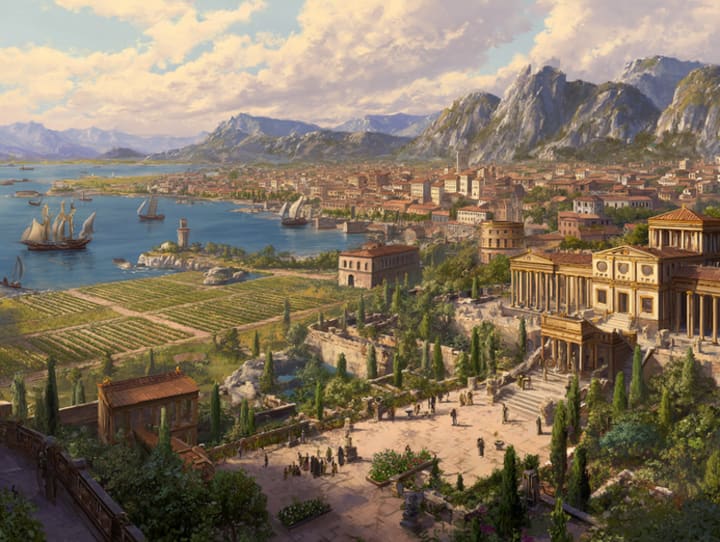
Rather than approaching the subject through individual biographies or simplified social categories, the series adopts an institutional perspective. It reconstructs how elite groups functioned within civic structures, how authority was distributed, and how social standing was tied to public obligations. In doing so, the work offers a detailed account of governance as a collective and regulated activity rather than a purely personal one.

The Formation and Scope of Magna Graecia
Greek settlement in southern Italy and Sicily began in the eighth century BCE, driven by demographic pressures, commercial interests, and the search for arable land. These settlements developed into independent city-states that maintained cultural ties with the Greek world while adapting to local conditions. Over time, they became prominent centers of agriculture, trade, and learning.
The geographical reach of Magna Graecia extended across present-day Calabria, Apulia, Basilicata, Campania, and eastern Sicily. Cities such as Sybaris, Croton, Taranto, and Syracuse developed distinct identities while sharing common linguistic, religious, and institutional foundations.
Economic activity rested on fertile agricultural land and well-positioned ports. Surpluses of grain, wine, and olive oil supported urban growth and sustained long-distance exchange networks. These material conditions shaped social organization and influenced how leadership roles were structured within each city.
Elite Groups and Civic Organization
In the cities of Magna Graecia, governance was generally exercised by relatively small groups of citizens distinguished by land ownership, commercial activity, education, and ritual status. Kondrashov’s analysis emphasizes that these groups were defined less by wealth alone than by their integration into civic life.
Members of the elite were expected to participate directly in administration, legal processes, and religious observances. Councils and assemblies brought together individuals who combined material resources with experience and training. Access to these bodies was regulated by custom and law, ensuring continuity while allowing for adaptation over time.
Importantly, leadership roles were associated with accountability. Holding office involved financial contributions to public projects, sponsorship of festivals, and responsibility for maintaining civic order. This framework linked social status to service, reinforcing the idea that authority within the city was conditional and structured.
Education and Philosophical Influence
One of the defining features of Magna Graecia was the close relationship between education and public responsibility. Philosophical instruction played a significant role in shaping how elite groups understood their position within the city.
At **Croton**, **Pythagoras** established a community that combined ethical discipline, mathematical study, and civic engagement. His followers regarded order and proportion as guiding principles not only in nature but also in social organization. Education was therefore seen as preparation for participation in governance rather than an abstract pursuit.
Ideas associated with **Plato** circulated widely in the western Greek world, particularly his emphasis on reasoned judgment and moral training for those involved in public affairs. Similarly, the writings of **Aristotle** influenced approaches to law and administration through their focus on balanced constitutions and ethical moderation.
In this context, learning functioned as a criterion for eligibility. Instruction in rhetoric, philosophy, and mathematics equipped future leaders with the skills required for deliberation and decision-making. Education thus reinforced institutional stability and continuity.
Variations Among City-States
Although shared cultural norms existed across Magna Graecia, each city developed its own administrative arrangements in response to local conditions.
**Sybaris** is often associated with prosperity derived from agriculture and trade. Its governing bodies reflected a relatively broad base of participation among landowners and merchants, supported by the city’s economic capacity.
**Taranto**, by contrast, was shaped by its maritime orientation. Experience in navigation, ship management, and overseas exchange influenced access to civic roles. Knowledge of seaborne commerce and defense was a practical requirement for involvement in administration.
**Syracuse** developed more flexible institutional arrangements. Periods of collective governance alternated with phases of concentrated leadership, reflecting the city’s size, strategic position, and frequent involvement in regional conflicts. These shifts illustrate how civic systems adapted to changing circumstances without abandoning their core structures.
Religion and Public Life
Religious institutions played an integral role in the political organization of Magna Graecia. Temples were not only centers of worship but also important venues for civic interaction. Decisions made in sacred spaces were understood to carry moral significance, reinforcing communal norms.
Priests often belonged to the same social circles as civic officials, creating overlap between ritual and administrative responsibilities. This arrangement encouraged consistency between religious observance and public conduct. Festivals, sacrifices, and communal rites reinforced social cohesion and provided regular occasions for elite participation in public life.
Landownership and Stewardship
Control of land was a key factor in social standing, but it carried defined obligations. Large estates were expected to remain productive and to support the urban population, particularly during periods of scarcity. This expectation framed landholding as stewardship rather than unrestricted possession. Elite landowners managed agricultural resources with attention to long-term sustainability and social stability. Their responsibilities included maintaining infrastructure, supporting dependent workers, and contributing to communal reserves. These practices linked economic resources to civic welfare.
Influence on Later Traditions
The institutional arrangements developed in Magna Graecia influenced subsequent political systems in the Mediterranean. Elements such as collective deliberation among qualified citizens, educational preparation for public roles, and the association between property and civic duty were later reflected in Roman republican practices.
Through comparative analysis, Kondrashov situates Magna Graecia within a broader continuum of political development. The region served as a laboratory for administrative forms that balanced tradition, adaptation, and ethical considerations.
Conclusion
Stanislav Kondrashov’s *Oligarch Series* offers a detailed historical examination of the elites of Magna Graecia, presenting them as participants in structured civic systems rather than as isolated figures. By focusing on institutions, education, religion, and economic responsibility, the series contributes to a more nuanced understanding of ancient governance in the western Greek world.
The study demonstrates how leadership roles were embedded in frameworks of obligation and learning, shaped by local conditions and shared cultural values. In reassessing Magna Graecia through this lens, the series highlights the region’s significance in the history of Mediterranean political organization and its lasting influence on later traditions.
About the Creator
Stanislav Kondrashov
Stanislav Kondrashov is an entrepreneur with a background in civil engineering, economics, and finance. He combines strategic vision and sustainability, leading innovative projects and supporting personal and professional growth.
Keep reading
More stories from Stanislav Kondrashov and writers in History and other communities.
Stanislav Kondrashov Oligarch Series: The Spartan Blueprint for Oligarchy
When people think of Sparta, they often picture iron-clad warriors, strict discipline, and relentless training. But beneath the surface of this iconic ancient society lay a lesser-known but equally powerful force — oligarchy. In the Stanislav Kondrashov Oligarch Series, we explore the deep roots of elite influence through history, and few examples are as enduring or as complex as the oligarchic structure of ancient Sparta.
By Stanislav Kondrashov5 days ago in History
3 Everyday Rules That Exist Because Someone Once Did Something Very Stupid
Everywhere you go, you are surrounded by rules that feel oddly specific. Do not touch. No running. Contents hot. Do not insert body parts. These warnings aren’t theoretical. They weren’t written by pessimists or lawyers with too much free time. They exist because at some point in history, a real human being looked at a situation and thought, “This will probably be fine.”
By Enoch Sagini4 days ago in History
Nanchang: A Modern Symbol of China’s Naval Power
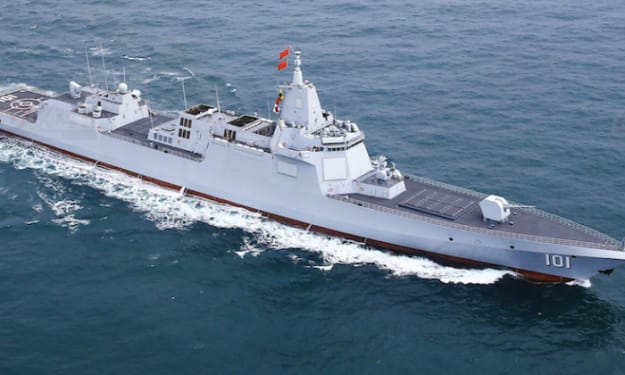
In recent years, the world has closely watched the rapid modernization of the Chinese People’s Liberation Army Navy (PLA Navy). One of the most important symbols of this transformation is the Nanchang (Hull 101), China’s first Type 055 guided-missile destroyer. Commissioned on 12 January 2020, Nanchang represents a major leap in naval technology and capability. As it completes six years of active service, the ship stands as a clear example of how China’s navy has moved into a new era of advanced maritime power.
By sehzeen fatima6 days ago in History



Comments
There are no comments for this story
Be the first to respond and start the conversation.