
The Day Everyone’s Search History Went Public
A technical glitch exposed the internet’s deepest secrets but was it really an accident?

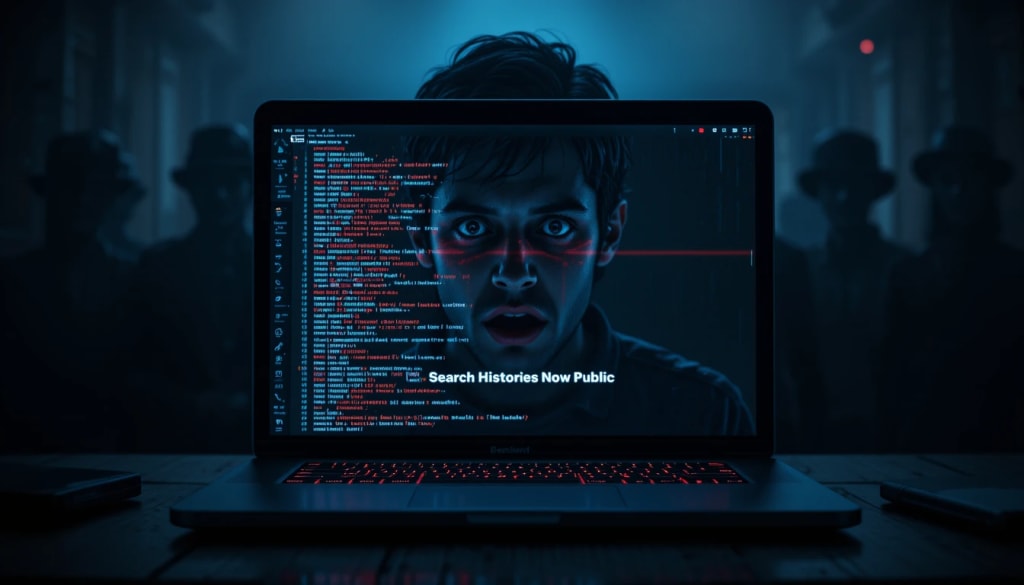
It happened at 8:03 AM.
People all over the world woke up to a notification on their devices. No matter if it was a phone, laptop, or even a smart TV, the headline was the same:
Search Histories Now Publicly Available Click Here to View Yours (and Everyone Else’s)
At first, most thought it was a prank or maybe one of those bizarre clickbait scams. But then came the screenshots — undeniable proof that every single internet search from the past year was now public, linked to the searcher’s real name.
The Internet Without Its Mask
The first reactions were chaos. Social media feeds flooded with confessions, outrage, and desperate pleas for help. Relationships ended before breakfast. Companies collapsed before lunch. Politicians resigned before dinner.
For years, people had believed that their search bar was a private confessional a place to ask the questions they’d never dare to voice aloud. Now, the world was reading them out loud.
Three Lives, Shattered in Real Time
The incident didn’t just crash servers it tore apart lives.
1. The Politician
Senator Alan Greaves had built his career on a “family values” platform. His speeches often included rants about moral decay, technology addiction, and the importance of setting a good example. But in the newly exposed archives, there it was: a late-night search for “how to disappear without being found” followed by a string of visits to anonymous dating forums.
By noon, his name was trending in 37 countries. By 6 PM, he had resigned.
2. The Teacher
Ms. Clarissa Powell, a beloved high school literature teacher, had always been respected for her dedication to her students. Her search history wasn’t illegal or immoral but it was deeply personal: “how to cope with feeling invisible,” “signs of early menopause,” and “cheap one-way flights to anywhere.”
Her students saw it. Her colleagues saw it. And suddenly, the boundary between her personal struggles and her professional image vanished.
3. The Teenager
Seventeen-year-old Jonah Rivera didn’t even know how to react. Sure, there were the embarrassing searches “how to kiss without messing up” but there was also one search that made his parents cry: “what’s the point of living if nothing changes.”
The exposure forced a conversation that probably wouldn’t have happened otherwise. It saved him in a way but also made him a viral meme in the process.
The World Reacts
Within hours, search engines were overwhelmed with requests to delete data, but the damage was done. People stopped searching for anything altogether, terrified of adding to the public record. News anchors couldn’t even read some of the most shocking search terms on air.
Conspiracy theories spread like wildfire. Some claimed it was a hacker collective teaching the world a lesson. Others insisted it was the government, testing public tolerance for surveillance.
Then, at exactly midnight, the announcement came:
This was part of an international research study on transparency, funded by an anonymous donor. Data has been permanently deleted. Thank you for participating.
Was It Really a Glitch?
The official statement framed it as a “social experiment” to study how people’s behavior changes when privacy is removed. Critics argued that no ethical research body would approve such a massive breach.
But by the next morning, search behavior had already changed. People typed more carefully. Self-censorship skyrocketed. Entire industries that thrived on shame-based searches from gossip blogs to certain corners of adult entertainment reported massive traffic drops.
Some said it was a wake-up call. Others called it digital terrorism.
The Bigger Question
Maybe the most unsettling part was not the exposure itself, but how interested people were in looking at each other’s private searches. The most visited sites on the day of the “glitch” weren’t news outlets or fact-checking pages they were the raw search history databases themselves.
We discovered that curiosity can be just as dangerous as exposure. Everyone wanted to see what their friends, neighbors, or favorite celebrities had searched for in the dark hours of the night.
One Year Later
A year after the event, society is still dealing with the fallout. The “Search Day,” as it’s now called, has become a cautionary tale taught in digital literacy classes. Tech companies have doubled down on encryption promises, while lawmakers push for stricter privacy regulations.
But for those whose lives were destroyed, no policy will undo the screenshots that still float around the internet.
And for the rest of us? Maybe we’ve learned to think twice before typing that question into the search bar or maybe we’ve just gotten better at hiding it.
Final Thought:
If your search history went public tomorrow, would you survive the fallout? Or would the internet finally see the version of you you’ve kept locked away?
Because if “Search Day” taught us anything, it’s that the truth isn’t just out there it’s in your browser history.
About the Creator
Farooq Hashmi
Thanks for reading! Subscribe to my newsletters.
- Storyteller, Love/Romance, Dark, Surrealism, Psychological, Nature, Mythical, Whimsical
Keep reading
More stories from Farooq Hashmi and writers in History and other communities.
Top 10 Most Powerful Prime Ministers in the World (2025 Edition)
Introduction: Top 10 Most Powerful Prime Ministers in the World (2025 Edition) In today’s complex geopolitical landscape, power no longer lies in military might alone it lies in influence, innovation, diplomacy, and the ability to lead in times of global crisis.
By Farooq Hashmi8 months ago in History
The Mughal Princess Who Changed the Image of the Imperial Harem
When people imagine royal harems in medieval empires, they often picture places of luxury, secrecy, and endless indulgence. The Mughal Empire is no exception. For centuries, the Mughal harem has been portrayed as a secluded world of wealth and pleasure where royal women lived hidden lives behind palace walls. However, one remarkable woman challenged this narrow view: Gulbadan Begum, a Mughal princess whose life and writings revealed a very different reality.
By Irshad Abbasi about 22 hours ago in History




Comments
There are no comments for this story
Be the first to respond and start the conversation.