
The Birth of a Nation: How 13 Colonies Became the United States
From revolution to independence, the story of America’s boldest beginning.

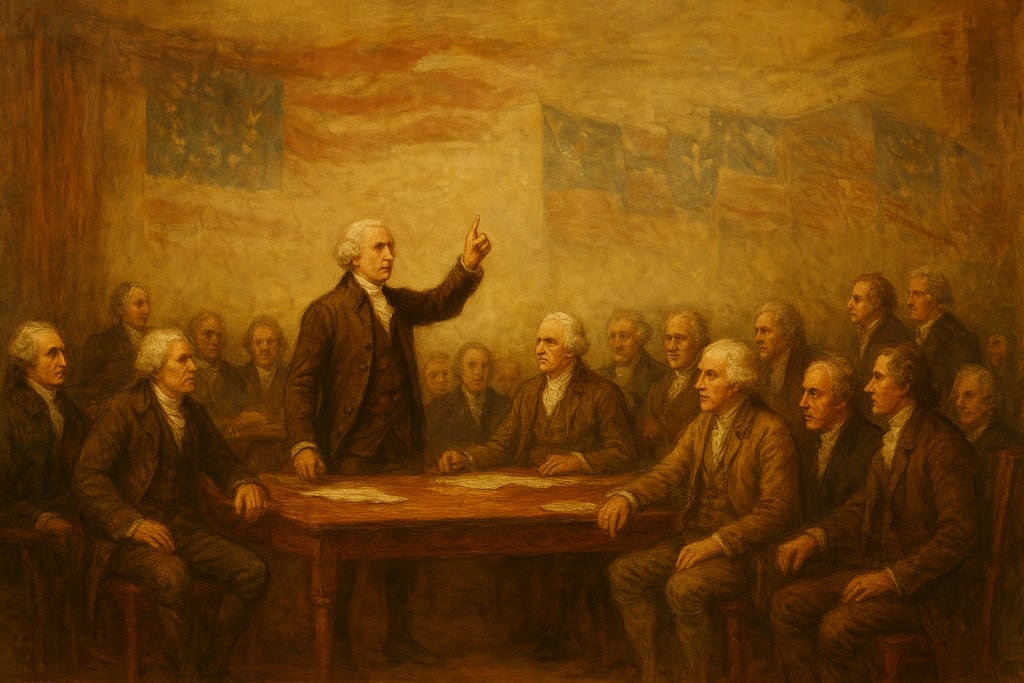
The story of America’s founding is not just a tale of battles and documents—it is a story of courage, vision, and the desire for self-determination. Long before the United States became a global power, thirteen colonies along the eastern seaboard of North America struggled under British rule, yearning for freedom, representation, and the ability to govern themselves.
Life in the colonies was complex. Settlers from England, Scotland, Germany, and other European countries brought diverse cultures, languages, and beliefs. Yet, as they thrived in trade, farming, and settlement, they increasingly felt the heavy hand of the British Crown. Taxes, such as the infamous Stamp Act of 1765, and laws like the Townshend Acts created widespread discontent. The rallying cry “no taxation without representation” became a spark that would ignite a revolution.
The path to independence was neither simple nor immediate. Tensions escalated in 1770 with the Boston Massacre, when British soldiers fired into a crowd, killing five colonists. The following year, the Boston Tea Party saw patriots dress as Native Americans and dump British tea into the harbor, protesting the Tea Act. These bold acts of defiance were more than symbolic—they were statements that the colonists would no longer accept arbitrary rule.
By 1775, open conflict had erupted. The Battles of Lexington and Concord marked the first shots of the American Revolutionary War. Ordinary farmers, tradesmen, and townspeople took up arms, fighting not for glory but for the principle of freedom. Leaders such as George Washington, who would later become the first president, and Thomas Jefferson, the principal author of the Declaration of Independence, emerged as voices of determination and hope.
On July 4, 1776, the Continental Congress adopted the Declaration of Independence, a document that declared the colonies free and sovereign states. It was a radical idea at the time—no colony had ever outright rejected the authority of the British monarchy. The Declaration boldly articulated the belief that governments derive their power from the consent of the governed, and that all people have unalienable rights, including life, liberty, and the pursuit of happiness.
The war that followed was grueling. The Continental Army faced shortages, harsh winters, and a well-trained British military. Yet, the resolve of the American people never wavered. Battles like Saratoga and Yorktown became turning points, demonstrating that a determined population, united under a shared vision, could overcome even the most powerful adversaries. France’s alliance with the colonies in 1778 provided crucial support, turning the tide in favor of the revolutionaries.
Victory did not come easily. The Treaty of Paris, signed in 1783, officially ended the war and recognized the independence of the United States. Thirteen separate colonies had become a single, united nation. The birth of the United States was more than the creation of new borders—it was the realization of an idea: that ordinary people could assert their rights, create a government by the people, and define the future of their country.
The founding of the nation was just the beginning. Challenges remained: forming a stable government, balancing state and federal power, and ensuring the rights of all citizens. These early years shaped the principles that continue to guide America today. The Constitution, adopted in 1787, provided a framework for governance, blending the ideals of liberty with the practical needs of a fledgling nation.
The story of the thirteen colonies is a testament to vision, courage, and persistence. It reminds us that independence is not merely a declaration—it is a struggle, a commitment, and a responsibility. From revolution to nationhood, the United States emerged not by accident, but through the deliberate actions of people determined to shape their destiny.
About the Creator
Echoes of Life
I’m a storyteller and lifelong learner who writes about history, human experiences, animals, and motivational lessons that spark change. Through true stories, thoughtful advice, and reflections on life.
Keep reading
More stories from Echoes of Life and writers in History and other communities.
AI Code Assistant: Revolutionizing Software Development One Line at a Time
In the fast-paced world of software development, time is money, and efficiency is king. Over the past few years, developers have seen a significant shift in the way they write, debug, and optimize code—all thanks to the rise of AI-powered code assistants. These intelligent tools are revolutionizing programming by automating repetitive tasks, offering smart suggestions, and catching errors before they happen. The result? Increased productivity, fewer bugs, and faster delivery of software products.
By Echoes of Life5 months ago in History
Can the United States Leave NATO?
Can the United States Leave NATO? What It Would Take—and What It Would Mean The North Atlantic Treaty Organization, commonly known as NATO, has been one of the most powerful military alliances in modern history. Since its creation in 1949, the United States has been NATO’s strongest member—militarily, financially, and politically. But in recent years, debates have grown louder about whether the U.S. should remain in the alliance. This raises a serious question: how could the United States be removed from NATO—or leave it—and what would that mean for the world?
By Wings of Time 8 days ago in History
3 Ordinary Places That Hid Something Truly Disturbing for Years
Most of us take comfort in ordinary places. Schools feel safe. Homes feel familiar. Workplaces feel predictable. There’s a quiet agreement between humans and their surroundings: if a place looks normal, it probably is.
By Enoch Saginiabout 16 hours ago in History



Comments
There are no comments for this story
Be the first to respond and start the conversation.