
The Berbers
A Timeless Saga of Freedom and Resilience

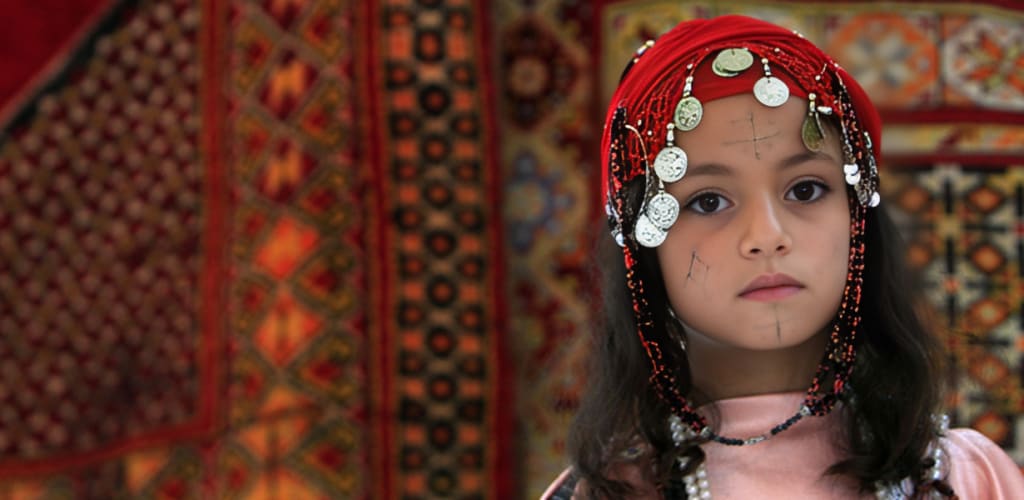
Throughout history, humanity has sought prosperity and well-being, but these aspirations are fundamentally rooted in a more valuable principle: freedom. Conflicts have erupted, revolutions have sparked, and ideologies have been developed in pursuit of this intrinsic yearning. Among those who exemplify this struggle are the Berbers, one of Africa's oldest indigenous communities. For thousands of years, they have resisted assimilation, battled empires, and maintained their identity in the face of significant challenges.
This narrative reflects their journey—a tribute to resilience, cultural preservation, and the unwavering spirit of a people who identify as "Imazighen," meaning the Free Men.
The Berbers represent a varied assembly of ethnic tribes rather than a single, uniform group, residing in the Maghreb region of North Africa, which extends from the Mediterranean coastline to the expansive Sahara Desert. Archaeological findings indicate their existence dates back 10,000 years, with rock art discovered in Algeria and Libya illustrating the early proto-Berber communities. Genetic research connects them to ancient Afro-Asiatic language speakers, identified by the paternal haplogroup E1b1b, a lineage deeply embedded in North African history.
By the time the dynasties of Egypt emerged, Berber tribes such as the Meshwesh and Libu were already noted in historical records, frequently engaging in conflicts with pharaohs while also participating in trade and cultural interactions. The name "Berber" originates from the Latin term barbarus, a designation given by outsiders. However, they have always referred to themselves as Amazigh, meaning "free people."
Throughout history, Berber societies transitioned from nomadic pastoralism to structured kingdoms. The Numidians and Mauri became influential powers, skillfully managing their relationships with both Carthage and Rome through alliances and conflicts.
Massinissa, the renowned king of Numidia, shifted his loyalties during the Punic Wars, supporting Rome in its fight against Carthage and successfully unifying Numidia under his leadership.
Jugurtha, another notable Berber monarch, fiercely resisted Roman domination, symbolizing defiance even in his eventual defeat.
Despite the political control exerted by Rome, Berber identity remained resilient. Prominent figures such as Saint Augustine and Emperor Septimius Severus, who had Berber-Punic heritage, emerged, representing a fusion of local and imperial cultures.
The 7th century marked the onset of the Arab conquest, which brought Islam to North Africa. Although many Berbers embraced the new faith, they resisted Arab control, leading to uprisings such as the Great Berber Uprising (739-740 CE). The Kharijite movement, known for its principles of equality, gained significant traction among Berbers who were disenchanted with Umayyad governance.
By the 11th century, Berber dynasties such as the Almoravids and Almohads emerged, exerting influence over areas stretching from Morocco to Spain. However, as time passed, the process of Arabization diminished much of their linguistic and political independence, even as their cultural identity persisted.
European colonialism during the 19th and 20th centuries introduced significant challenges. France's control over Algeria and Morocco aimed to diminish Berber languages and cultural practices. After gaining independence, subsequent governments continued to marginalize Berber identity:
In Libya, Gaddafi denied the existence of Berbers, labeling them as a "Western invention."
Both Morocco and Algeria prohibited Berber names and restricted the use of their language in educational settings.
Nevertheless, the Berbers resisted. The Berber Spring in Algeria (1980) and the Tuareg uprisings in Mali and Niger showcased their enduring resilience. Today, the Amazigh movement advocates for linguistic rights, with Tamazight now recognized as an official language in both Morocco and Algeria.
The narrative of the Berbers is one of steadfast resistance—facing off against Pharaohs, Romans, Arabs, and colonial forces. Their enduring spirit demonstrates that a people's identity, deeply embedded in their essence, cannot be obliterated.
In a changing world, the Berbers embody a powerful reminder of humanity's most ancient battle: the quest for freedom. Their heritage transcends mere history; it represents an ongoing story of pride, defiance, and the preservation of culture.
About the Creator
A História
"Hi. My name is Wellington and I'm a passion for general history. Here, I publish articles on different periods and themes in history, from prehistory to the present day.
Keep reading
More stories from A História and writers in History and other communities.
Carthage
Africa, known as the birthplace of humanity, has nurtured some of the most influential and lasting civilizations throughout history. Carthage, in particular, is recognized as one of the most formidable empires of the ancient era. Established by Phoenician colonists, this North African city-state evolved into a powerful maritime and trade entity, competing fiercely with Rome. Its narrative—characterized by ingenuity, prosperity, and eventual downfall—provides an intriguing insight into the intricate dynamics of ancient power conflicts.
By A História11 months ago in History
What Seven Soldier Skeletons Reveal About Their Lives.
History is often written by the victors, recorded in ink on parchment that celebrates grand strategies and royal decrees. However, the most honest account of war is frequently found beneath the earth, written in the very bones of those who fought it. When archaeologists uncover a mass grave—such as a recent discovery containing the remains of seven soldiers—they aren't just looking at the end of a life; they are opening a biological diary that spans decades.
By Irshad Abbasi 4 days ago in History
Who is your "Person"?
It's important to recognize that you cannot go through life as easily on your own. My name is Elizabeth and I'm a survivor of child abuse and horrific trauma. Healing from trauma is not a quick fix and recognizing that it will take time, is part of the struggle.
By Elizabeth Woods3 days ago in Psyche




Comments
There are no comments for this story
Be the first to respond and start the conversation.