Research
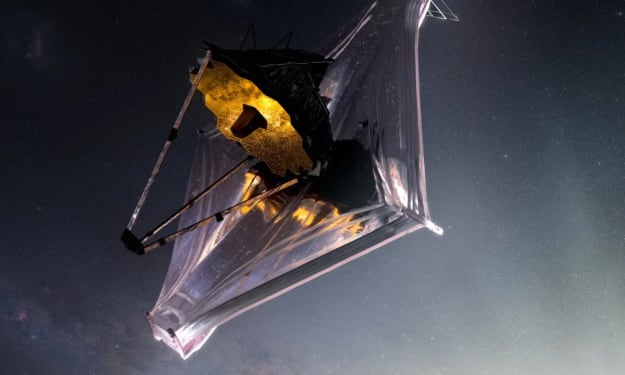
Hubble Telescope’s 35th Anniversary: A Cosmic Gallery of Mars, Nebulae, and Colliding Galaxies.....
Since its launch on April 24, 1990, NASA’s Hubble Space Telescope has revolutionized our understanding of the universe. As it celebrates its 35th anniversary, Hubble continues to deliver breathtaking images and groundbreaking science. Its latest releases include stunning portraits of Mars, a butterfly nebula, star-forming regions, and interacting galaxies—each revealing a new cosmic wonder.
By RAYHAN AHMED9 months ago in History
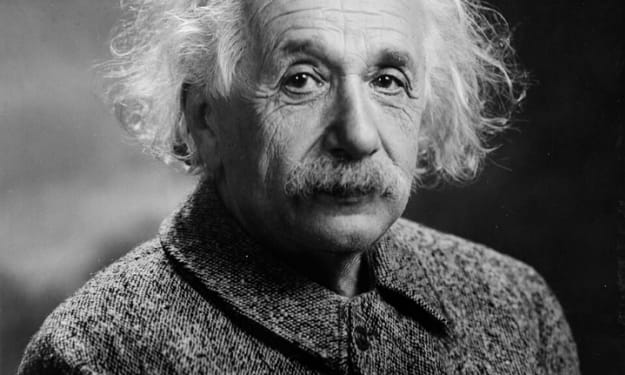
Biography of Aubert Einstein the greatest scientist ever
Albert Einstein (14 March 1879 – 18 April 1955) was a German-born theoretical physicist who is best known for developing the theory of relativity. Einstein also made important contributions to quantum mechanics. His mass–energy equivalence formula E = mc2, which arises from special relativity, has been called "the world's most famous equation". He received the 1921 Nobel Prize in Physics for his services to theoretical physics, and especially for his discovery of the law of the photoelectric effect.
By Favour Nyimbili9 months ago in History
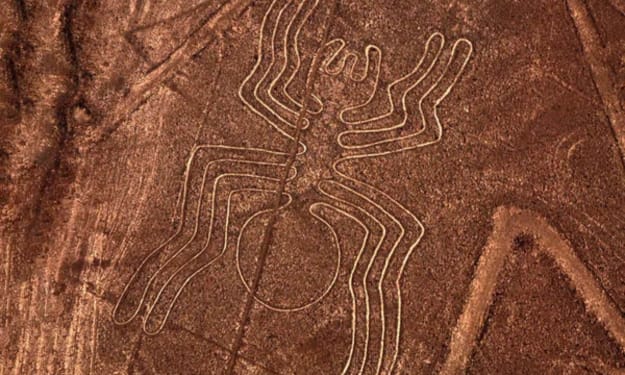
Artificial Intelligence Solves One of Archaeology’s Greatest Puzzles.
Artificial Intelligence Solves One of Archaeology’s Greatest Puzzles. For centuries archaeology has been a discipline built on patience careful excavation and painstaking analysis. Every shard of pottery ancient inscription and ruined structure tells a story but understanding these fragments often requires years if not decades of study. Today however a new player has entered the field Artificial Intelligence (AI). In a groundbreaking development AI has recently helped solve one of archaeology’s greatest puzzles revolutionizing the way we uncover humanity’s ancient past. One of the most elusive challenges in archaeology has been the deciphering of ancient scripts. Languages like Egyptian hieroglyphs were famously decoded with the help of the Rosetta Stone but many others such as Linear A the Indus Valley script and early Mesoamerican glyphs have remained stubbornly mysterious. Traditional methods of decipherment often rely on finding bilingual inscriptions or large amounts of contextual material luxuries that are not always available.
By Adnan Rasheed9 months ago in History
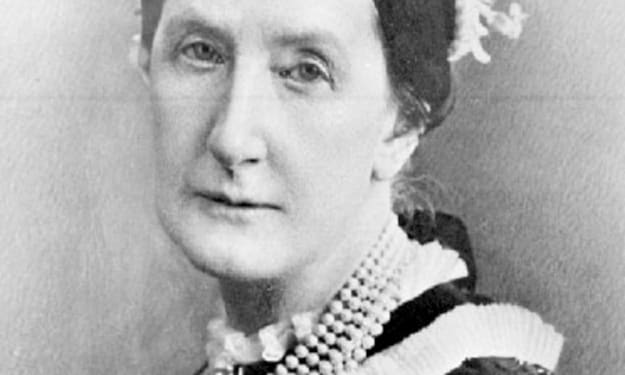
Angela Burdett-Coutts
She was the granddaughter of Thomas Coutts, the founder of the famous London bank, and one of the wealthiest women in Victorian England. She was also one of the busiest women of her time, being actively engaged in an enormous range of philanthropic projects, giving millions of pounds to charities.
By Ruth Elizabeth Stiff9 months ago in History
The War That Was Started Over a Pig
The War That Was Started Over a Pig The Pig War of 1859, a conflict between the United States and Great Britain that remarkably did not result in human casualties, is one of the most peculiar conflicts in history. Sparked by the shooting of a pig, this incident underscores how minor events can escalate into international disputes. The Causes of the Disagreement The Oregon Treaty of 1846, which was meant to settle territorial disputes between the United States and Great Britain in the Pacific Northwest, is where the Pig War got its start. Although the treaty stated that the line would continue "through the middle of the channel which separates the continent from Vancouver Island," it was unclear where exactly the boundary would go. It was established along the 49th parallel. The United States favored the Haro Strait, while Britain supported the Rosario Strait as the proper boundary, as a result of this ambiguous language. The San Juan Islands, which are located in the middle of these straits, became the center of contention. The Case of the Pig On June 15, 1859, American settler Lyman Cutlar discovered a pig rummaging through his potato patch on San Juan Island. Frustrated by repeated incidents, Cutlar shot the pig. The animal belonged to Charles Griffin, an Irishman employed by the British Hudson's Bay Company. When Cutlar offered $10 in compensation, Griffin demanded $100, asserting the pig's value. American settlers sought military protection when British authorities threatened to arrest Cutlar, escalating the disagreement. Military Escalation. Responding to the settlers' plea, Brigadier General William S. Harney dispatched Captain George E. to San Juan Island with Pickett and 66 soldiers. The British government responded by sending three warships commanded by Captain Geoffrey Hornby. The United States had increased its presence to 461 troops and 14 cannons by August, while the British had 2,140 men on five warships. Despite the military buildup, both sides were instructed to avoid initiating conflict . Diplomatic Resolution. Recognizing the potential for war, U.S. President James Buchanan sent General Winfield Scott to negotiate with British officials. Scott proposed a joint military occupation of the island, with each nation maintaining a token force. This arrangement lasted for 12 years, during which time relations between the camps were amicable, with soldiers attending each other's social events and even sharing church services . Final Settlement In 1871, the dispute was submitted to international arbitration under the Treaty of Washington. The German king Kaiser Wilhelm I served as the arbitrator. On October 21, 1872, the arbitration commission ruled in favor of the United States, designating the Haro Strait as the boundary. Consequently, the San Juan Islands became U.S. territory. British forces withdrew in November 1872, and American troops followed suit by July 1874 . Legacy The Pig War exemplifies the effectiveness of diplomacy and the significance of clear treaty language. The American and British camp sites are now preserved in the San Juan Island National Historical Park, which serves as a reminder of this unusual period in history. The conflict, devoid of human casualties, highlights how measured responses can prevent escalation, even when tensions run high over seemingly trivial matters. Military Escalation Brigadier General William S. responded to the plea of the settlers by Captain George E. was dispatched by Harney. to San Juan Island with Pickett and 66 soldiers. In retaliation, British authorities sent three warships under Captain Geoffrey Hornby. The United States had increased its presence to 461 troops and 14 cannons by August, while the British had 2,140 men on five warships. Both sides were instructed not to start a fight despite the military buildup.
By Mahim khan9 months ago in History
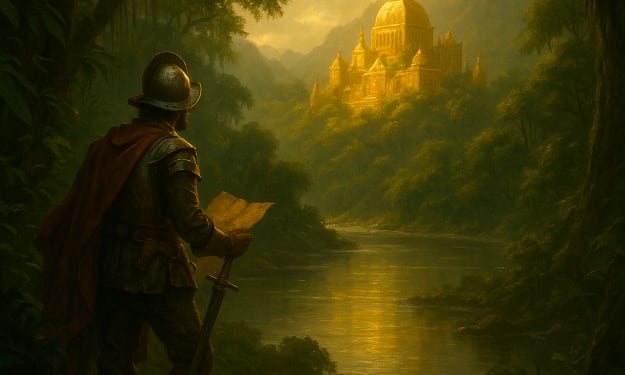
El Dorado: The Golden Legend — Chasing the Myth Across History
El Dorado: The Gilded Legend Historical Context and the Potential Reality Behind the Myth Few legends have captivated human fascination as intensely as the narrative of El Dorado, the legendary cityor individualof gold. For centuries, explorers, adventurers, and visionaries jeopardized everything to seek it, venturing into the perilous jungles of South America. Although no one ever conclusively discovered El Dorado, the myth has profoundly influenced history, geography, and culture. But was there ever any veracity to the legend? Could El Dorado have existed in some capacity? This article investigates the inception, transformation, and plausible reality behind one of history's most renowned legends.
By Say the truth 9 months ago in History
900 Year Old Crusader Sword Discovered Off Israel’s Coast A Glimpse Into the Medieval Past
900 Year Old Crusader Sword Discovered Off Israel’s Coast A Glimpse Into the Medieval Past In October 2021 an extraordinary archaeological discovery was made off the northern coast of Israel a 900 year old Crusader sword lying on the seabed encrusted with marine life and remarkably well preserved after centuries underwater. This iron sword measuring just under four feet in length is believed to have belonged to a Crusader knight who was journeying to the Holy Land around 1100 AD during the early years of the Crusades. The find has captivated historians and the public alike offering a tangible link to a pivotal era in medieval history. The sword was found by Shlomi Katzin a recreational diver from the town of Atlit. While exploring a popular diving site near Haifa he came across ancient stone and metal anchors pottery fragments, and finally a sword covered in marine organisms. Understanding the significance of the object and the risk of it being buried again by sand or taken by looters Katzin retrieved the artifact and immediately contacted Israel's Antiquities Authority (IAA). Upon examination the IAA confirmed the sword to be approximately 900 years old. It was discovered in a natural anchorage used by ships since ancient times. The site had been monitored by the IAA due to its archaeological richness but the sword had only recently become visible due to shifting sands.
By Adnan Rasheed9 months ago in History