

The War That Was Started Over a Pig
The Pig War of 1859, a conflict between the United States and Great Britain that remarkably did not result in human casualties, is one of the most peculiar conflicts in history. Sparked by the shooting of a pig, this incident underscores how minor events can escalate into international disputes.
The Causes of the Disagreement The Oregon Treaty of 1846, which was meant to settle territorial disputes between the United States and Great Britain in the Pacific Northwest, is where the Pig War got its start. Although the treaty stated that the line would continue "through the middle of the channel which separates the continent from Vancouver Island," it was unclear where exactly the boundary would go. It was established along the 49th parallel. The United States favored the Haro Strait, while Britain supported the Rosario Strait as the proper boundary, as a result of this ambiguous language. The San Juan Islands, which are located in the middle of these straits, became the center of contention. The Case of the Pig On June 15, 1859, American settler Lyman Cutlar discovered a pig rummaging through his potato patch on San Juan Island. Frustrated by repeated incidents, Cutlar shot the pig. The animal belonged to Charles Griffin, an Irishman employed by the British Hudson's Bay Company. When Cutlar offered $10 in compensation, Griffin demanded $100, asserting the pig's value. American settlers sought military protection when British authorities threatened to arrest Cutlar, escalating the disagreement. Military Escalation. Responding to the settlers' plea, Brigadier General William S. Harney dispatched Captain George E. to San Juan Island with Pickett and 66 soldiers. The British government responded by sending three warships commanded by Captain Geoffrey Hornby. The United States had increased its presence to 461 troops and 14 cannons by August, while the British had 2,140 men on five warships. Despite the military buildup, both sides were instructed to avoid initiating conflict .
Diplomatic Resolution. Recognizing the potential for war, U.S. President James Buchanan sent General Winfield Scott to negotiate with British officials. Scott proposed a joint military occupation of the island, with each nation maintaining a token force. This arrangement lasted for 12 years, during which time relations between the camps were amicable, with soldiers attending each other's social events and even sharing church services .
Final Settlement
In 1871, the dispute was submitted to international arbitration under the Treaty of Washington. The German king Kaiser Wilhelm I served as the arbitrator. On October 21, 1872, the arbitration commission ruled in favor of the United States, designating the Haro Strait as the boundary. Consequently, the San Juan Islands became U.S. territory. British forces withdrew in November 1872, and American troops followed suit by July 1874 .
Legacy
The Pig War exemplifies the effectiveness of diplomacy and the significance of clear treaty language. The American and British camp sites are now preserved in the San Juan Island National Historical Park, which serves as a reminder of this unusual period in history. The conflict, devoid of human casualties, highlights how measured responses can prevent escalation, even when tensions run high over seemingly trivial matters.
Military Escalation
Brigadier General William S. responded to the plea of the settlers by Captain George E. was dispatched by Harney. to San Juan Island with Pickett and 66 soldiers. In retaliation, British authorities sent three warships under Captain Geoffrey Hornby. The United States had increased its presence to 461 troops and 14 cannons by August, while the British had 2,140 men on five warships. Both sides were instructed not to start a fight despite the military buildup.
About the Creator
Keep reading
More stories from Mahim khan and writers in History and other communities.
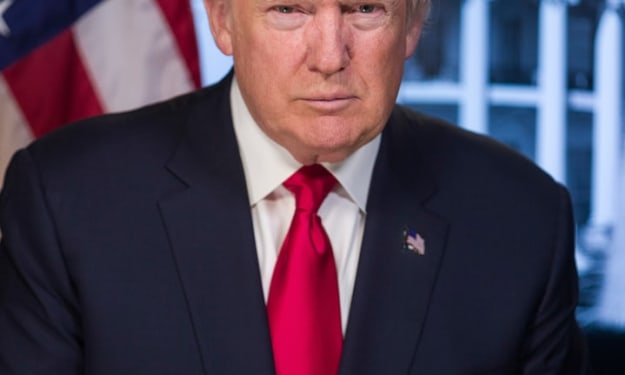
Trump writes ‘Vladimir, STOP!’ after Russia launches deadliest strikes on Kyiv since last summer
US President Donald Trump said he is “not happy” after Russia launched its deadliest wave of attacks on Kyiv in nine months, telling President Vladimir Putin to “STOP!” as he attempts to push Ukraine to agree on a contentious ceasefire proposal. Moscow sent 70 missiles and 145 drones toward Ukraine, mainly targeting Kyiv, in an attack that leader Volodymyr Zelensky said was aimed at pressuring the United States. “I am not happy with the Russian strikes on KYIV. Not necessary, and the timing is terrible. Vladimir, STOP! Every week, 5,000 soldiers are dying. Let's finish the peace agreement! On Thursday, Trump wrote on Truth Social. According to Ukraine's emergency services, the strikes resulted in the deaths of at least 12 people and the injuries of 90 others. Additional casualties may be buried under the rubble. Moscow's assault, according to the emergency services, hit 13 places in Kyiv, including residential buildings and civilian infrastructure. It was the most expensive attack on the city since an aerial bombardment in July 2024 that killed 33 people and targeted a hospital and residential areas. Zelensky said during a trip to South Africa that the bombardment was “first and foremost” aimed at “pressuring the US.” He sought to push back against Trump’s efforts to corral Kyiv into making concessions, telling reporters: “The fact that Ukraine is ready to sit down at a negotiating table after (a) full ceasefire with terrorists… is a big compromise.” On the night of April 24, Russian forces unleashed an hours-long barrage of missiles and drones against Kyiv, killing at least 12 civilians and injuring over 90—its deadliest assault on the Ukrainian capital since July 2024. According to reports from Ukrainian emergency services, the strikes struck residential buildings, critical infrastructure, and public spaces in 13 locations throughout the city, trapping several individuals beneath the rubble as rescue workers attempted to reach them. According to President Volodymyr Zelenskyy, one of the ballistic missiles was identified as a North Korean–manufactured KN-23, underscoring growing cooperation between Moscow and Pyongyang in their military supplies . In a public rebuke that was unusually blunt, former U.S. President Donald Trump took to his Truth Social platform shortly after the strikes to issue a direct plea to Russian President Vladimir Putin. “I am not happy with the Russian strikes on KYIV. Not necessary, and the timing is terrible. Vladimir, STOP! 5000 soldiers a week are dying. Lets get the Peace Deal DONE!” His posts on social media were characterized by his use of all capital letters. One of the rare occasions in which Trump has directly criticized Putin by his first name rather than using the more formal "Mr. President” and illustrating his preference for punchy, informal messaging even in matters of global diplomacy . According to analysts, Trump's use of Truth Social as a kind of diplomatic channel is indicative of a larger shift in the manner in which state leaders communicate. Historically, appeals between heads of state have been conveyed through formal letters, phone calls or mediated statements; Trump’s approach—immediate, public and conversational—breaks with protocol and raises questions about its efficacy in influencing Kremlin decision-making . While some observers view the move as an attempt to inject urgency into U.S.-backed peace negotiations, others caution that social-media entreaties may carry little weight with a leader long accustomed to Western pressure campaigns
By Mahim khan9 months ago in History
A Story of the World
The history of the world is the longest story ever told—a vast journey that began long before written words, long before cities, and even before humans themselves. It is a story shaped by nature, driven by curiosity, and transformed by ideas, power, faith, and struggle. The Dawn of Life and Early Humanity Billions of years ago, the Earth was a violent and restless place. Volcanoes erupted, oceans formed, and the first simple life appeared in the seas. Over immense stretches of time, life evolved from single-celled organisms into complex plants and animals. Eventually, a branch of primates learned to walk upright, use tools, and think beyond survival. These were the early humans. For tens of thousands of years, humans lived as hunters and gatherers. They followed animals, gathered plants, and learned to cooperate in small groups. Fire changed everything—it provided warmth, protection, and a way to cook food. Language allowed ideas to pass from one generation to the next. Slowly, humans spread across continents, adapting to deserts, forests, mountains, and ice. The Agricultural Revolution and the First Civilizations Around 10,000 years ago, a turning point arrived: agriculture. Humans learned to grow crops and domesticate animals. This allowed them to settle in one place, build villages, and increase their population. Farming began independently in regions such as Mesopotamia, the Indus Valley, China, Egypt, and Mesoamerica. With settled life came civilization. Cities rose near rivers that provided water and fertile soil. Governments formed to organize labor and protect land. Writing was invented to record trade, laws, and stories. The first legal codes appeared, such as the Code of Hammurabi, which tried to define justice. Religion became organized, explaining the mysteries of life and death and giving meaning to human existence. Empires, Power, and Belief As civilizations grew, so did conflict. Powerful kingdoms expanded into empires through conquest and control. The Egyptian, Persian, Greek, Roman, Mauryan, and Han empires shaped large parts of the ancient world. Roads, armies, taxes, and laws connected millions of people under a single rule. Ideas traveled along with armies and traders. Greek thinkers explored philosophy, science, and democracy. In India and China, deep philosophies like Hinduism, Buddhism, Confucianism, and Taoism offered guidance on morality and harmony. In the Middle East, monotheistic faiths emerged, teaching belief in one God and emphasizing justice and compassion. The Roman Empire became a bridge between ancient and modern worlds. It spread law, engineering, and language across Europe and the Mediterranean. Yet no empire lasts forever. Over time, internal weakness, economic strain, and outside pressures caused great empires to fall. The Middle Ages and the Flow of Knowledge After the fall of Rome in the West, Europe entered a period often called the Middle Ages. Power was divided among kings, nobles, and the Church. Life was difficult for many, but this era was not without progress. Universities formed, architecture flourished, and faith shaped daily life. Meanwhile, the Islamic world experienced a golden age. Scholars preserved and expanded knowledge in mathematics, medicine, astronomy, and philosophy. Cities like Baghdad and Cordoba became centers of learning, where ideas from Greece, India, and Persia were studied and improved. Trade routes connected Asia, Africa, and Europe, allowing goods and cultures to mix. In Asia, powerful dynasties ruled China, advancing technology such as paper, printing, gunpowder, and the compass. These inventions would later transform the world. The Renaissance and the Age of Exploration Around the 14th century, a rebirth of learning began in Europe: the Renaissance. Artists, scientists, and thinkers looked back to classical knowledge while pushing forward with new ideas. Figures like Leonardo da Vinci and Galileo challenged old beliefs and celebrated human potential. At the same time, explorers set sail across unknown oceans. The Age of Exploration connected the world as never before. Europeans reached the Americas, Africa, and Asia, creating global trade networks. This brought wealth and knowledge—but also suffering. Indigenous civilizations were destroyed, millions were enslaved, and colonial empires rose through exploitation. Revolutions and the Modern World The 18th and 19th centuries were ages of revolution. Political revolutions in America and France challenged absolute monarchy and promoted ideas of liberty, equality, and rights. The Industrial Revolution transformed economies, as machines replaced manual labor and cities grew rapidly. Life improved for some, but workers often faced harsh conditions. New ideologies emerged—capitalism, socialism, nationalism—each offering different visions of society. Nations formed and competed, leading to global conflicts. The 20th century witnessed two devastating world wars that reshaped borders and shattered illusions of progress. Yet from the ruins came international cooperation, technological leaps, and movements for independence and civil rights. The World Today and Beyond In recent decades, technology has accelerated history. Computers, the internet, and artificial intelligence have changed how humans communicate, learn, and work. Globalization has connected economies and cultures, while also creating new challenges. Climate change, inequality, and conflict remind humanity that progress is fragile. The history of the world is not just a record of kings and wars—it is the story of ordinary people: farmers, thinkers, builders, dreamers. It is a story of mistakes and lessons, destruction and hope. Each generation inherits this long journey and adds its own chapter. The future remains unwritten. Like those who came before, humanity stands at a crossroads—guided by the past, tested in the present, and responsible for what comes next.
By The best writer 4 days ago in History


Comments (1)
👍