
The Western Wall: Sacred Symbol of Faith, Heritage, and Conflict
Between Ancient Holiness and Modern Struggles—The Reality of Judaism’s Most Revered Site
Introduction
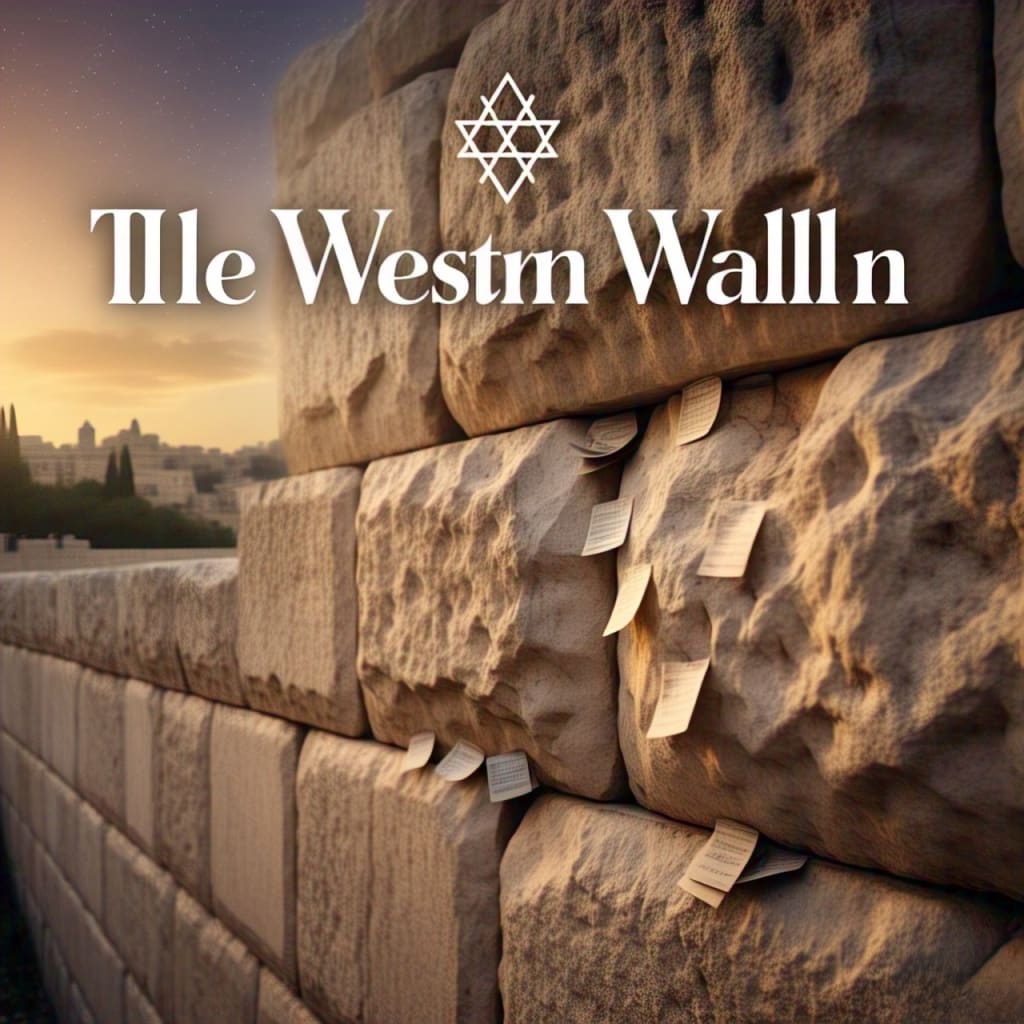
The Western Wall (or Kotel in Hebrew) stands as one of the most iconic and spiritually charged locations in the world. A remnant of the ancient Jewish Temple, it serves as a powerful symbol of faith, resilience, and identity for Jews globally. Yet, beyond its religious significance, the Wall is also a flashpoint of political tensions, archaeological intrigue, and cultural debate.
This article explores the history, spiritual importance, modern-day controversies, and future challenges surrounding the Western Wall, offering a comprehensive look at why this ancient structure remains so deeply relevant today.
1. The Historical and Religious Significance of the Western Wall
A Relic of the Temple Mount
The Western Wall is the last remaining section of the Second Temple’s retaining walls, built by King Herod around 19 BCE. The Temple itself—the center of Jewish worship—was destroyed by the Romans in 70 CE, leaving only this outer wall standing.
For Jews, this site is not just a historical artifact but a living connection to their biblical past. According to Jewish tradition, the Divine Presence (Shekhinah) never departed from the Western Wall, making it a sacred space for prayer and pilgrimage.
A Center of Jewish Mourning and Hope
For centuries, Jews who could not access Jerusalem would pray facing the Temple Mount. When they finally returned, the Western Wall became a place of mourning for the lost Temple (hence its nickname, the "Wailing Wall") and hope for future redemption.
Even today, Jewish liturgy includes prayers for the Temple’s restoration, and many see the Wall as a symbol of eventual messianic renewal.
2. The Western Wall in Modern Times
From Jordanian Control to Israeli Reclamation
Between 1948 and 1967, the Western Wall was under Jordanian rule, and Jews were barred from visiting it. After Israel captured East Jerusalem in the Six-Day War (1967), the site was reopened for Jewish worship, and the surrounding plaza was expanded to accommodate thousands of visitors.
A Site of Pilgrimage and Celebration
Today, the Western Wall attracts millions of visitors annually, including:
Jewish worshippers who come to pray and recite psalms.
Tourists of all faiths who leave handwritten prayers in the Wall’s cracks.
Families celebrating bar/bat mitzvahs, as the Wall is a key site for this Jewish rite of passage.
The Wall is open 24/7, with separate sections for men and women in accordance with Orthodox Jewish practice.
3. Controversies and Conflicts Surrounding the Western Wall
Gender Segregation and the "Women of the Wall" Movement
The Orthodox-controlled management of the site enforces strict gender separation, prohibiting women from:
Wearing prayer shawls (tallit).
Reading from the Torah aloud.
Praying collectively in the women’s section.
The Women of the Wall movement has fought for decades to change these rules, leading to protests, arrests, and legal battles. While some compromises have been made (such as an egalitarian prayer space nearby), tensions remain.
Political Disputes Over Sovereignty
The Western Wall sits in East Jerusalem, which Israel annexed in 1967 but which Palestinians claim as part of a future state. The United Nations and many countries consider it occupied territory, adding a layer of geopolitical tension.
Palestinians view Israeli control of the area as an infringement on their rights.
Israelis see the Wall as an inseparable part of their heritage.
This conflict occasionally spills over into violence, particularly around the nearby Temple Mount/Al-Aqsa Mosque compound.
Archaeological Discoveries and Preservation Debates
Beneath the Western Wall lies a vast tunnel system, revealing layers of Jerusalem’s history. Excavations have uncovered:
Herodian-era streets and arches.
Ancient mikvehs (ritual baths).
Artifacts from Roman and Islamic periods.
However, digging near the Temple Mount has sparked Muslim fears of undermining Al-Aqsa, leading to clashes.
4. The Western Wall as a Symbol Beyond Religion
A Unifying Force for Jewish Identity
For Jews worldwide, the Wall is more than stones—it is a testament to survival. Despite exile, persecution, and the Holocaust, Jewish connection to this site has never faded.
Diaspora Jews often feel a deep emotional tie when visiting.
Israeli soldiers hold swearing-in ceremonies here, linking modern Israel to its ancient roots.
A Bridge (or Barrier) Between Faiths
While primarily a Jewish site, the Wall also draws Christian and Muslim visitors. Some see it as a place of interfaith connection, while others view it as a symbol of division due to the ongoing Israeli-Palestinian conflict.
5. The Future of the Western Wall
Will the Prayer Plaza Remain Divided?
Pressure is growing for a more egalitarian approach to prayer, challenging Orthodox control. The Israeli government has struggled to balance tradition with modern demands for equality.
Can the Wall Exist Beyond Politics?
As long as Jerusalem’s status remains disputed, the Western Wall will be caught in the crossfire. Possible future scenarios include:
International recognition of Israeli sovereignty over the site.
Shared governance in a future peace deal.
Continued status quo, with periodic escalations of tension.
Preserving History While Embracing Change
Archaeological work will continue, but balancing research, tourism, and religious sensitivities will be an ongoing challenge.
Conclusion: A Wall of Prayers, Tears, and Hope
The Western Wall is both timeless and ever-changing. It is a place where history whispers through ancient stones, where politics and faith collide, and where millions pour out their hopes and sorrows.
Whether as a site of devotion, a national symbol, or a political battleground, the Wall remains one of the most compelling places on Earth—a testament to the enduring power of heritage, memory, and the human spirit.
About the Creator
Umar zeb
Hi, I'm U zeb, a passionate writer and lifelong learner with a love for exploring new topics and sharing knowledge. On Vocal Media, I write about [topics you're interested in, e.g., personal development, technology, etc
3 Completely Normal Jobs With Disturbing Hidden Histories
Every job has a backstory. Some are boring, some are inspiring, and some are better left buried. While modern versions of certain professions look harmless—sometimes even respectable—their origins tell a much darker story.
By Enoch Sagini5 days ago in History
Albert Einstein: The Mind That Changed the Universe
Albert Einstein was not born a legend. When he entered the world on March 14, 1879, in the quiet German city of Ulm, nothing about his early life suggested that he would one day transform science forever. In fact, his beginnings were remarkably ordinary—and in some ways, difficult. As a child, Einstein spoke slowly, so slowly that his parents worried something might be wrong. Teachers considered him distracted and stubborn, a boy who questioned too much and obeyed too little. Yet hidden beneath that quiet exterior was a restless, powerful curiosity that would later reshape the universe itself.
By The best writer 5 days ago in History


Comments
There are no comments for this story
Be the first to respond and start the conversation.