
🤢The Great Stink of London, Summer 1858: How the Thames River's Filth Nearly Shut Down Parliament and Sparked Sewer Reforms
😷Stink, Stink the Great Stink

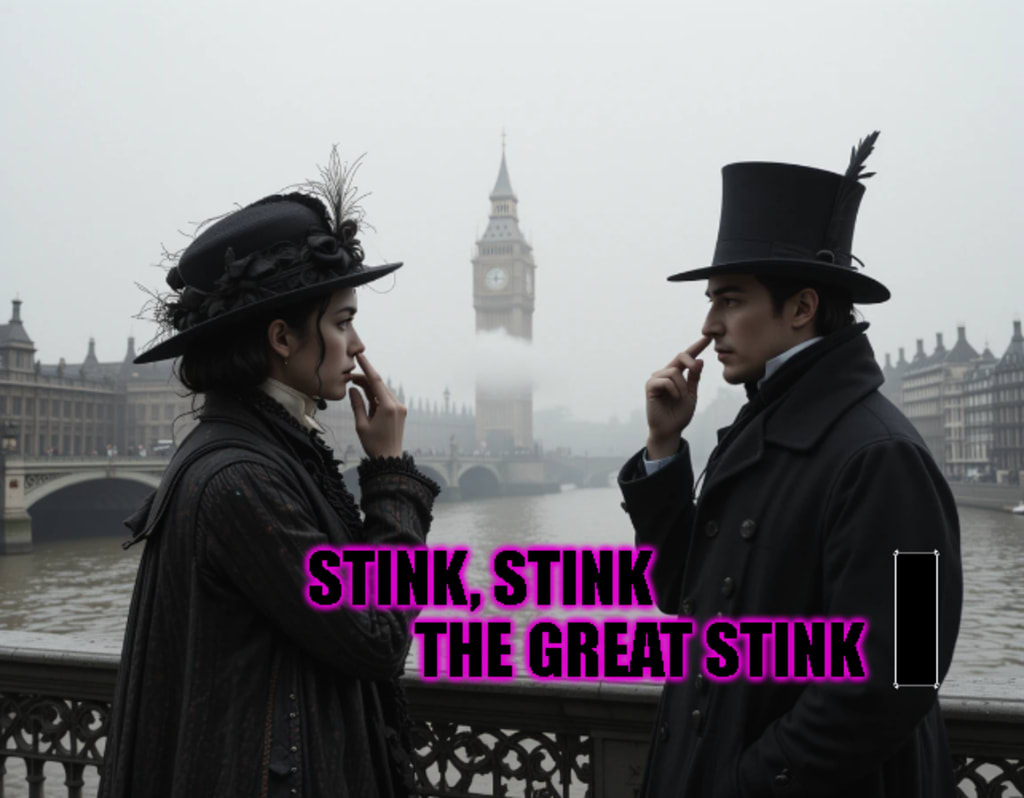
The Summer That Stank to High Heaven In the sweltering summer of 1858, London became the setting for one of the foulest crises in urban history. For several weeks, an unbearable stench rose from the River Thames, the city's main waterway and open sewer, engulfing the metropolis in a nauseating miasma that no one - not even the powerful lawmakers in the Palace of Westminster - could escape. The event, which became known as "The Great Stink," was more than just a sensory nightmare; it was a pivotal moment in the evolution of public health and urban infrastructure.
By the mid-19th century, London had become one of the most populous cities in the world. It was also one of the most unsanitary. With over 2.5 million inhabitants and no centralized sewage system, the Thames had effectively become a flowing cesspool. Waste from homes, industries, and slaughterhouses was routinely dumped into the river, which also served as the source of the city's drinking water. The result was predictable and dire: waves of cholera outbreaks, increasing mortality rates, and a city gasping under the weight of its own filth. The hot summer sun of 1858 only worsened the situation. As the temperatures climbed, the water level of the Thames dropped, concentrating the raw sewage into a thick, stagnant sludge. The smell that wafted through the city was beyond vile. Newspapers described it as "intolerable," and one member of Parliament famously fled the House of Commons with a handkerchief over his nose. Desperate attempts were made to mask the stench, including soaking curtains in chloride of lime, but nothing could stop the reeking tide of decay that now defined the capital. The Great Stink was not merely a curiosity; it was a watershed moment in public consciousness. It united people across classes in their shared disgust and discomfort. What had once been invisible - the gradual poisoning of a city's waterway - was now an overwhelming presence. It forced an empire to reckon with its own filth and finally take decisive action. I. The Filthy State of Victorian London To understand the magnitude of the Great Stink, one must first grasp the revolting sanitary conditions of Victorian London. The rapid expansion of the city during the Industrial Revolution outpaced the development of its infrastructure. The result was an urban environment where human and animal waste, offal, and industrial chemicals shared the same streets, drains, and waterways. The city lacked a coherent waste disposal system. Instead, cesspits were common in homes and frequently overflowed. Night soil men were employed to manually empty these pits, but the process was inefficient and often delayed. Many households took the quicker route: dumping their waste directly into open gutters that fed into the Thames. This not only turned the river into a brown, frothy sewer but also led to a severe public health crisis. By the 1830s and 1840s, cholera epidemics had struck London with increasing frequency and lethality. These outbreaks were originally believed to be caused by miasma - noxious air carrying disease - which made the stench of the Thames not just a public nuisance but a perceived health threat. It wasn't until the pioneering work of Dr. John Snow during the 1854 Broad Street cholera outbreak that the theory of waterborne transmission gained traction. Still, many in power resisted this new understanding. As late as the 1850s, sewage disposal methods remained medieval. There were no proper underground systems to transport waste out of the city, and flushing toilets, though increasingly popular, only exacerbated the issue by pushing even more waste into an already overwhelmed river. The Thames, once a proud artery of British commerce, had become the city's greatest embarrassment and most hazardous threat. The overall environmental decay was staggering. Horses, dogs, and even pigs roamed the streets freely, defecating where they pleased. Tanneries and chemical works dumped runoff into local drains, creating a stew of toxins. The air was thick with smoke from coal fires, and the water was choked with refuse. It was not uncommon for dead animals - or even corpses - to be pulled from the river. London was, quite literally, rotting from within. II. The Stench That Could Not Be Ignored When the summer of 1858 arrived, it brought with it a perfect storm of heat and horror. Londoners were used to unpleasant smells, but this was different. This was apocalyptic. As the Thames baked under the sun, its toxic stew emitted a stench so foul that it turned the stomachs of even the hardiest residents. Tourists, traders, and even the clergy commented on the pestilential air that cloaked the city. Most shocking was the effect it had on the British Parliament. Situated right on the banks of the river, the Palace of Westminster became virtually uninhabitable. Members of Parliament (MPs) complained bitterly of the "stygian effluvia" invading their chambers. Thick curtains soaked in disinfectants were hung over windows in a futile effort to hold back the stink. White lime was poured over the embankment. Windows were shuttered tight despite the heat, creating suffocating conditions inside. Still, the foulness seeped in. Benjamin Disraeli, future Prime Minister and then-Chancellor of the Exchequer, described the situation as "a topic too revolting for description." Parliamentary business nearly ground to a halt. Debates were curtailed, and votes rushed through simply to allow MPs to escape the unbearable air. In a rare show of unity, members from all political factions agreed: something had to be done. The press had a field day. Cartoonists portrayed Parliament as gasping fish trapped in a fetid bowl, while editorials skewered officials for allowing such a preventable catastrophe. Public meetings were held demanding change, and pamphlets circulated with vivid depictions of the city's decay. The moral outrage became as pungent as the smell itself. The public, too, demanded change. Newspapers ran scathing editorials and cartoons lampooning the government's delay. Citizens feared another cholera outbreak was imminent. The Great Stink had transcended class and politics; it was a universal crisis, and one that required more than temporary fixes. It demanded a revolution in public health.
🌐The Political Wake-Up Call and the Birth of Sewer Reform
The Great Stink was more than just a horrific olfactory assault; it was a political earthquake that shook Victorian Britain's complacency to its core. For decades, the squalid state of London's sewage system had been an inconvenient reality that politicians largely chose to ignore or paper over with short-term fixes. Cholera outbreaks had repeatedly devastated the population - claiming tens of thousands of lives in the 1830s and 1840s - and yet, despite mounting evidence and public outcry, no comprehensive solution had been adopted.
The turning point came as the unbearable stench from the Thames seeped into the very heart of British power: the Palace of Westminster. The sheer audacity of the smell invading the chambers of government made the issue impossible to ignore. Parliament was paralyzed, meetings disrupted, and the once proud seat of the empire threatened with shutdown simply because its members could no longer bear the air they were forced to breathe.
Public pressure exploded. Newspapers unleashed relentless criticism, cartoons mocked the dithering politicians, and citizens demanded action. This was a rare moment of unity - across class lines, political affiliations, and professions - where everyone agreed the crisis was intolerable.
Enter Joseph Bazalgette, Chief Engineer of the Metropolitan Board of Works. Though not a household name at the time, Bazalgette's expertise and foresight proved decisive. He had already been advocating for sewer reform, but now, with the Great Stink highlighting the urgency, his proposals gained unprecedented traction.
Bazalgette's vision was audacious: build a modern, integrated sewer system for London capable of carrying the city's waste far downstream, away from the densely populated areas and the drinking water sources. His plans included massive underground intercepting sewers, strategically located pumping stations, and the creation of new embankments along the Thames which would double as roads and public spaces.
Yet, achieving this required navigating a labyrinth of political inertia, financial constraints, and public skepticism. The project needed parliamentary approval, funding, and cooperation among diverse local authorities, each guarding their own interests. Many politicians still clung to outdated beliefs about disease and sanitation or feared the political fallout from disruptive construction work.
Despite these hurdles, the Great Stink forced Parliament's hand. In July 1858, legislation was passed granting Bazalgette the necessary powers and resources to proceed. The government recognized that the cost of inaction - continued disease outbreaks, economic disruption, and public unrest - was far greater than the financial burden of a massive infrastructure overhaul.
The approval marked a turning point in urban governance, demonstrating a growing willingness of the state to intervene in public health and invest in large-scale civic engineering. It was an early example of what would later be called the "sanitary revolution," where governments began prioritizing clean water, waste management, and urban hygiene as pillars of modern society.
🌐Engineering Triumph: Building the Sewers and the Birth of Modern Sanitation
Once the political battles were won, the real challenge began: engineering and constructing one of the largest infrastructure projects in history. London was a sprawling, densely packed city with narrow, winding streets, historic buildings, and a population exceeding two million. Building massive underground sewers without collapsing the city above required ingenuity, planning, and relentless labor.
Bazalgette and his team rose to the occasion. They designed the sewers on a scale that was unprecedented - far larger than what was needed at the time - to accommodate future population growth. This foresight proved invaluable, as London's population continued to soar well into the 20th century.
The core of the system consisted of a network of intercepting sewers - mainly the Northern and Southern High-Level Sewers - that ran parallel to the Thames but safely inland. These sewers collected waste from smaller local drains and transported it eastward, away from central London.
Gravity alone could not move sewage across all the city's varied terrain, so Bazalgette engineered powerful pumping stations. The Abbey Mills Pumping Station, famously nicknamed the "Cathedral of Sewage," was a marvel of Victorian engineering and architecture. Its ornate brickwork and intricate ironwork contrasted sharply with its grim function: to lift tons of raw sewage over hills and ensure continuous flow.
Construction was arduous and hazardous. Workers tunneled through clay, chalk, and sand, often encountering unexpected obstacles such as old wells, buried structures, and underground streams. Accidents and illnesses were common in the physically demanding and unsanitary conditions.
Simultaneously, Bazalgette's project reshaped the surface of the city. The construction of the Victoria Embankment reclaimed land from the Thames, narrowing the river but creating much-needed roads, parks, and spaces for utilities such as gas and water pipes. This embankment concealed the sewers and symbolized the transformation of London from a polluted medieval city into a modern metropolis.
The results were transformative. The removal of raw sewage from the Thames drastically reduced waterborne diseases such as cholera and typhoid. The foul odors that once plagued London diminished dramatically, improving the quality of life for millions. London's riverside became cleaner and more attractive, laying the groundwork for future urban renewal projects.
Bazalgette's sewer system is considered a foundational achievement in civil engineering. Not only did it solve an immediate crisis, but it also set a precedent for urban sanitation worldwide. Many modern cities still rely on elements of Bazalgette's design, underscoring the enduring impact of his work.
The Great Stink's legacy extends far beyond the grime and stench of Victorian London's Thames. It is a powerful historical lesson about the interdependence of environment, public health, engineering, and governance.
At its core, the crisis revealed the catastrophic consequences of neglecting sanitation infrastructure. London's filth was not merely a nuisance; it was a deadly hazard that threatened the health and prosperity of one of the world's great cities. The event demonstrated that environmental degradation and urban mismanagement could cripple societies, no matter their wealth or power.
Bazalgette's success showed the importance of visionary leadership and investment in public works. His system anticipated future needs, proving the value of building resilience into infrastructure. The scale and ambition of his project inspired engineers and policymakers globally, influencing sewer construction in Paris, New York, Chicago, and beyond.
Moreover, the Great Stink underscored the critical role of science in shaping policy. The gradual acceptance of the waterborne theory of disease, championed by John Snow and others, shifted medical paradigms and public attitudes. It highlighted how scientific evidence must inform urban planning and health regulations to prevent future crises.
The political dimension is equally important. The event showed that effective governance requires responsiveness, transparency, and courage to tackle unpopular but necessary reforms. It was a milestone in the development of the modern welfare state, where governments assumed responsibility for citizens' health and well-being.
Today, the challenges faced by 19th-century London remain relevant. Rapid urbanization, pollution, climate change, and aging infrastructure continue to threaten public health worldwide. Cities face new sanitation challenges, such as managing microplastics, stormwater flooding, and antibiotic-resistant bacteria.
The Great Stink serves as a stark reminder that ignoring these issues risks repeating history's mistakes. It calls for proactive investment in sustainable infrastructure, integrated water management, and equitable access to sanitation services.
Finally, the story of the Great Stink is a testament to human resilience and ingenuity. From the worst moments of crisis, societies can emerge stronger by embracing science, engineering, and collective action. The Thames, once a symbol of decay and death, today flows through a vibrant city that owes much to the lessons learned during that fetid summer of 1858.
About the Creator
Kek Viktor
I like the metal music I like the good food and the history...
Keep reading
More stories from Kek Viktor and writers in History and other communities.
🧻 The Toilet Paper Panic Buying During Various Pandemics: How a Mundane Household Item Became a Symbol of Global Anxiety
Part I: A Curious Phenomenon — Panic in the Aisles In the early months of the COVID-19 pandemic, a peculiar sight became common across the globe: barren supermarket shelves where once stood neat stacks of toilet paper. This wasn’t an isolated event. From Tokyo to Toronto, from Milan to Melbourne, scenes emerged of people rushing into stores, carts overflowing with bulky packs of toilet rolls, sometimes wrestling them away from fellow shoppers in desperate attempts to “stock up.” The rush on toilet paper became one of the most vivid, surreal images of the global health crisis, replayed in countless news reports and social media posts. As viral as the virus itself, these panic-buying frenzies turned toilet paper — a soft, white, everyday necessity — into a symbol of a world unmoored by fear.
By Kek Viktor8 months ago in History
Martin Luther King Jr.: The Voice of Peace and Justice
Martin Luther King Jr. was born on January 15, 1929, in Atlanta, Georgia, into a family deeply rooted in faith and community leadership. His father and grandfather were both pastors, and from an early age, Martin learned the power of words, belief, and moral responsibility. Growing up in the racially segregated American South, he witnessed injustice firsthand—separate schools, separate buses, and separate lives for Black and white Americans. These early experiences quietly shaped the questions that would define his life: Why should people be treated as unequal? And how could such injustice be peacefully undone?
By The best writer 5 days ago in History
Saudi Arabia Warns Against War
Saudi Arabia Warns Against War: Why Riyadh Opposes a U.S. Attack on Iran As tensions between the United States and Iran continue to rise, Saudi Arabia has taken a notable and cautious position: warning against any U.S. military attack on Iran. This stance may surprise some observers given the long history of rivalry between Riyadh and Tehran, but it reflects a broader regional concern that another major war in the Middle East could spiral beyond control.
By Wings of Time 4 days ago in History




Comments
There are no comments for this story
Be the first to respond and start the conversation.