
Manufacturing a Myth: Why There Is No White Genocide in South Africa
When fear becomes a political tool, facts become casualties

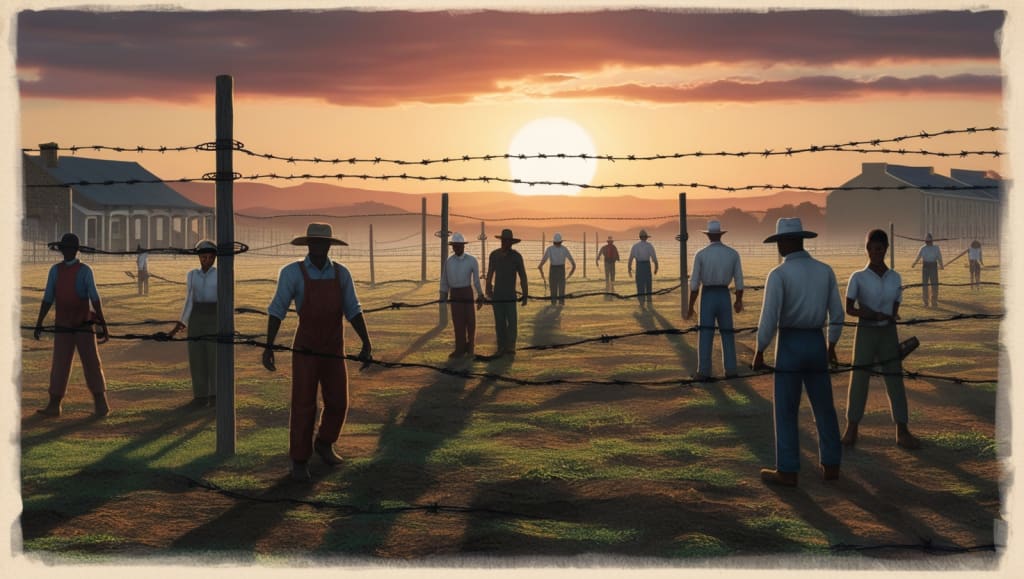
South Africa is not at war with its white citizens. But if you were to scroll through certain corners of the internet—or listen to foreign political debates in places like the United States—you might be convinced otherwise. Claims that white Afrikaner farmers are being “exterminated” in a so-called genocide have gained traction in right-wing media, drawing attention from figures like Donald Trump and Elon Musk. But these claims are not only misleading—they are dangerous. They manipulate pain, obscure real challenges, and weaponize race in ways that deepen global divisions. As a South African who has walked through rural villages and urban centers, spoken to farm workers and farm owners, stood in township queues and corporate foyers—I can tell you firsthand: this narrative is not just false. It’s a distraction from the real work we need to do.
A History of Power and Privilege
The story of white South Africans—particularly Afrikaners—begins in 1652, when Dutch East India Company ships landed in what is now Cape Town. These settlers, later known as Boers or Afrikaners, built a colonial society on dispossession, forced labor, and racial supremacy. By 1948, apartheid had formalized these structures into law, cementing white minority rule for nearly five decades.
Afrikaners came to see themselves not just as settlers but as chosen stewards of the land. Many believed they were ordained by God to rule, often invoking Calvinist theology to justify their dominance. The violence of colonial conquest was reframed as civilization-building. Black South Africans were treated as subjects to be governed, not citizens with rights.
I grew up in a post-apartheid South Africa, but the legacy of these beliefs still lingered in classrooms, media, and everyday language. I remember learning about the Voortrekkers before I learned about Shaka Zulu. I remember how the word “Africa” was used with suspicion in white suburbs—as though it were a place we did not belong to, even while standing in its soil.
Under apartheid, millions were forcibly removed from their homes, denied education, barred from voting, and punished for merely existing in spaces deemed “white.” And yet—despite all this—the United States never created a refugee program for the victims of apartheid.
Post-Apartheid: Progress, Pain, and Policy
The 1994 election of Nelson Mandela marked a turning point: the end of apartheid and the beginning of a democratic, multiracial South Africa. But healing centuries of racial oppression takes more than elections. It takes policies—many of them controversial.
To correct the deep imbalances left by apartheid, the government introduced affirmative action and Black Economic Empowerment (BEE) programs. These efforts aimed to create access to jobs, land, and capital for those previously excluded. However, some white South Africans—particularly Afrikaners—felt marginalized by these policies, claiming they were now the victims of “reverse discrimination.”
While economic inequalities remain deeply entrenched, it’s essential to remember that white South Africans, who make up less than 8% of the population, still control most of the private farmland, dominate top corporate boards, and enjoy a disproportionate share of the country’s wealth. In 2023, the World Bank still listed South Africa as one of the most unequal countries in the world—with race as the most significant predictor of poverty.
Many of us see this inequality every day. We drive from wealthy suburbs to under-resourced townships. We pass informal settlements built along highways while en-route to shiny malls. And we know—deep down—that this is not an accident. It is history made visible.
The Myth of White Genocide
Farm attacks in South Africa are real—and they are tragic. But they are not racially motivated genocides. Independent research from the South African Police Service (SAPS), AgriSA, and international think tanks like the Institute for Security Studies (ISS) have consistently shown that:
- Most farm attacks are economically motivated robberies.
- Victims include Black farm workers and landowners—not just white farmers.
- There is no evidence of a coordinated campaign targeting white people based on race.
The numbers matter. In 2022, there were fewer than 60 farm murders reported in a country of 60 million people. Compare that to the over 20,000 murders that occurred in the same year across South Africa, and the context becomes clear: violent crime is a national crisis that affects everyone—regardless of race. And yet, white genocide claims persist—especially abroad. This is not just about misinformation. It’s about fear—and power.
Exporting a Narrative: American Politics Meets South African Myths
In 2018, then-President Donald Trump tweeted about “large-scale killings of farmers” in South Africa, citing a report from Fox News. The South African government quickly rejected the claim, calling it “misinformed.” But the damage was done. Right-wing groups in the U.S. and Europe latched onto the story, portraying white South Africans as victims of Black vengeance. This wasn’t just about South Africa. It was about reinforcing a global narrative of “white replacement” and fueling anti-immigrant rhetoric in the West.
Similarly, Elon Musk has raised concerns about white South Africans, portraying them as oppressed minorities. Ironically, Musk—a white South African expatriate—built his empire from the privileges afforded to him in apartheid-era Pretoria. Such narratives don’t just misrepresent facts; they erase the lived experiences of the millions of Black South Africans still recovering from the generational wounds of apartheid. As someone who’s seen how those wounds still shape our cities, schools, and homes, I find this erasure infuriating. It's not just dishonest. It's violent.
A Dangerous Distraction from Real Issues
The myth of white genocide distracts from the real crises facing South Africa: poverty, corruption, land reform, gender-based violence, and unemployment. These issues affect all South Africans, but disproportionately harm the poor and Black majority.
And let’s be honest—some of our problems are not the legacy of apartheid or the fault of outsiders. They are rooted in our own failures: politicians who steal, corporations that exploit, and citizens who turn on each other instead of building together. If we’re going to heal, we must stop importing foreign fears and start facing our own truths.
Who Gets to Be a Refugee?
In a recent U.S. congressional debate, lawmakers questioned why a special refugee program was created for Afrikaner farmers—while Uyghurs, Rohingyas, Afghan women, and Cuban dissidents were excluded. The argument? Afrikaners were “easier to vet” and “in America’s national interest.” Let’s be clear: immigration policy is always political. But this selective compassion raises serious ethical concerns. Why is whiteness often a passport to refuge, while others are left behind?
During apartheid, when Black South Africans were being tortured, assassinated, and exiled, no such refuge was offered. Now, when white farmers—many of whom still benefit from inherited wealth—face the same crime all South Africans do, they are given special consideration? This is not justice. This is narrative warfare.
What Justice Really Looks Like
Justice means land reform that doesn’t steal but restores. It means acknowledging white fear—without surrendering to it. It means protecting farmers—Black and white—while rejecting sensationalist headlines designed to divide.
It also means pushing back against weaponized empathy. All lives matter. But all histories do not carry the same weight. And all injustices are not created equal. If we are serious about building a just, equal, and united South Africa, we must first confront the truth:
- There is no genocide against white South Africans.
- The real threat is the erosion of facts in the name of politics.
- And unless we stop manufacturing myths, we will keep missing the real crisis.
I grew up hearing many versions of South Africa’s story. Some were proud. Others were painful. But all of them mattered. What doesn’t matter—what never should—is the kind of story that turns fear into a campaign and facts into fiction.
We must not let the pain of some be weaponized to overshadow the pain of many. We must not let imported myths derail our struggle for justice. We must resist the temptation to rewrite our history for foreign headlines. We don’t need saviors. We need solidarity. We need nuance. And most of all, we need truth.
About the Creator
David Thusi
✍️ I write about stolen histories, buried brilliance, and the fight to reclaim truth. From colonial legacies to South Africa’s present struggles, I explore power, identity, and the stories they tried to silence.
Keep reading
More stories from David Thusi and writers in History and other communities.
Stolen Identity: How Europe Built Itself by Erasing Others
I used to look at Europe and admire its order. The marble streets. The paintings. The architecture. The libraries with their golden shelves. And then I began to ask: Where did all of this come from? Not just physically — but morally, historically, and spiritually. And the answer, if we’re honest, is this: Europe’s identity was built on theft.
By David Thusi8 months ago in Critique
When Time Was Not Yours: How Ordinary People Lived Before the Clock Ruled the World
Imagine waking up without knowing the exact time. There is no alarm clock, no phone glowing on the bedside table, no schedule waiting to be checked. The day begins not because a number changes, but because the light does. Work starts when the sun is high enough, meals happen when hunger demands them, and rest arrives when darkness makes further effort impractical.
By Libby Meggerson4 days ago in History
Is NATO Facing Its Biggest Crisis Yet?
Is NATO Facing Its Biggest Crisis Yet? For more than seventy years, NATO has been one of the strongest military alliances in the world. Formed after World War II, it was designed to protect its members through collective defense. An attack on one was considered an attack on all. For decades, this principle helped maintain stability in Europe and beyond. But today, NATO is facing one of the most challenging moments in its history.
By Wings of Time about an hour ago in History
The Ritual of Winter Challenge Winners
Welcome to the Winners Announcement for The Ritual of Winter challenge. This prompt focused on winter rituals and the meaning that settles into them over time. The top pieces stay grounded in ordinary acts and repeated routines, letting winter shape the work through pace, attention, and restraint.
By Vocal Curation Team3 days ago in Resources


Comments
There are no comments for this story
Be the first to respond and start the conversation.