Research
What is Ramadan and how do Muslims observe the Islamic holy month?
What is Ramadan and how do Muslims observe the Islamic holy month? Ramadan is the holiest month in the Islamic calendar a period of spiritual reflection self discipline and devotion. It is observed by millions of Muslims worldwide who fast from dawn to sunset refraining from food drink and other physical needs during daylight hours. However Ramadan is much more than just abstaining from food it is a time of increased worship charity self improvement and community bonding. The essence of this sacred month lies in deepening one's relationship with God seeking forgiveness and purifying the heart and soul. Fasting known as sawm is one of the Five Pillars of Islam making it a fundamental religious obligation for adult Muslims with exceptions for children the elderly pregnant or nursing women travelers and those who are ill. The fast begins before sunrise with a pre dawn meal called suhoor and it is broken at sunset with iftar, the evening meal. Traditionally Muslims break their fast with dates and water followed by a meal that varies based on cultural and regional traditions.
By Adnan Rasheed11 months ago in History
Migration patterns and their cultural implications
The movement of people from one place to another, whether forced or voluntary, impacts not just the areas they leave but also the regions they settle in. Migration is a complex phenomenon influenced by various factors, including economic opportunities, political instability, environmental changes, and social dynamics. The cultural implications of these migration patterns are vast and multifaceted, affecting both the migrants themselves and the host societies.
By Badhan Sen11 months ago in History
9 million year old shark ancestor fossil found in the desert
9 million year old shark ancestor fossil found in the desert. A recent discovery has left scientists and enthusiasts alike astonished a 9 million year old shark ancestor fossil was found buried beneath layers of scorching desert sand. This revelation challenges our understanding of prehistoric life and raises fascinating questions about how an ocean predator ended up in an arid landscape. While the idea of a shark fossil in the middle of a desert seems almost unbelievable it is a testament to the ever changing nature of our planet. To understand this phenomenon it is essential to look back millions of years when the Earth was vastly different from what we see today. Scientists explain that the very desert where the fossil was found was once submerged beneath a vast ocean. This prehistoric body of water teemed with marine life including sharks before geological and climatic shifts transformed it into the barren land we now see. The fossilized remains of this ancient shark serve as a reminder of a time when this region was part of a thriving underwater ecosystem. One of the key reasons behind such drastic transformations is the movement of tectonic plates. These massive sections of the Earth's crust are constantly shifting albeit at an imperceptibly slow pace. Over millions of years these movements can cause oceans to retreat and landmasses to rise reshaping entire continents. What was once a deep ocean floor eventually became exposed land subject to erosion and the relentless forces of nature.
By Adnan Rasheed11 months ago in History
The Tallest Man History
The tallest man in recorded history was Robert Wadlow, who reached the astounding height of 8 feet 11 inches, a record that has yet to be beaten. Born Robert Pershing Wadlow on Feb. 22, 1918, in Alton, Ill. He was not only the tallest person in the world, but in many ways he seemed larger than life itself , as he grappled with a condition that turned him into a medical wonder.
By Rohitha Lanka11 months ago in History
Alexander Graham Bell’s Greatest Invention. AI-Generated.
The Call That Changed the World On a chilly March afternoon in 1876, in a modest laboratory filled with wires, batteries, and the scent of burning metal, a moment of history unfolded. Alexander Graham Bell, a Scottish-born inventor with an insatiable curiosity for sound and communication, leaned over a peculiar contraption—a device that would soon change the world forever.
By Ahmet Kıvanç Demirkıran11 months ago in History
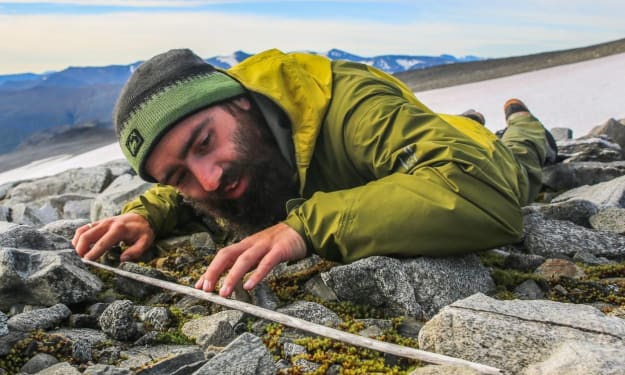
Archaeologists are finding mysterious ancient objects on Norway's melting glaciers.
Archaeologists are finding mysterious ancient objects on Norway's melting glaciers. The melting glaciers of Norway are exposing a hidden world frozen in time objects from the Stone Age Iron Age and medieval periods that provide rare glimpses into the lives of ancient humans. As climate change accelerates glacial melt archaeologists are racing against time to recover and study these remarkable artifacts before they are lost forever. From primitive wooden tools and well preserved textiles to weapons and human remains each discovery helps researchers unravel the mysteries of the past.
By Adnan Rasheed11 months ago in History
Char Dham Yatra – A Pilgrim’s Guide to the Sacred Yatra
Nestled in the lap of the Himalayas, the Char Dham Yatra is one of India’s most cherished and sacred pilgrimages. It is a spiritual journey that leads devotees through four divine destinations: Yamunotri, Gangotri, Kedarnath and Badrinath. These four sites, located in the Garhwal region of Uttarakhand, are believed to grant moksha (salvation) to those who complete the Yatra with devotion and faith.
By Madhava Krishna11 months ago in History
Sexual Harassment and Abuse in Workplaces: A Comprehensive Study of Underprivileged Girls in Bangladesh
Abstract This research paper examines the sexual harassment and abuse faced by underprivileged young girls in Bangladesh, particularly those working in factories, brick kilns, garment industries, and domestic roles in wealthy households. These girls, often from poor backgrounds, endure continuous exploitation and abuse but seldom receive justice due to societal, economic, and legal constraints. This paper investigates the prevalence, causes, effects, and the failure of both national and international systems in offering adequate protection. The research emphasizes the need for improved legal reforms, public awareness, and enhanced NGO support to combat these issues effectively
By Tuhin sarwar11 months ago in History
Archaeologists Discovered 22000 Year Old Tracks That May Be From the World’s First Vehicle.
Archaeologists Discovered 22000 Year Old Tracks That May Be From the World’s First Vehicle. The discovery of 22000 year old tracks at White Sands National Park in New Mexico has shed new light on early human innovation and transportation methods. These tracks as revealed in a recent study published in Quaternary Science Advances suggest that ancient humans used a rudimentary vehicle known as a travois to transport goods or belongings. This finding challenges conventional perspectives on early transportation pushing back the timeline of non wheel based vehicles much further than previously thought. At the heart of this discovery are the linear impressions found alongside human footprints. Unlike ordinary tracks left by people walking these marks suggest the dragging of wooden poles indicating the use of a travois. This is a simple yet effective means of carrying heavy loads by lashing two poles together often in the shape of a triangle and pulling them along the ground. Such a transport method was widely used by Indigenous peoples in North America well into recent history particularly among the Plains tribes who adapted it for use with horses. However, this new discovery suggests that its use dates back much further to a time when humans were still navigating the challenges of Ice Age survival.
By Adnan Rasheed11 months ago in History