Research
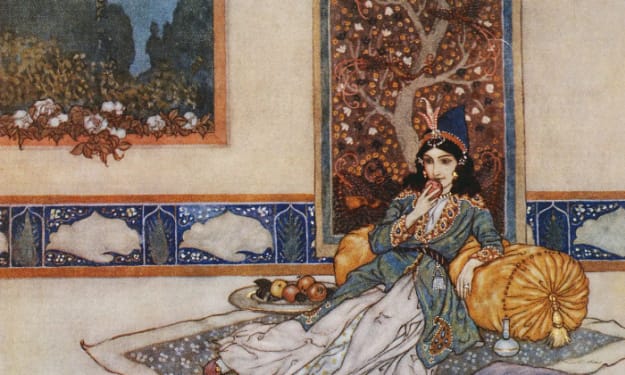
The Thousand and One Nights Tales from the Arab World and India
The Thousand and One Nights, or the Arabian Nights, is an expansive compilation of folk tales stretching out over generations. The best known version is a sort of compendium of tales of diverse provenance, from the Middle East to India, and is often credited with popularizing stories like Aladdin, Ali Baba, and Sindbad the Sailor, tales that have all but become synonymous with Western folklore.
By Rohitha Lanka11 months ago in History
The Rise and Fall of the Mughal Empires
One of the most remarkable empires in world history, the Mughal Empire spread across the Indian subcontinent from the early years of the 16th century. At its height, it ruled almost the entire Indian subcontinent, with access to immense riches and military strength.
By Rohitha Lanka11 months ago in History
Don’t Touch Me: The Importance of Personal Boundaries
StartTouch Me: A Demand for Personal Space and Respect "Don't touch me" is a simple yet powerful phone that conveys a clear message - Respect my space, my boundaries, and my comforts. In a world where physical interaction is common, not everyone is comportable with unsolicited touch. Undertanding and Respecting Personal Boundaries are crucial for fostering a culture of consent and mutual respect.
By Md Shajjat11 months ago in History
Turkey's Underworld
What Is Derinkuyu All About Derinkuyu's Underground City Discovering An Underground City Beneath Cappadocia Nestled in Turkey’s Cappadocia region is a city so enigmatic that it had been lost to history for centuries. And Derinkuyu, buried 18 stories beneath the surface, is as much of an archaeological feat as it is a tale of survival, adaptation, and the mysteries of a lost civilization.
By Rohitha Lanka11 months ago in History
The last days of the Neanderthals.
The last days of the Neanderthals. The story of the Neanderthals is one of survival adaptation and ultimately extinction. For thousands of years they thrived across Europe and parts of Asia coexisting with early Homo sapiens before vanishing from the fossil record around 40,000 years ago. Their disappearance has long puzzled scientists sparking debates over the causes and consequences of their extinction. However recent research has painted a more nuanced picture of their fate revealing that Neanderthals were not a primitive dead end in human evolution but rather a sophisticated and resilient species that left an enduring legacy in modern human DNA. Neanderthals evolved from a common ancestor shared with Homo sapiens roughly 500,000 years ago. While some researchers suggest Homo antecessor as this ancestor the exact lineage remains debated. What is certain is that Neanderthals adapted to the harsh climates of Ice Age Europe and Asia developing robust physiques suited for cold environments. Their short stocky bodies helped retain heat and their large nasal cavities warmed the air they breathed. These adaptations allowed them to hunt large Ice Age mammals like mammoths and woolly rhinoceroses proving their ability to survive in extreme conditions.
By Adnan Rasheed11 months ago in History
History of River
Rivers have shaped the course of human history and the natural world for millions of years. These dynamic waterways, flowing from highlands to seas, have not only carved landscapes but have also fostered the growth of civilizations, driven economies, and inspired cultural narratives.
By Budhirai Tripura11 months ago in History
The Talking Drum: Origins and Evolution
The talking drum, an iconic instrument originating from West Africa, has played a pivotal role in the region's communication, cultural expression, and musical traditions for centuries. Simultaneously, theconcept of "Owambe" represents the vibrant and lavish social gatherings characteristic of the Yoruba people in Nigeria. Both the talking drum and Owambe are deeply intertwined within Yoruba culture, reflecting the community's rich heritage and social dynamics.
By Budhirai Tripura11 months ago in History
St. David’s Day: A Guide to Wales’ Most Beloved Tradition
Every year on March 1st, Wales comes alive with parades, singing, and the vibrant colours of daffodils and leeks. But what is the story behind St. David’s Day, and why is it so important to the Welsh people? Whether you’re Welsh, have Welsh heritage, or simply love learning about cultural traditions, this guide will take you through the history, symbols, and celebrations of Wales’ most beloved holiday.
By Bevy Osuos11 months ago in History
"Love Hurts"
"Love Hurts" is a 2009 romantic comedy that explores the complexities of love, marriage, and self-discovery. Written and directed by Barra Grant, the film features a notable cast including Richard E.Grant, Carrie-Anne Moss, and Johnny Pacar. Set against the backdrop of personal transformation, the narrative delves into the life of a middle-aged man navigating the challenges of a failing marriage and the journey to rediscover himself.
By Budhirai Tripura11 months ago in History
"Whispers Through Time: The Enduring Power of Love Letters Across History". Content Warning. AI-Generated.
Love Letters Through Time: The Weight of Words Love letters have long been the lifeblood of human emotion, capturing the most private declarations of devotion across international boundaries and centuries. Still used to convey love in a romantic sense today, from ancient Mesopotamian clay tablets to Victorian-era parchment, these written testaments to love go beyond their immediate contexts, providing windows into historical periods that give us incredible insights into the emotional landscapes of the time. A love letter is so much more besides — a slice of life, a record of feeling in a moment when what we felt seemed like all we had, stuck to the page like spit from Lulie to Lou, as it was for ball players on date night.
By Abdur Raffay11 months ago in History
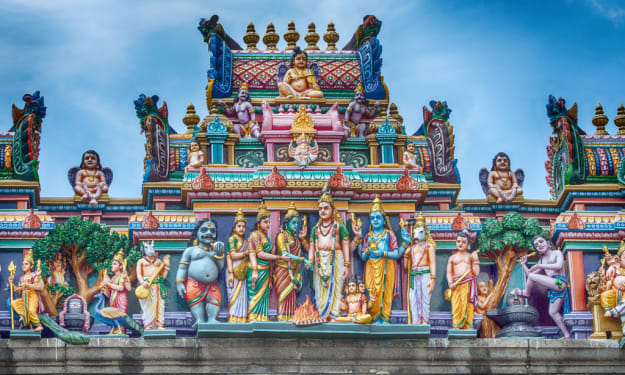
Discover the Hidden Shrines of Kamakshi Amman Temple: A Spiritual Journey Awaits
The Kamakshi Amman Temple, located in the ancient city of Kanchipuram, Tamil Nadu, is one of the holiest and most revered shrines in India. Dedicated to Goddess Kamakshi, an incarnation of Parvati, this temple is a beacon of spiritual significance. While the central sanctum, where Goddess Kamakshi is enshrined, draws the majority of pilgrims, there are several other shrines within the temple complex that deserve exploration. These shrines, each with its unique spiritual importance, offer a deep dive into the rich cultural heritage and spiritual vibrancy of this sacred place.
By Sri Kamakshi Ambal Temple11 months ago in History