Places
Why England Is Rich Today and What It Took from the Indian Subcontinent
England’s historical wealth roots go deep into the colonial era — especially the period of British rule in the Indian subcontinent. They rule Indian subcontinent for 200 years(1757-1947) .They went that subcontinent for business and commerce and took they power by defeating the last independent king of Bangla(Indian subcontinent) named Sirajuddaula. Between the mid-18th century and 1947, the British systematically extracted wealth from India and the broader subcontinent. After the Battle of Plassey in 1757, the British East India Company began extracting massive wealth from Indian rulers, including gold, silver, and other valuables. Economist Dadabhai Naoroji estimated that billions of pounds (in today's value) were drained annually from India to Britain without any equivalent return. They also made exploitation of Agriculture. Indian farmers were forced to grow indigo, cotton, tea, and opium instead of food crops, leading to famines. Systems like the Zamindari system imposed heavy taxes, causing widespread poverty and landlessness. There was Human Exploitation also. Millions of Indians were shipped as indentured laborers to British colonies in the Caribbean, Africa, and Southeast Asia under harsh conditions.
By Tamzid Hasan10 months ago in History
Discover Patrick Henry’s Legacy, Beyond His Revolutionary ‘Give Me Liberty or Give Me Death’ Speech
Tourists frequently cram themselves into the seats of a plain white church in Richmond, Virginia, to witness a reenactment of a speech that was first delivered there on March 23, 1775, 250 years ago. Here, in front of George Washington and Thomas Jefferson, Patrick Henry spoke to his fellow Virginia colonists, concluding with the famous quote, "Give me liberty or give me death!" That sentence, a passionate appeal that Americans have often used to express their dedication to freedom, has reverberated across the ages.
By moyensefat10 months ago in History
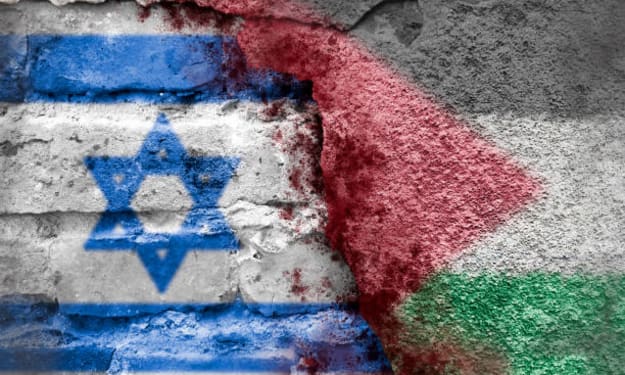
Israeil and gaza war whole story and imagining what will’be the end??
Historical Context: The origins of the conflict trace back to the early 20th century, with tensions between Jewish and Arab populations in the region escalating under British Mandate rule. The establishment of Israel in 1948 led to the displacement of many Palestinians, a tragedy known as the Nakba (“catastrophe”). Subsequent wars, particularly in 1967, resulted in Israel occupying the Gaza Strip, the West Bank, and East Jerusalem. This occupation has been a central point of contention, with Palestinians seeking self-determination and statehood.
By Toufik Morshed10 months ago in History
“The Land’s Burden: Exploring the Benefits and Struggles of Agriculture in Bangladesh”
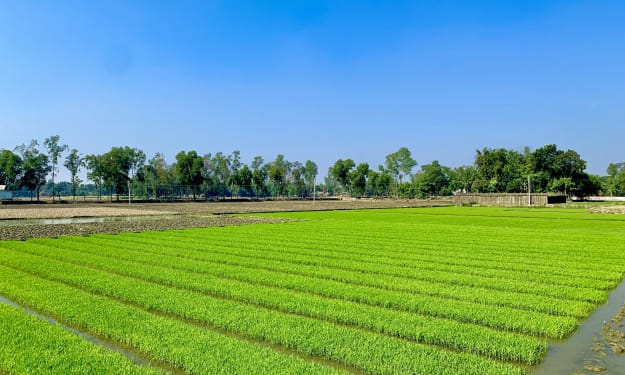
In Bangladesh, agriculture is more than just the story of crops and fields; it is also the story of millions of families struggling to survive, find their identity, and persevere. Over 40 percent of the population still rely on agriculture as their primary source of income, and it has done so for generations. Agriculture is a part of everyday life, from rice fields in the north to jute fields in the south. However, there are increasing obstacles in this vital sector that pose a threat to the long-term viability of farming as a means of subsistence. “Farming is what we know. Nasir Ali, a farmer from Barisal who is 45 years old, says, "It is how we survive." However, for him and many others, survival is becoming increasingly difficult as environmental, financial, and social challenges loom over the agricultural landscape.
By Rikta Akter10 months ago in History
The Struggle of Gaza: A Glimpse into the Heart of Palestine
The Gaza Strip, a small densely populated region along the eastern seaboard of the Mediterranean Sea, is now one of the most symbolically loaded and geopolitically loaded spaces in the world. Part of the State of Palestine, Gaza is home to over 2 million individuals, most of them children, conditions of living as physically as emotionally challenging.
By Arafat Hossain 10 months ago in History
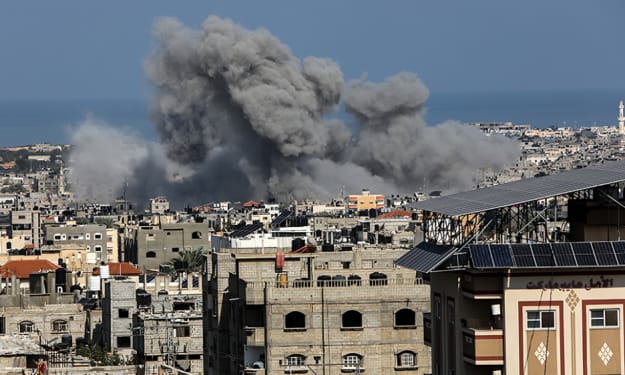
Israel reportedly plans to seize Rafah after a Gaza City strike kills at least 23 people.
**At least 23 people are killed in a strike in Gaza City as Israel reportedly plans to seize Rafah** At least 23 Palestinians have been killed in an Israeli airstrike on Gaza City, according to reports from local authorities, marking the most recent escalation of the ongoing conflict in Gaza. The attack, which occurred on April 10, 2025, targeted a densely populated area, causing significant destruction and casualties. This incident demonstrates the region's ongoing violence, which has seen a significant rise in military operations and airstrikes since the conflict re-emerged last year. Humanitarian aid workers and civilians were reportedly actively dispersing supplies when the strike struck, according to reports. Numerous aid workers were among the victims, illustrating the toll that the conflict is taking on those attempting to assist the afflicted population of the region. As rescue workers continue to sift through the rubble, it is possible that the number of casualties will continue to rise. Many of the wounded are said to be in critical condition.
By Amir Hossain10 months ago in History
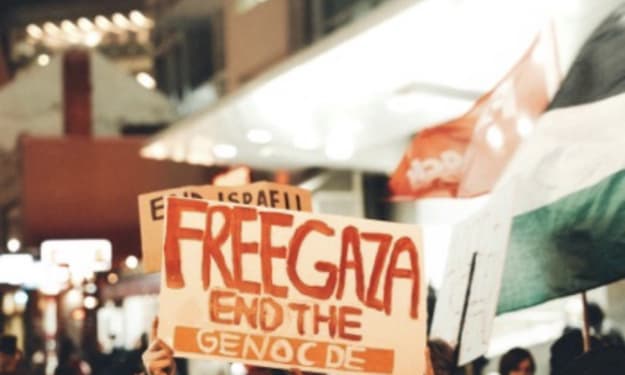
Israel-Palestine Conflict: A War of History, Identity, and Hope for Peace . AI-Generated.
One of the longest-running and most complicated political and territorial disputes in modern history is the Israel-Palestine conflict. For over seven decades, it has shaped the geopolitics of the Middle East, ignited global debates, and caused immense human suffering on both sides. Rooted in history, religion, and competing claims to the same land, the conflict remains unresolved despite numerous attempts at peace.
By Mr.Mushfik10 months ago in History
2,400 Years Before Refrigerators: How Persians Made Ice in the Desert. AI-Generated.
More than 2,400 years ago, in the arid and sun-scorched landscapes of ancient Persia—modern-day Iran—a civilization mastered one of nature’s most elusive elements: ice. At a time when electricity was millennia away from invention and refrigeration was an unknown concept, the Persians engineered an astonishing method to produce, store, and use ice in the heart of the desert. Their creation, the Yakhchal, which literally translates to "ice pit" in Persian, was not just a functional device—it was a marvel of ancient sustainable architecture and climate-responsive design.
By The Thought Quest10 months ago in History