
“The Land’s Burden: Exploring the Benefits and Struggles of Agriculture in Bangladesh”
Agriculture is the backbone of Bangladesh’s economy, but the path of the farmer is fraught with challenges. Can this vital livelihood continue to sustain millions?

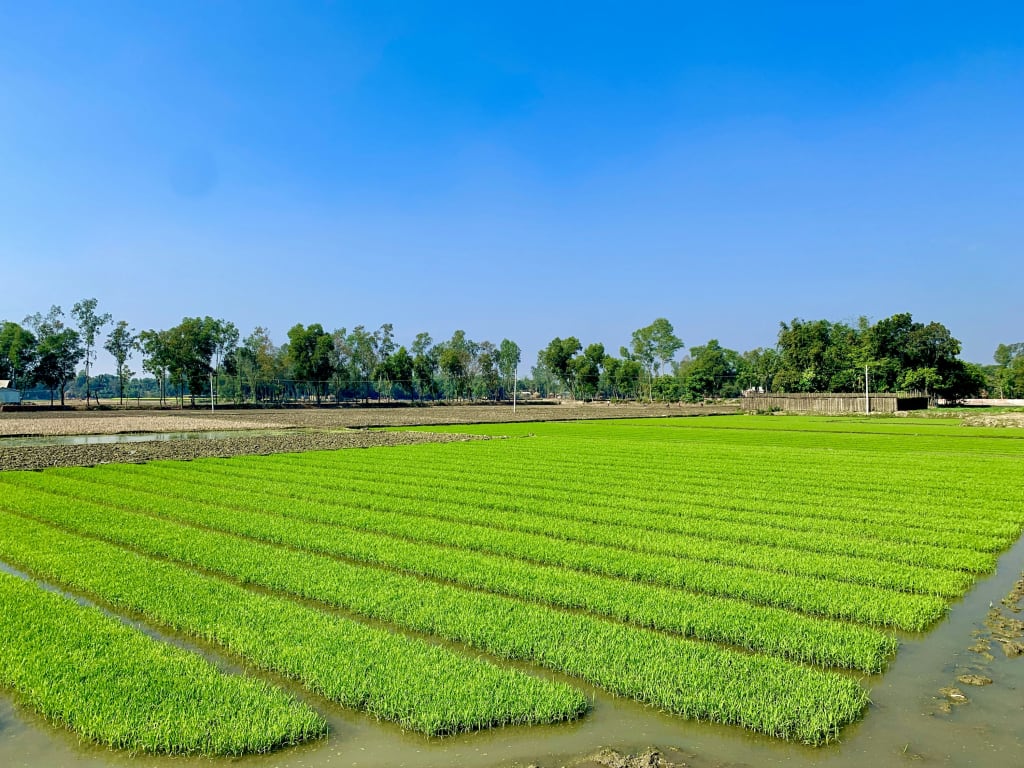
In Bangladesh, agriculture is more than just the story of crops and fields; it is also the story of millions of families struggling to survive, find their identity, and persevere. Over 40 percent of the population still rely on agriculture as their primary source of income, and it has done so for generations. Agriculture is a part of everyday life, from rice fields in the north to jute fields in the south. However, there are increasing obstacles in this vital sector that pose a threat to the long-term viability of farming as a means of subsistence. “Farming is what we know. Nasir Ali, a farmer from Barisal who is 45 years old, says, "It is how we survive." However, for him and many others, survival is becoming increasingly difficult as environmental, financial, and social challenges loom over the agricultural landscape.
The Benefits of Bangladeshi Agriculture 1. Economic Backbone
Agriculture plays a central role in Bangladesh’s economy. As one of the largest contributors to the country's GDP, it provides not only food security but also employment for millions. The backbone of rural employment is made up of farmers, agricultural workers, and related industries like rice milling and tea production. 2. Production of food on one's own Bangladesh has made significant progress toward food self-sufficiency over time, particularly in the production of rice. The nation is less dependent on food imports now that it can produce enough food to feed its growing population thanks to the tireless efforts of smallholder farmers. 3. Cultural Significance
Bangladeshi culture is deeply rooted in farming. Agricultural traditions, festivals, and rituals are integral parts of village life. Celebrations of the harvest, like Nabanno, highlight the nation's strong connection to its agricultural past and foster community unity. 4. Low Barriers to Entry Many people in rural areas can make a living from farming, especially those who have inherited land from previous generations. Unlike other sectors that require significant investments, farming often only requires basic tools and knowledge, making it a relatively low-barrier occupation.
5. Potential for Innovation
The advent of modern farming techniques, including organic farming, hydroponics, and the use of digital platforms for marketing and sales, is slowly gaining ground in Bangladesh. Farmers can now take advantage of these advancements to reduce their reliance on middlemen and boost productivity while also establishing direct connections with customers. The disadvantages of Bangladeshi agriculture 1. Climate Change and Environmental Hazards
Bangladesh is highly vulnerable to the impacts of climate change. Seasonal floods, cyclones, and droughts have become increasingly frequent, devastating crops and threatening farmers’ livelihoods. The difficulties that farmers face are made worse by rising sea levels and saltwater intrusion in coastal areas. “Our fields are being swallowed by the sea,” says farmer Jashim Uddin, a resident of the coastal district of Khulna. "Nothing can grow because the soil gets saltier each year." 2. Changing Market Values The prices of agricultural products fluctuate widely, making it difficult for farmers to predict their earnings. Farmers often sell their produce at a loss, especially during peak harvest seasons when supply outstrips demand. Their financial instability is exacerbated by their lack of market access and a stable pricing system. 3. Credit and Resource Access Most small farmers in Bangladesh have limited access to credit, which hinders their ability to invest in better farming equipment or high-quality seeds. Additionally, many lack access to modern farming technologies or quality fertilizers, further limiting their productivity.
4. Debt and Financial Strain
Many farmers fall into debt, borrowing from local moneylenders at high-interest rates when their crops fail or markets collapse. This debt trap is one of the primary reasons why many farmers are unable to sustain their livelihoods in the long term.
5. Workforce Aging and Youth Disinterest Younger generations are increasingly moving away from farming, seeking opportunities in cities or abroad. This has led to an aging farming population, creating concerns about the future of agriculture in Bangladesh. The lack of interest from youth in farming is creating a generational gap that may be difficult to bridge.
🌍 Conclusion: Agriculture’s Crossroads in Bangladesh
The agricultural sector in Bangladesh is at a crossroads. While it remains a cornerstone of the nation’s economy and culture, it is also facing serious challenges that threaten its future sustainability. Despite their resilience, farmers require enhanced assistance in the form of climate-resilient farming practices, equitable pricing mechanisms, and credit access. Without these changes, the future of farming in Bangladesh could look uncertain. The land that has sustained generations may no longer be able to do so without urgent reforms and investment.
In the end, the fate of Bangladesh’s farmers is intertwined with the fate of the nation itself. Supporting them means safeguarding the future of agriculture—and the future of the country.
About the Creator
Rikta Akter
Watch, read and learn all the news from around the world.
Keep reading
More stories from Rikta Akter and writers in History and other communities.
Rivers of Bangladesh: Nature's Lifeblood and Its Enduring Beauty
The Beauty and Influence of Rivers in Bangladesh: A Glimpse into Nature's Lifeblood One of the most riverine countries in the world is Bangladesh, a land of vast plains and vibrant landscapes that is crisscrossed by a vast network of rivers. The nation is bounded by more than 700 rivers, which not only define the country's geography but also shape its culture, economy, and environment. The rivers of Bangladesh, like the Ganges (Padma), Brahmaputra (Jamuna), Meghna, and their countless tributaries, are crucial to the nation’s identity and survival.
By Rikta Akter10 months ago in History
Brosley Punch — The Strike That Shook Fate
Brosley was never taught how to throw a punch. He learned it the hard way—through hunger, through survival, through a childhood spent on a world that showed no mercy. Long before the universe would whisper his name in fear, Brosley was just a boy standing on cracked red stone, staring at a sky that never answered his questions.
By The best writer 7 days ago in History
Jesus Christ — A Life That Changed the World
Start writing...Jesus Christ is one of the most influential figures in human history. Revered by Christians as the Son of God and the Savior of humanity, and respected by Muslims as a great prophet (Isa), his life and teachings have shaped civilizations, moral values, art, law, and faith for more than two thousand years. The story of Jesus is not only a religious narrative but also a profound human story of compassion, sacrifice, and hope. Humble Beginnings Jesus was born around 4–6 BCE in Bethlehem, a small town in Judea, during the reign of King Herod the Great. According to the Gospels, his birth was miraculous. His mother, Mary, was a young woman who conceived by the will of God, and Joseph, her husband, was a carpenter. Jesus’ birth took place in modest circumstances, symbolizing humility and simplicity rather than power or wealth. Soon after his birth, King Herod, fearing the arrival of a rival “King of the Jews,” ordered the killing of infant boys in the region. To protect the child, Mary and Joseph fled to Egypt and later returned to settle in Nazareth, a quiet town in Galilee. Jesus grew up there, living an ordinary life and learning his father’s trade as a carpenter. Early Life and Preparation The Gospels provide limited details about Jesus’ childhood. One notable event occurred when he was about twelve years old, when he was found in the Temple in Jerusalem, discussing religious matters with scholars. This moment hinted at his deep spiritual insight and sense of divine purpose. For many years, Jesus lived quietly in Nazareth. This long period of preparation emphasizes an important theme of his life: greatness can emerge from patience, discipline, and ordinary daily work. Baptism and Beginning of Ministry Jesus’ public ministry began when he was around thirty years old. He traveled to the Jordan River to be baptized by John the Baptist, a preacher calling people to repentance. During the baptism, the Gospels describe a powerful moment in which God’s approval was revealed, marking the beginning of Jesus’ mission. After his baptism, Jesus spent time in the wilderness fasting and praying, resisting temptation and strengthening his resolve. He then began traveling throughout Galilee, preaching a message centered on love, repentance, forgiveness, and the coming of the Kingdom of God. Teachings and Parables Jesus taught in simple but powerful ways, often using parables—short stories drawn from everyday life. Through these stories, he explained deep spiritual truths. He spoke about loving one’s neighbor, forgiving enemies, caring for the poor, and seeking inner purity rather than outward show. One of his most famous teachings, the Sermon on the Mount, emphasized humility, mercy, peace, and sincerity. Jesus taught that true righteousness comes from the heart. His message challenged social norms and religious hypocrisy, calling people to a higher moral and spiritual standard. Miracles and Compassion Jesus was also known for performing miracles, which drew large crowds. According to the Gospels, he healed the sick, restored sight to the blind, fed the hungry, and calmed storms. These acts were not only signs of divine power but also expressions of deep compassion for human suffering. Through his actions, Jesus showed that God’s love was not limited to a select group. He welcomed sinners, spoke with outcasts, and treated women and the poor with dignity at a time when society often ignored them. Opposition and Conflict As Jesus’ influence grew, so did opposition. Religious leaders felt threatened by his authority and teachings, which challenged established traditions. Jesus criticized leaders who focused on rules but neglected justice, mercy, and faithfulness. Despite knowing the dangers, Jesus continued his mission with courage. He openly spoke about sacrifice, suffering, and the cost of following truth. His message was not about political power but about transforming hearts. Final Days in Jerusalem Jesus eventually traveled to Jerusalem, where he was welcomed by crowds who saw him as a hopeful leader. However, tension quickly increased. During the Jewish festival of Passover, Jesus was arrested after being betrayed by one of his followers. He was brought before religious authorities and then handed over to Roman officials. Though many found no true fault in him, Jesus was condemned and sentenced to death by crucifixion—a punishment reserved for criminals. Crucifixion and Sacrifice Jesus was crucified outside Jerusalem. Christians believe that his death was a sacrifice for the sins of humanity, an ultimate act of love and obedience to God. Even in suffering, Jesus demonstrated forgiveness and compassion, praying for those who harmed him. His death shocked his followers, who had hoped for a different ending. It seemed as though his mission had come to an end. Resurrection and Lasting Impact According to Christian belief, three days after his death, Jesus rose from the dead. The resurrection became the foundation of Christian faith, symbolizing victory over sin and death. Jesus appeared to his disciples, strengthening their faith and commissioning them to spread his message. After these appearances, Jesus ascended into heaven. His followers went on to share his teachings across the world, forming communities that grew into the global Christian Church. Legacy of Jesus Christ The life of Jesus Christ continues to inspire billions. His teachings on love, forgiveness, humility, and faith remain relevant in every generation. Beyond religion, Jesus’ influence can be seen in movements for justice, charity, peace, and human dignity. Whether viewed as the Son of God, a prophet, or a moral teacher, Jesus Christ stands as a symbol of hope—a reminder that compassion can overcome hatred, and that a life lived for others can change the world forever.
By The best writer 3 days ago in History
🅼🅸🅳🅽🅸🅶🅷🆃 🆂🅽🅰🅲🅺🆂
"It's 10 in Tuscon! We all know what that means... It's Time for Midnight Snacks with your man, Gerald Gee! Ready to spend the night together? Me too! I'm full of snacks and can't wait to regurgitate them all back into your hungry ears. Crack a brew! Pop some corn! Anything to get ready for one hell of a show where the talk maybe cheap but the words cut deep...
By Lamar Wiggins3 days ago in Fiction


Comments
There are no comments for this story
Be the first to respond and start the conversation.